
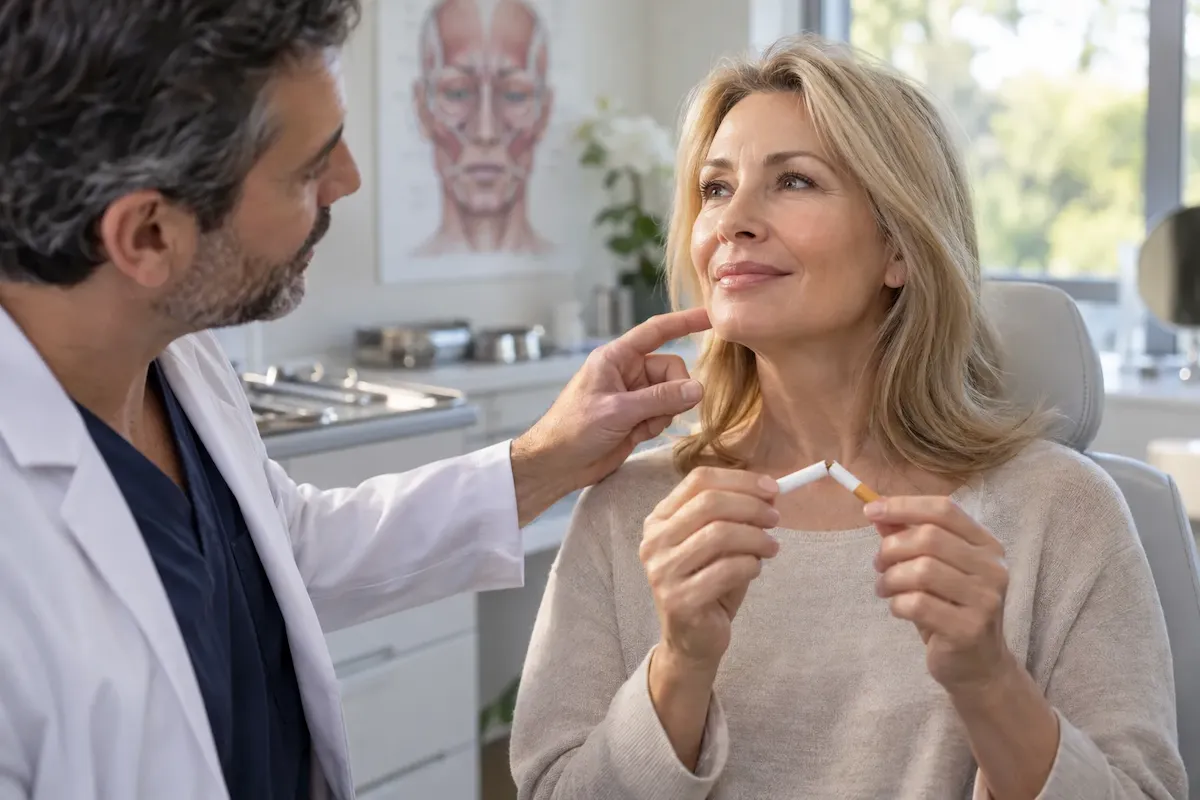
how smoking and nicotine affect facelift healing
Smoking and nicotine can compromise the blood supply facelift skin needs to heal. When skin is lifted and repositioned, its circulation may be more vulnerable while tissues recover. Dr. Mark Albert, MD, FACS, is certified by the American Board of Plastic Surgery and a Fellow of the American College of Surgeons. This guide offers general education; an individual plan requires consultation with a qualified clinician.
Key Takeaways
- Nicotine narrows blood vessels, which reduces oxygen delivery to healing facelift tissue and raises the risk of wound complications, skin loss, and delayed recovery.
- Most surgeons advise stopping all smoking and nicotine products, including vaping and patches, well before surgery and for several weeks afterward to protect the healing incisions.
- Quitting early gives the body time to improve circulation, and even a few smoke-free weeks can meaningfully lower surgical risk.
- Every patient's situation is different, so the safest timeline for stopping nicotine should be discussed during a consultation with a qualified clinician.
For anyone considering Facelift surgery, disclosing smoking or nicotine use is a practical part of planning, not a reason to expect judgment. The goal is to discuss healing risks candidly and determine whether timing and preparation are appropriate for the individual.
Nicotine narrows blood vessels, while carbon monoxide from cigarette smoke reduces the blood’s capacity to carry oxygen. Together, these effects can limit oxygen delivery to healing facial tissue. A facelift surgeon may ask patients to stop nicotine before surgery and remain nicotine-free during early recovery. The appropriate interval depends on the patient and the surgeon’s guidance.
How Nicotine and Smoking Interfere With Facelift Healing: The Skin Flap Mechanics Surgeons Worry About
Why a facelift depends on blood supply to elevated skin flaps
During a facelift, the surgeon lifts and repositions facial skin to address changes in the lower face and neck. That lifted tissue, often called a skin flap, depends on blood vessels in surrounding and underlying tissues for oxygen and nutrients. Its circulation supports healing along the incision and across the repositioned skin. If blood flow is reduced, tissue may have less capacity to recover, particularly where circulation is already strained by surgical changes.
Nicotine vasoconstriction and carbon monoxide: a double hit on oxygen delivery
Nicotine causes vasoconstriction, or narrowing of blood vessels, which can restrict circulation to the skin. Carbon monoxide in cigarette smoke binds to hemoglobin, reducing the blood’s ability to carry oxygen. The American Society of Plastic Surgeons discusses nicotine-related risks in plastic surgery, and a review of smoking and wound healing after facial procedures reports that evidence of impaired healing is especially pronounced in facelift studies. These effects make smoking and nicotine relevant to the blood supply a healing flap requires.
The signature smoker complication: facial skin necrosis, wound breakdown, and thickened scars
When tissue receives insufficient blood, skin necrosis, meaning tissue death, is a serious possible complication. Compromised skin may take longer to heal or break down, requiring clinical care and potentially affecting the appearance of scars. Published reports have described facial skin necrosis after facelift surgery in smokers, though individual risk varies and no single estimate applies to every patient. Anyone who smokes or uses nicotine should discuss this possibility before surgery.
Added risks: infection, delayed healing, anesthesia airway irritation, and fluid collections
Smoking may contribute to delayed wound healing and infection. Smoke can irritate the airways, a relevant consideration when anesthesia is planned. Fluid collections, including a hematoma, are other surgical concerns discussed as part of individualized risk counseling. These complications have different causes; it would be inaccurate to attribute every one solely to nicotine. Medical history, surgical technique, and other factors also affect risk.
Your Nicotine-Free Timeline: How Long to Quit Before and After a Facelift

Why 4 weeks nicotine-free before surgery gives flaps their best chance
A practical planning target discussed in this guide is at least four weeks without nicotine before surgery. This is not a guarantee of healing or a universal rule: surgeons may recommend a different interval based on health, nicotine history, and the planned operation. Stopping well before the procedure gives the care team time to discuss exposure and preparation. Ask the surgeon for a clear quit date and whether any nicotine-containing products fall outside the plan.
The post-operative window: what to protect during weeks 1 through 6
Plan to remain nicotine-free through the first six weeks after surgery unless the treating surgeon gives different instructions. Early healing involves incision closure and recovery of repositioned tissues; an incision can look improved before deeper healing is complete. A surgeon may tailor restrictions to the procedure and the patient’s progress. Do not restart smoking or nicotine based only on appearance or a personal estimate of recovery.
Why technique matters: deep plane, mini facelift, and Nanolift™ undermining and skin tension
Facelift techniques differ in how they address facial tissues and how much skin is lifted or repositioned. A Deep Plane Facelift, Mini Facelift, and Nanolift™ are not interchangeable operations, and a technique name alone cannot establish how nicotine will affect an individual’s healing. The surgical plan, tissue condition, skin tension, medical history, and exposure all matter. Dr. Albert can explain the proposed approach and its recovery considerations during a consultation.
Recovery milestones smokers and nonsmokers can both expect
Swelling, bruising, incision care, and follow-up visits are part of recovery planning, though timing and severity vary. The surgeon’s team provides instructions for activity, wound care, and symptoms that need prompt assessment. Smoking history does not make every recovery predictable, and abstinence does not remove all surgical risk. The Facelift service information describes the procedure; personal candidacy, technique, recovery, risks, and outcomes require an individualized clinical assessment.
Is Vaping, Nicotine Gum, a Patch, or Marijuana a Safe Substitute Before a Facelift?
Changing the delivery method does not necessarily remove the concern: nicotine can narrow blood vessels whether it comes from a cigarette, vape, pouch, or cessation product. Before a Facelift, tell the surgeon about every product you use, including occasional or social use. The team can explain which exposures matter to your plan and what restrictions apply. Do not assume a substitute is safe around surgery without guidance from the treating clinician.
Why vaping and e-cigarettes still deliver the vasoconstrictor that matters
Many e-cigarettes deliver nicotine in an aerosol rather than through burned tobacco. That difference does not eliminate nicotine’s effect on blood vessels. Vaping may also expose the airways to substances that can irritate them, a relevant issue when anesthesia is planned. Nicotine concentration and use patterns vary, so the device type alone cannot establish whether exposure is low enough for surgery. Include vaping in the same candid discussion as smoking.
Gum, patches, lozenges, and pouches: nicotine by any route carries risk
Nicotine replacement products deliver nicotine without cigarette smoke, but still provide the substance that can constrict blood vessels. Gum, patches, lozenges, and oral pouches should not be treated as nicotine-free options for facelift preparation. Do not start, stop, or substitute a cessation product without discussing it with your surgeon and the clinician supporting your quit plan. The surgical team can advise how to approach nicotine abstinence while taking your health needs into account.
Hookah, marijuana, and secondhand smoke exposure
Hookah involves smoke exposure and may also deliver nicotine, depending on the product. Marijuana does not always contain nicotine, but smoking it exposes the airways to smoke; products and methods differ. Mention secondhand smoke too, especially if exposure is frequent at home or work. Be specific about what you use, how often, and when you last used it. Your surgeon can assess these details alongside your medical history and planned care.
Comparison table: nicotine delivery method vs. risk around facelift surgery
This table is a discussion aid, not a personalized risk assessment. It distinguishes products that deliver nicotine, expose you to smoke or aerosol, or both. The surgical team needs the full picture to provide relevant instructions.
| Method | Nicotine or smoke exposure | What to disclose |
|---|---|---|
| Cigarettes | Nicotine and tobacco smoke | Amount, frequency, and last use |
| Vaping or e-cigarettes | Often nicotine; aerosol exposure | Device, liquid, and use pattern |
| Gum, patches, lozenges, pouches | Nicotine, without cigarette smoke | Product and timing of use |
| Hookah | Smoke; nicotine may be present | Product and frequency |
| Marijuana | May involve smoke; nicotine depends on product | Substance, route, and timing |
| Secondhand smoke | Environmental smoke exposure | How often exposure occurs |
How a Facelift Surgeon Screens for Nicotine Use Without Judgment
Nicotine screening is a safety conversation, not a test of character. In a facelift consultation, the surgeon needs accurate information to discuss healing risks, preparation, and whether the timing is appropriate. A candid account does not automatically determine eligibility. Candidacy, technique, recovery, risks, and outcomes require individualized clinical assessment.
What to tell your surgeon at consultation: a checklist for honest conversation
Share the details plainly, even if you are worried they may affect scheduling. Include current and recent use, products, frequency, approximate last use, and regular secondhand exposure. Mention prior quit attempts, withdrawal concerns, and whether you use nicotine for reasons beyond smoking. Bring an accurate medication and supplement list as well. This helps the care team understand your circumstances and discuss next steps without relying on assumptions.
Cotinine testing and how abstinence is verified before scheduling
Cotinine is a substance the body produces after nicotine exposure, and a clinician may use testing to help verify abstinence. Testing practices and scheduling requirements vary. Results need interpretation in light of product use and timing, so disclose nicotine replacement and other sources rather than trying to predict what a test will show. Ask the surgeon’s office whether testing is part of its process and how results affect planning.
Quitting support, cessation resources, and relapse guidance if you slip
Quitting can be difficult, and needing support is not a reason to avoid a consultation. Tell the surgeon if cravings, stress, or a recent lapse make abstinence challenging. The clinical team can discuss coordinating cessation support with surgical planning; do not conceal a relapse or change products without advice. If nicotine use resumes, contact the surgeon before proceeding or changing your recovery plan. A qualified clinician can help determine appropriate next steps.
Facelift FAQs for Smokers: Quit Windows, Vaping, Testing, and Relapse
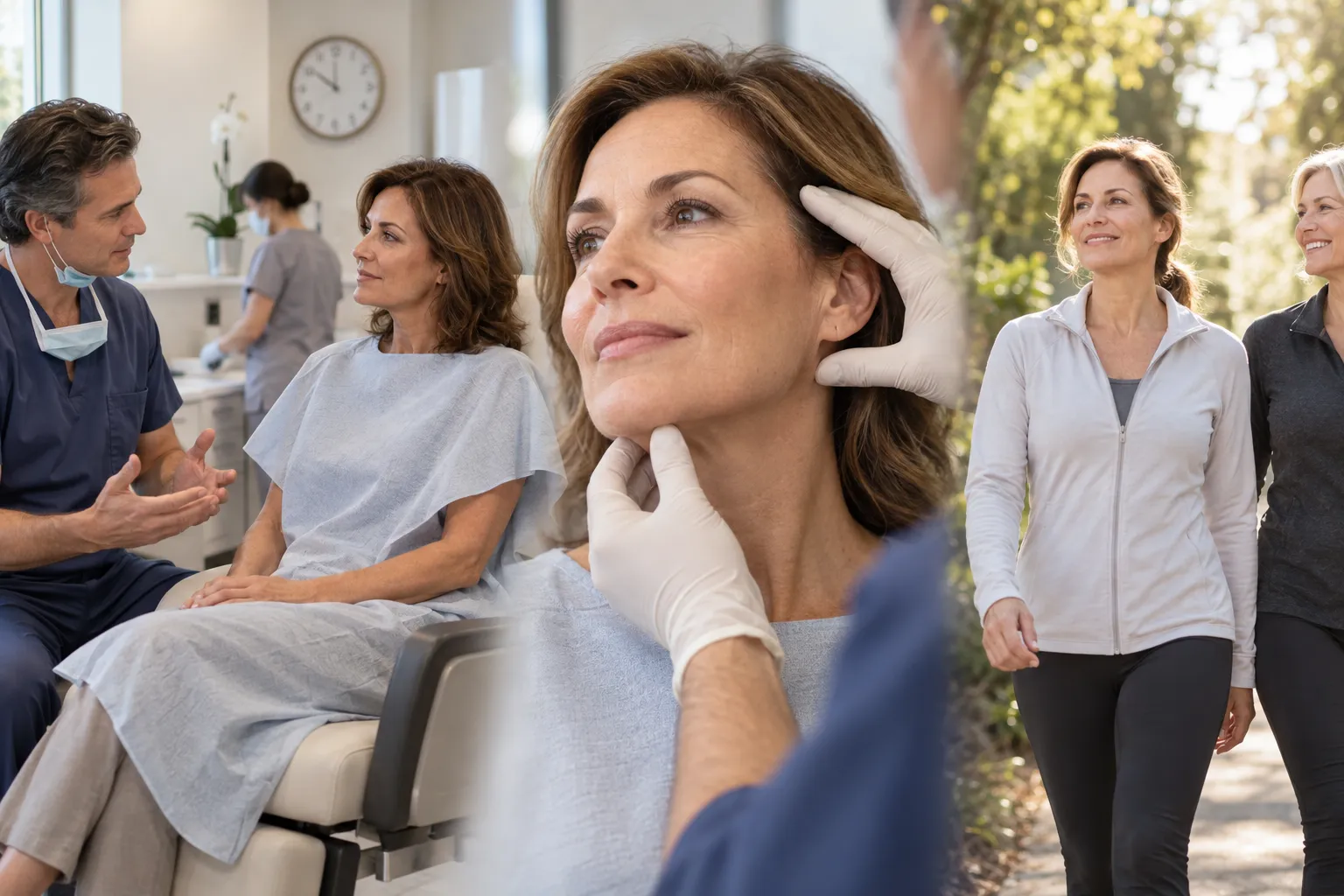
Questions about nicotine are a normal part of planning a Facelift. These answers offer general education, not a personal medical assessment. Your surgeon’s instructions should reflect your health, nicotine exposure, and proposed operation.
How exactly does nicotine affect blood flow to the face after a facelift?
Nicotine narrows blood vessels, which may reduce circulation to healing facial tissue. Repositioned skin depends on an adequate blood supply as incisions and surrounding tissue recover. Less blood flow can mean less oxygen and fewer nutrients reach the area, raising concern about delayed healing or tissue injury. Individual risk varies, and nicotine is only one factor a surgeon considers.
How long before and after a facelift must I stay nicotine-free?
There is no single interval for every patient. This guide describes a planning target of at least four weeks before surgery and remaining nicotine-free through the first six weeks of recovery, subject to your surgeon’s instructions. Ask your care team for specific dates, including when to stop and when any restriction may end. Do not use the appearance of an incision alone to decide when to resume nicotine.
Is vaping or nicotine replacement safer than smoking before surgery?
Vaping and nicotine replacement products may avoid some cigarette-smoke exposure, but still deliver nicotine when the product contains it. Nicotine can affect blood vessels regardless of delivery method. Tell your surgeon about vaping, gum, patches, lozenges, and pouches rather than assuming one is acceptable. Your clinician can advise on cessation alongside surgical planning.
What happens if I relapse after my facelift?
Contact your surgeon’s office promptly and explain what you used and when. Do not hide the exposure or change your care plan on your own. Your surgeon can advise whether you need an assessment or different instructions. Seek urgent medical attention for severe or rapidly worsening symptoms, such as trouble breathing or significant bleeding.
When should I talk to a qualified facelift surgeon?
Consider a consultation when exploring surgery, even if you currently smoke or are unsure whether you can stop. Honest discussion lets the surgeon review your health, explain risks, and consider whether timing is appropriate. Dr. Mark Albert is certified by the American Board of Plastic Surgery and is a Fellow of the American College of Surgeons. Learn more about Dr. Albert or request a consultation to discuss a Facelift. Candidacy, technique, recovery, risks, and outcomes require individualized clinical assessment.
Frequently Asked Questions
Will quitting smoking make my face look better?
Quitting smoking supports healthier circulation, but this guide cannot promise specific facial changes from quitting alone. What matters most for facelift planning is protecting blood supply to healing skin flaps. Discuss your timeline and preparation with a qualified surgeon, who can offer individualized guidance.