

mini facelift plastic surgery
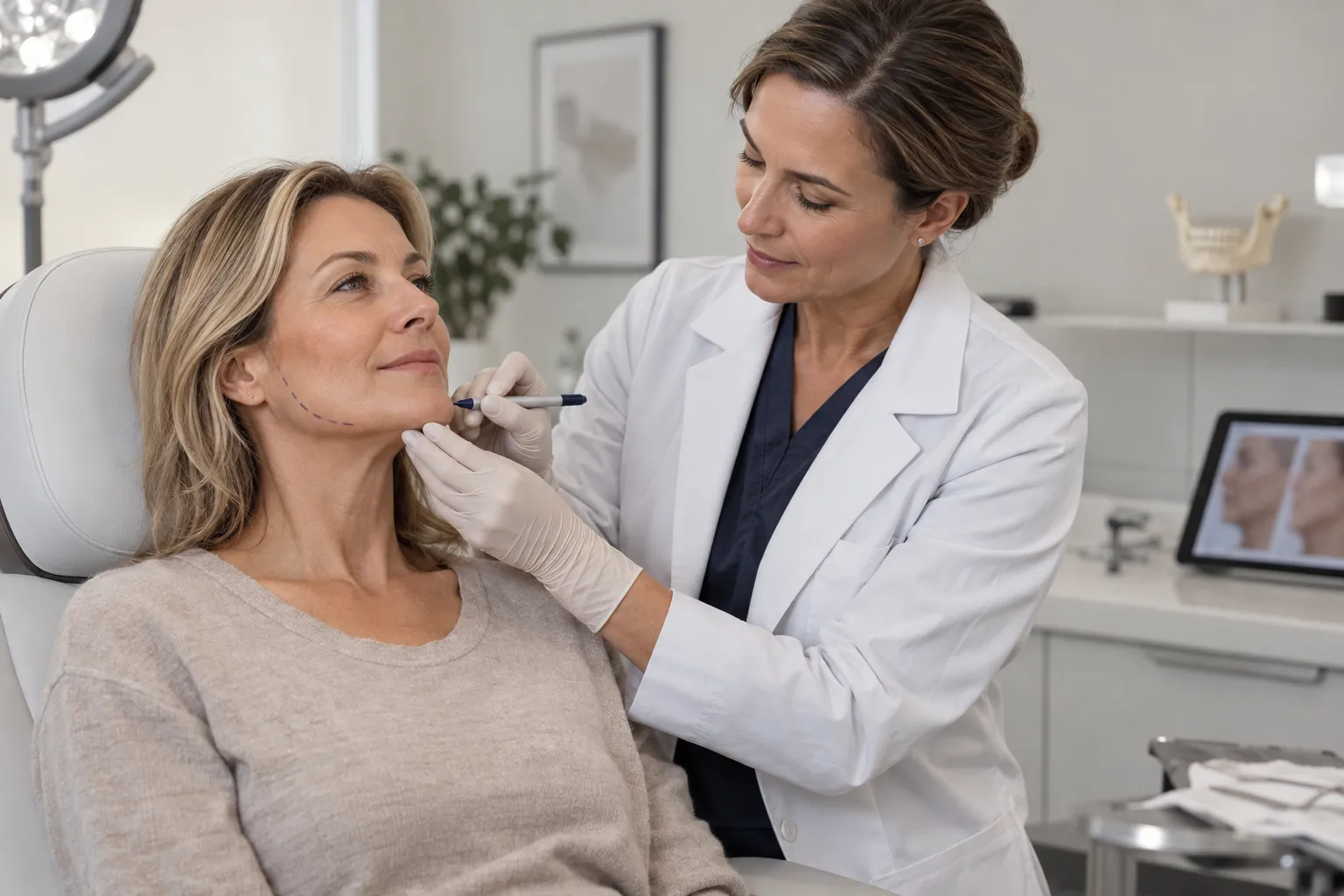
Mini facelift plastic surgery may suit someone with early jowling and mild jawline looseness, but it is not simply a smaller version of every facelift. Its scope depends on the changes being addressed and the surgeon’s plan. A consultation can help determine whether a Mini Facelift fits your anatomy and goals or whether another approach warrants discussion.
Key Takeaways
- A mini facelift addresses early jowling and mild looseness along the jawline in patients whose changes are not yet extensive.
- This approach should be understood as a technique with its own scope rather than a scaled-down version of a full facelift.
- The right option depends on your individual anatomy, the changes you want to address, and the surgical plan your surgeon recommends.
- A consultation with a qualified facelift surgeon is the appropriate way to confirm whether a mini facelift matches your goals.
Dr. Mark Albert is certified by the American Board of Plastic Surgery and is a Fellow of the American College of Surgeons. His facelift planning matches the operation to the areas of concern rather than choosing by technique name alone. Results and recovery vary, and an article cannot establish personal candidacy.
What Is a Mini Facelift Plastic Surgery: How Is It Different From a Full Facelift?
A Concise Definition: A Shorter-Scar Facelift Focused on the Lower Face
A mini facelift typically uses shorter incisions and less tissue dissection than a more extensive facelift. It generally focuses on early lower-face changes, such as mild jowling and jawline definition. The label does not describe one standardized operation: incision placement, tissue handling, and correction vary by surgeon and patient.
It is surgery, not a non-surgical treatment or not assured shortcut. Technique depends on skin laxity, facial structure, health history, and the outcome a patient considers natural. The Mini Facelift is one of Dr. Albert’s facelift options; suitability requires an individualized clinical assessment.
Mini Facelift vs. Full Facelift vs. Deep Plane Facelift vs. Non-Surgical Options
These approaches differ in surgical scope and the areas they are designed to address. A shorter incision alone does not determine the appropriate correction. This comparison is general education, not a treatment recommendation.
| Approach | General focus | What to understand |
|---|---|---|
| Mini Facelift | Earlier lower-face changes, often including mild jowling | Usually involves shorter incisions and less dissection than a traditional facelift; its scope is limited. |
| Full facelift | Broader facial aging concerns, depending on the surgical plan | May address more extensive laxity than a limited operation; the specific plan varies. |
| Deep Plane Facelift | Deeper facial tissue repositioning as part of a surgical facelift | Technique, anatomy, and goals determine whether it is appropriate. |
| Non-surgical options | May address selected concerns without facelift surgery | They do not reproduce the tissue repositioning of a surgical facelift. |
Why Some Board-Certified Surgeons Do Not Offer Mini Facelifts
Surgeons differ in the techniques they perform, terminology they use, and patients they consider appropriate for a limited operation. A mini facelift may not address the main concern when there is substantial skin laxity or change outside the lower face. A more extensive plan, or advice against surgery, may then be more appropriate than an operation with narrower scope.
Ask what the proposed operation would address and what would remain unchanged. A responsible explanation covers limitations as well as potential benefits; a shorter scar does not make a procedure better or suitable for everyone.
Incision Patterns, Anesthesia Options, and How Long the Procedure Takes
Incisions are commonly placed around the ear; the pattern depends on technique and planned correction. Shorter incisions may reduce scar length, but cannot eliminate scars, and visibility varies with healing. Anesthesia depends on the operation and patient. Ask what is planned, why it fits your case, and where surgery will take place.
Procedure time varies with technique and individual circumstances, so a universal duration would mislead. Dr. Albert’s Mini Facelift page describes his approach; a consultation is needed to discuss details relevant to you.
Who Is a Good Candidate for a Mini Facelift? A Candidacy Self-Assessment

What a Mini Facelift Can Address: Early Jowls, Jawline, and Marionette Lines
This operation may be considered when early jowls or mild lower-face looseness are the main concerns. Some patients also ask about marionette lines, which run from the corners of the mouth toward the chin. The degree of change is individual; surgery should not be understood as erasing every line or restoring a specific earlier appearance.
It may be worth discussing when goals are limited and clear, and examination suggests the procedure’s scope could match them. A clinician must assess anatomy, medical history, and expectations before advising on candidacy.
What a Mini Facelift Cannot Address: Midface, Neck, and Severe Skin Laxity
A limited lower-face operation may not adequately address concerns centered in the midface, significant neck laxity, or substantial excess skin. Even when the jawline is the main concern, adjacent areas matter: changing one region cannot ensure the overall result will meet expectations. The consultation should separate reasonable targets from concerns beyond the procedure’s scope.
Candidacy Questions to Ask Yourself Before Booking a Consultation
Use these questions to organize concerns, not determine your eligibility. They can help you explain priorities and identify topics for a surgeon’s assessment.
- Are early lower-face changes, rather than neck or midface concerns, my main reason for considering surgery?
- Can I describe the change I hope to see without expecting a particular face or age?
- Am I prepared to discuss medical history, healing considerations, and surgical risks candidly?
- Do I understand that a smaller operation may have a narrower scope and may not meet every concern?
- Have I set aside time to discuss technique, anesthesia, recovery, and alternatives with a qualified clinician?
Age Considerations: Am I Too Young or Too Old?
Age alone does not establish candidacy. Facial aging, skin quality, health, healing factors, and goals differ among people of the same age. The American Society of Plastic Surgeons reports increased demand for facial rejuvenation procedures among patients in their 40s and 50s; that trend does not set an appropriate age for an individual operation.
Someone younger may have too little lower-face laxity to justify surgery, while age alone does not rule out a consultation for an older adult. A qualified clinician can assess health and anatomy, explain risks and limitations, and discuss whether the expected scope aligns with your goals. Consider mini facelift plastic surgery only through that individualized discussion.
Mini Facelift Recovery Timeline, Longevity, and Cost Factors
Week-by-Week Recovery: What to Expect and When You Can Return to Work
Recovery after a Mini Facelift varies with the surgical plan, healing, and individual circumstances. Swelling, bruising, tightness, and temporary changes in skin sensation may occur. Follow your surgeon’s instructions and schedule for activity and wound care rather than a general timeline.
| Period | General expectations | Planning considerations |
|---|---|---|
| First several days | Rest and follow the care plan. Swelling and bruising may be most noticeable during early healing. | Arrange help with transportation and routine tasks as directed by the surgical team. |
| First one to two weeks | Bruising and swelling often begin to settle, though visible signs of healing may remain. | Return to work depends on comfort, job demands, and the surgeon’s assessment. |
| Following weeks | Healing continues, and residual swelling or firmness may take longer to resolve. | Resume exercise and more strenuous activity only when cleared by your clinician. |
Do not schedule work or travel assuming recovery follows a fixed calendar. Contact your surgical team about concerning symptoms; seek urgent medical care for severe or rapidly worsening symptoms, including breathing difficulty or uncontrolled bleeding.
How Long Mini Facelift Results Last and What Can Affect Them
Surgery changes facial tissues but does not stop aging. Visible improvement varies with technique, skin quality, anatomy, healing, and changes over time. Sun exposure, smoking, and major weight changes can affect skin and facial appearance; discuss personal health and lifestyle factors with your clinician before surgery.
A Mini Facelift cannot preserve one appearance permanently, and no surgeon can guarantee a particular duration or outcome. Ask what change is realistic for your anatomy, how aging may continue, and what signs of healing or later change warrant follow-up.
What Drives Mini Facelift Cost: Surgeon, Facility, Anesthesia, and Technique
Prices vary by patient. A written estimate can identify the proposed plan and included services. Ask whether it covers the surgeon’s fee, facility charges, anesthesia, preoperative assessment, follow-up visits, and required supplies, and which costs may be separate.
- Surgeon and surgical plan: Fees may reflect the clinician’s qualifications and the complexity of the planned operation.
- Facility and anesthesia: Charges vary according to where surgery takes place and the anesthesia plan.
- Technique and follow-up: The scope of surgery and the care provided before and after it can affect the total expense.
Compare estimates by what each includes, not just the headline amount. A consultation should cover technique, expected care, and financial terms without implying cost predicts an individual result.
Risks, Limitations, and When Revision May Be Needed
Facelift surgery carries risks, including bleeding, infection, fluid collection, poor wound healing, visible or widened scars, temporary or lasting changes in sensation, asymmetry, and anesthesia-related risks. Health factors can affect risk. Surgery may leave some concerns unchanged, and results may differ from expectations.
Revision is not automatic or always appropriate. It may be discussed if healing reveals a persistent concern, but timing and options depend on examination and recovery. Ask how complications are managed, whom to contact after surgery, and what would prompt reassessment. Candidacy, technique, recovery, risks, and outcomes require individualized clinical assessment.
How to Choose a Qualified Mini Facelift Surgeon: A Credential Verification Checklist
Choosing a surgeon for a Mini Facelift involves more than confirming the procedure is offered. Verify training and credentials, then assess whether the consultation clearly covers goals, the surgical plan, limitations, and risks. The surgeon should explain why an approach fits your anatomy and what it may not change. A checklist cannot replace individualized assessment of candidacy, technique, recovery, risks, and outcomes.
Verifying Board Certification, FACS Status, and Hospital Privileges
Check certification by the American Board of Plastic Surgery rather than relying on a general “board certified” claim. The board requires completion of an accredited plastic surgery residency and written and oral examinations. Fellowship in the American College of Surgeons, designated FACS, is a separate professional credential. Ask where surgery would take place and whether the surgeon has appropriate privileges for the planned operation. Confirm credentials through issuing organizations and ask who will provide care before and after surgery.
- Verify American Board of Plastic Surgery certification through the board’s official resources.
- Confirm FACS status through the American College of Surgeons.
- Ask about the surgeon’s facelift training and experience with the specific operation proposed.
- Clarify the surgical facility, anesthesia plan, follow-up schedule, and after-hours contact process.
Dr. Mark Albert: A Verified Credentials Example for New York City Patients
Dr. Mark Albert is certified by the American Board of Plastic Surgery and is a Fellow of the American College of Surgeons. His training includes plastic surgery residency and chief residency at the University of Massachusetts Medical School, followed by an aesthetic plastic surgery fellowship at Manhattan Eye, Ear, and Throat Hospital. He is Program Director of the MEETH Aesthetic Plastic Surgery Fellowship and an Assistant Clinical Professor of Surgery at the Zucker School of Medicine at Hofstra/Northwell. These verifiable credentials illustrate information patients can check; they do not establish that any surgeon or technique is right for every individual.
Questions to Ask at a Mini Facelift Consultation
Use the appointment to understand the recommendation, not just the procedure name. Explain your priorities and ask for plain-language details about the plan, recovery, and possible complications. If the scope does not match your concerns, ask what would remain untreated and why. Consider the answers before deciding.
- What changes do you expect this operation to address, and what will likely remain?
- Why do you recommend this technique for my facial anatomy and goals?
- What are the material risks, and how are complications managed?
- What will the estimate include, and which fees may be separate?
- Who will oversee follow-up care, and whom should I contact with concerns?
Red Flags: Superlative Claims, Missing Risk Disclosures, and Vague Pricing
Be cautious if a consultation promises a specific result, calls surgery lower-risk, or pressures you to decide quickly. A responsible surgeon discusses uncertainty, recovery variation, complications, and the limits of the operation. Vague pricing makes planning difficult: request a written estimate identifying surgeon, facility, and anesthesia fees, follow-up costs, and other likely charges. You should have time to ask questions and seek another opinion if information remains unclear.
Mini Facelift FAQ
Is a Mini Facelift Real Surgery or Just a Marketing Term?
It is surgery when it involves incisions and repositioning or removal of tissue. “Mini” is not standardized, so ask what the surgeon means and what the operation entails.
Will a Mini Facelift Make Me Look Pulled or Overdone?
No appearance can be promised. Planning, tissue handling, healing, and anatomy influence results. Describe your natural-looking goal and ask how the proposed plan may support it.
How Visible Is the Scar in Front of the Ears?
Incisions may be placed around the ears, but visibility varies with placement, healing, and skin characteristics. A shorter incision does not mean no scar. Ask where your incisions would be and how scar care is handled.
Should I Choose a Mini Facelift, a Full Facelift, or Non-Surgical Treatment First?
The decision depends on areas of concern, anatomy, health, and desired change. Non-surgical approaches do not reproduce the tissue repositioning of facelift surgery. A qualified clinician can explain relevant options’ scope, tradeoffs, risks, and costs.
Frequently Asked Questions
How is a mini facelift different from a full facelift?
A mini facelift uses shorter incisions and less tissue dissection than a full facelift, focusing mainly on early lower-face changes such as mild jowling. A full facelift addresses broader facial aging and may treat more extensive laxity. The right approach depends on your anatomy and goals, which require an in-person assessment.
What are the downsides of a mini facelift?
The main limitation of a mini facelift is its narrower scope: it may not adequately address midface concerns, significant neck laxity, or substantial excess skin. Scars cannot be eliminated, only shortened, and visibility varies with healing. Results vary by patient, so a consultation should cover limitations as well as potential benefits.
Can a mini facelift be performed without anesthesia?
Anesthesia for a mini facelift depends on the specific operation and the patient, so the plan is determined during consultation rather than assumed. Some facelift approaches may use local anesthesia, while others require different options. Ask your surgeon what is planned, why it fits your case, and where surgery will take place.
How long is recovery after a mini facelift?
Recovery after a mini facelift varies by patient, technique, and individual healing factors, so no single timeline applies to everyone. Because a mini facelift involves shorter incisions and less dissection than a traditional facelift, some patients may find recovery less extensive, but only a consultation with a qualified clinician can establish what to expect for you.
What is the typical cost of a mini facelift for a 40-year-old?
The cost of a mini facelift varies widely based on the surgeon, technique, anesthesia, facility, and the extent of correction needed, and age alone does not determine price or candidacy. A board-certified plastic surgeon can provide an individualized estimate after examining your anatomy and discussing your goals during a consultation.
Who is a good candidate for a mini facelift?
A mini facelift may suit adults whose primary concerns are early jowls, mild jawline looseness, or marionette lines, rather than midface aging, neck laxity, or substantial excess skin. Age alone does not establish candidacy. A qualified clinician must assess your anatomy, medical history, and expectations before advising whether this limited operation fits your goals.
Does a shorter scar mean a mini facelift is better than a full facelift?
A shorter scar does not make a mini facelift better or more suitable; scar length alone does not determine the appropriate correction. What matters is whether the operation's scope matches your areas of concern. Surgeons differ in the techniques they offer, and a responsible consultation should explain what the proposed operation would address and what would remain unchanged.