

deep plane facelift what is it
For readers asking “deep plane facelift what is it,” the short answer is a surgical technique that releases some deeper facial attachments and repositions underlying tissue, rather than relying mainly on skin tension. It may address age-related changes in the midface and lower face, but it is not appropriate for every patient. A consultation with a qualified surgeon is needed to assess anatomy, goals, health, and potentially suitable options.
Key Takeaways
- A deep plane facelift works beneath the skin's surface, lifting deeper facial structures rather than tightening skin alone.
- Repositioning underlying tissue can create a natural-looking result in the midface and lower face, rather than relying primarily on skin tension.
- This technique addresses age-related changes in the middle and lower portions of the face, though it cannot address every concern a patient may have.
- Cost, recovery, and suitability vary from person to person, which makes an in-person evaluation an essential step.
- A consultation with a board-certified surgeon is the best way to determine whether a deep plane approach fits your anatomy and goals.
Deep Plane Facelift is one of the facelift techniques offered by Dr. Mark Albert. Understanding what the technique involves and how it differs from other facelift approaches can help you discuss your priorities and trade-offs.
What Is a Deep Plane Facelift? Quick Facts and a Clear Definition
A deep plane facelift is a technique in which the surgeon works beneath the superficial musculoaponeurotic system (SMAS), a supportive tissue layer connected to facial muscles. By releasing selected retaining ligaments, the surgeon can reposition the SMAS and nearby fat as a connected layer. This differs from approaches that primarily lift the SMAS or tighten skin without releasing the same deeper attachments. The extent of surgery and tissues treated depend on the individual plan.
Deep Plane Facelift at a Glance
The technique aims to reposition facial tissue, not simply pull the skin tighter. It is a significant operation, with risks and recovery needs; results vary from person to person. Facial structure, skin quality, health, and goals all matter when considering whether it may be suitable.
The Anatomy Behind the Technique: SMAS, Retaining Ligaments, and Facial Fat Pads
The SMAS sits beneath the skin and is connected to deeper structures by retaining ligaments that help hold facial tissues in place. With age, changes in skin elasticity, soft tissue, and facial fat distribution can contribute to descent around the cheeks and jawline. In a deep plane approach, selected attachments, including zygomatic and masseteric ligaments, may be released so the SMAS-fat layer can be repositioned. The dissection and release vary by surgical plan; the term alone does not specify every detail of an operation.
How the Surgery Works, Step by Step
- Planning: The surgeon evaluates facial anatomy, medical history, and the changes the patient hopes to address. Technique and anesthesia are determined individually.
- Incisions and access: Incisions are generally placed around the ears and may extend into the hairline, allowing access to deeper tissue layers.
- Release and repositioning: The surgeon works beneath the SMAS, releases selected retaining ligaments, and repositions the connected tissue layer. The plan may differ based on anatomy and goals.
- Closure: Excess skin is addressed and incisions are closed. A clinician provides individualized postoperative care and follow-up instructions.
For details about the technique offered by Dr. Albert, see the Deep Plane Facelift service page. General descriptions cannot determine which operation, if any, is appropriate for a particular person.
Deep Plane vs. Traditional Facelift vs. Mini Deep Plane vs. Mini Facelift: Which Technique Fits You?
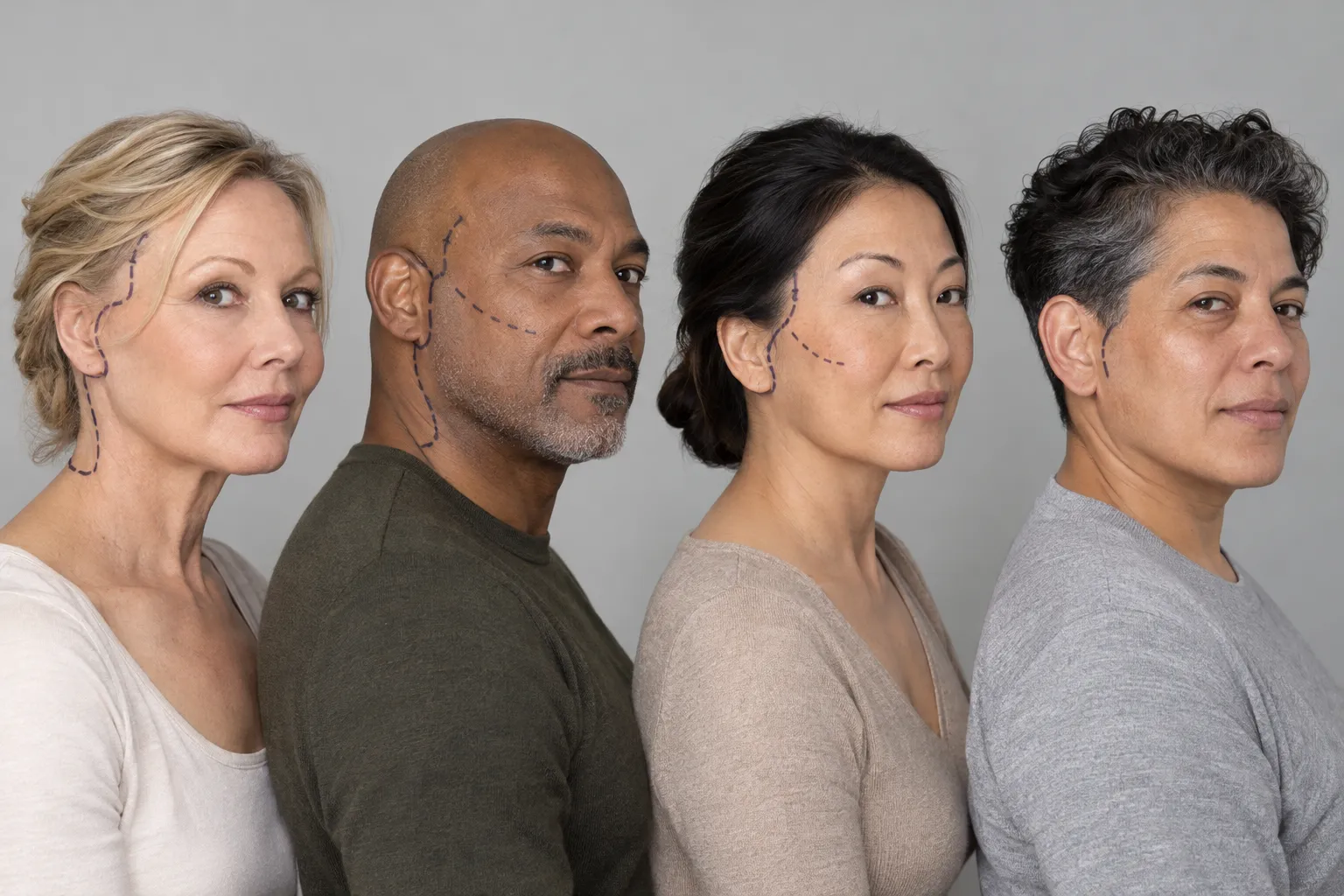
Facelift names can describe different dissection depths, degrees of ligament release, and extents of tissue repositioning. “Traditional facelift” is not a single standardized technique, so the label may mean different things across surgeons. Ask which tissues the surgeon plans to address and why, rather than choosing by procedure name alone. Natural-looking results depend on individualized planning and careful tissue handling; no technique guarantees a particular appearance or duration.
Side-by-Side Comparison: Depth, Release, Repositioning, and Results
| Approach | Typical focus | Key consideration |
|---|---|---|
| Deep plane facelift | Works beneath the SMAS and releases selected retaining ligaments to reposition a connected tissue layer. | More extensive dissection may be considered for certain midface and lower-face concerns; it is major surgery with meaningful risks and recovery demands. |
| Traditional facelift | May involve skin elevation with SMAS tightening, repositioning, or another SMAS-based method. | The term covers varied techniques. Clarify the planned tissue layer, extent, and goals with the surgeon. |
| Mini deep plane facelift | A more limited approach using deep plane principles in a narrower treatment area. | Its scope may not address broader facial changes; the name does not establish candidacy or expected results. |
| Mini facelift | Usually a less extensive lift focused on selected early signs of laxity. | May be insufficient when concerns extend beyond its treatment area. Ask how the proposed plan addresses your anatomy. |
Mini Deep Plane Facelift: Definition, Candidacy, and Limitations
A mini deep plane facelift generally refers to a more limited operation using a deeper tissue approach in a defined area. The label has no universally fixed meaning, so ask which ligaments and tissues would be addressed, how far treatment extends, and what concerns would remain. A focused change may be appropriate for some patients, but a shorter or smaller procedure is not automatically a better fit. A clinician must assess whether the treatment area matches the patient’s goals and facial anatomy. Learn about Dr. Albert’s Mini Facelift and how its scope is described.
Pros and Cons of the Deep Plane Approach
Potential advantages include repositioning deeper tissue rather than depending chiefly on skin tightening, which may help address certain patterns of midface and lower-face descent. Results are not permanent; longevity varies with aging, anatomy, and surgical plan. Trade-offs include a more involved operation, recovery, cost, and risks such as bleeding, infection, nerve injury, and prolonged swelling. A different facelift technique may better match a patient’s needs.
When weighing deep plane facelift pros and cons, ask the surgeon to explain the proposed dissection, expected limits, facelift alternatives, and reasons for recommending a particular approach. A technique label or photograph cannot establish the best choice; candidacy and outcomes require individualized clinical assessment.
Recovery Timeline, Scars, and What Results Look Like
Healing after a Deep Plane Facelift happens in stages, with timing that varies by surgical plan and individual healing. Swelling, bruising, tightness, and temporary changes in sensation may affect daily activities early on. Research findings indicate that many patients take about two weeks away from work, while bruising can remain for three to four weeks. These are general estimates, not a personal schedule. Follow-up visits and your surgeon’s instructions guide decisions about returning to work, exercise, and other activities.
Week-by-Week Recovery: Swelling, Bruising, Work, and Exercise
This timeline is a broad planning framework. Your surgeon should give you instructions based on your operation and healing, including when to resume specific activities. Do not use a general timeline to decide that a symptom is expected or an activity is safe for you.
| Approximate period | What recovery may involve | Planning consideration |
|---|---|---|
| First several days | Swelling, bruising, and a need for rest and assistance may affect routine tasks. | Arrange support and keep follow-up appointments as directed. |
| Around two weeks | Some patients plan to return to work, depending on healing and job demands. | Allow flexibility if visible bruising or swelling remains. |
| Weeks three to four | Bruising may persist for some patients as everyday activities gradually resume. | Ask the surgeon when to restart exercise and increase activity. |
| Following months | Swelling and incision appearance can continue to change during healing. | Attend follow-up visits and discuss concerns with your care team. |
Where Facelift Scars Are Placed and How They Heal
Facelift incisions are commonly placed around the ears; their position and extent depend on the procedure and patient anatomy. Incisions may extend into the hairline. Scars can differ in color, texture, and visibility, and take time to mature. A surgeon can explain planned incision locations and factors that may affect healing. No placement can guarantee imperceptible scars.
Scar Care and How to Read Before-and-After Photos
Follow your surgeon’s scar-care instructions rather than applying products or changing wound care on your own. Keep scheduled visits so the clinical team can assess healing and answer questions. When reviewing deep plane facelift before and after photos, look for patients with similar facial features and concerns, consistent lighting and angles, and images taken at a stated point in recovery. Ask whether swelling has had time to settle and discuss what the images can and cannot predict about your outcome.
Safety, Risks, and Choosing a Qualified Surgeon
A Deep Plane Facelift is major surgery, and no technique is lower-risk. The decision should account for your health, facial anatomy, goals, recovery needs, and possible complications. Ask the surgeon to explain the risks that apply to your proposed operation, how the care team works to reduce them, and what to do if a concern develops. A consultation can help you assess the surgeon’s training, facility, communication, and follow-up plan.
Realistic Risks: Nerve Injury, Hematoma, and How They Are Minimized
Potential complications include bleeding or hematoma, infection, facial nerve injury, changes in sensation, delayed healing, visible scarring, and prolonged swelling. A hematoma is a collection of blood beneath the skin and may require prompt medical attention. Facial nerve injury can affect movement; its degree and duration can vary. Complication rates differ across patients and procedures, so a general statistic cannot predict an individual’s risk. Ask how the surgeon plans to reduce risk, who will monitor you after surgery, and which symptoms require an urgent call or emergency care.
Why Board Certification and Facelift-Focused Training Matter
Board certification helps verify a surgeon’s formal qualifications, but it is only one part of selection. Confirm certification through the American Board of Plastic Surgery and check applicable state medical board records. The American Academy of Facial Plastic and Reconstructive Surgery (AAFPRS) advises patients to review a surgeon’s credentials, experience, and surgical setting when considering facial surgery. Dr. Mark Albert is certified by the American Board of Plastic Surgery and is a Fellow of the American College of Surgeons. He completed plastic surgery residency and chief residency at the University of Massachusetts Medical School and an aesthetic plastic surgery fellowship at Manhattan Eye, Ear, and Throat Hospital, where he is Program Director of the Aesthetic Plastic Surgery Fellowship. Learn more about Dr. Mark Albert’s training and credentials.
Your Consultation Checklist: Questions to Ask and Marketing Red Flags
Use the consultation to understand the proposed plan and whether you feel comfortable asking questions. Consider bringing a written list:
- What specific changes can this operation address, and what limitations should I expect?
- Why are you recommending this technique for my anatomy and goals?
- What are the material risks in my case, and how are complications managed?
- Where will surgery take place, who provides anesthesia, and who will see me during follow-up?
- What costs are included in the estimate, and who should I contact with a postoperative concern?
Be cautious of not assured results, pressure to decide quickly, unclear credentials, or answers that dismiss risks. Photographs can support discussion but cannot forecast your individual outcome. Candidacy, technique, anesthesia, recovery, risks, and outcomes require individualized clinical assessment.
How Much Does a Deep Plane Facelift Cost?

The total price depends on the surgeon’s fee, surgical facility, anesthesia, geographic location, and scope of the operation. The American Academy of Facial Plastic and Reconstructive Surgery (AAFPRS) reports that deep plane facelift costs typically range from $20,000 to $100,000 or more, with variation related to surgeon expertise, location, and complexity. This broad published range can help with initial budgeting, but does not establish a fee for a specific patient or practice. Request an itemized written estimate and confirm what is included before making financial decisions.
What’s Included: Surgeon Fee, Facility Fee, and Anesthesia
Ask the office to separate major components so you can understand the expected expense. The estimate should identify whether follow-up visits and routine postoperative care are included, and explain how additional care would be billed. Fees and arrangements vary by practice and surgical plan.
| Cost component | What to be clear |
|---|---|
| Surgeon fee | Which surgical services and planned follow-up visits the fee covers. |
| Facility fee | Whether the operating facility, supplies, and required monitoring are included. |
| Anesthesia | Who provides anesthesia and whether that fee is listed separately. |
Mini Deep Plane Cost vs. Full Deep Plane Cost
A more limited operation may have different fees from a broader facelift, but “mini deep plane” does not define a uniform surgical scope or price. Cost depends on the treatment area, operating time, facility, anesthesia, and surgeon’s fee. Ask for a written estimate tied to the specific plan rather than relying on a general online price. A lower quote alone does not show whether the procedure matches your goals or what services are included.
Financing, Insurance, and Getting an Accurate Quote
Facelift surgery is generally elective, so ask the practice about payment arrangements and verify financing terms directly with the provider. Do not assume insurance coverage; confirm benefits with your insurer if you have a coverage question. For an individualized estimate, request a consultation with Dr. Mark Albert. The proposed approach and total fees can be discussed after an in-person clinical assessment.
Frequently Asked Questions
What is a deep plane facelift and how is it performed?
A deep plane facelift is a surgical technique in which the surgeon works beneath the SMAS, a supportive tissue layer connected to facial muscles, and releases selected retaining ligaments so the SMAS and nearby fat can be repositioned as a connected layer. Incisions are generally placed around the ears and may extend into the hairline, and the surgical plan is individualized.
How does a deep plane facelift differ from a traditional facelift?
A deep plane facelift releases deeper facial attachments and repositions underlying tissue, while traditional facelift approaches may involve skin elevation with SMAS tightening or another SMAS-based method. Traditional facelift is not a single standardized technique, so ask which tissue layer the surgeon plans to address and why rather than choosing by name alone.
What are the pros and cons of a deep plane facelift?
Potential advantages include repositioning deeper facial tissue rather than depending chiefly on skin tightening, which may address certain patterns of midface and lower-face descent. Trade-offs include a more involved operation, recovery demands, cost, and risks such as bleeding, infection, nerve injury, and prolonged swelling. A different facelift technique may better match some patients' needs.
Is a deep plane facelift safe, and what are the risks?
A deep plane facelift is major surgery with meaningful risks, so it is not appropriate for every patient. Risks can include bleeding, infection, nerve injury, and prolonged swelling, and results vary from person to person. Candidacy, safety, and technique depend on anatomy, health, and goals, and require assessment by a qualified clinician.
Where are the scars located after a deep plane facelift?
Incisions for a deep plane facelift are generally placed around the ears and may extend into the hairline, allowing access to deeper tissue layers. Exact incision placement and resulting scars vary by surgical plan, so discuss expected incision locations and healing with your surgeon during a consultation.
What is a mini deep plane facelift?
A mini deep plane facelift generally refers to a more limited operation using deep plane principles in a narrower treatment area. The label has no universally fixed meaning, so ask which ligaments and tissues would be addressed, how far treatment extends, and what concerns would remain.
Who is a good candidate for a deep plane facelift?
Deep plane facelift candidacy cannot be determined from general descriptions, because facial structure, skin quality, health, and personal goals all matter. The technique may be considered for certain age-related changes in the midface and lower face, but a consultation with a qualified surgeon is needed to assess anatomy and potentially suitable options.

