

before and after photos of mini facelift
Before and after photos of mini facelift surgery can show the kinds of changes a targeted facelift may produce, but they cannot predict your result. The most useful images use consistent lighting, facial position, camera distance, and makeup disclosure, with the healing interval clearly identified. Treat them as educational examples. Not promises about appearance, recovery, or candidacy.
Key Takeaways
- Mini facelift before and after photos illustrate what a targeted lift can accomplish, yet no image can guarantee your individual surgical outcome.
- Trustworthy photo comparisons rely on standardized lighting, matched camera distance, and identical head positioning between the two images.
- Quality galleries disclose whether makeup was worn and state the exact amount of healing time between surgery and the photograph.
- Use these images to educate yourself about possible changes in the jawline and lower face, not to form expectations about your own recovery or candidacy.
- A personal consultation with a qualified plastic surgeon can help assess whether a mini facelift may fit your anatomy and aesthetic goals.
As the founder and chief surgeon of Albert Plastic Surgery, I encourage patients to study photographs alongside a discussion of facial anatomy, skin quality, tissue laxity, incision placement, and personal goals. Albert Plastic Surgery provides educational information about Facelift surgery. Candidacy, technique, recovery, risks, and expected outcomes require an individualized clinical assessment.
What Do Before and After Photos of a Mini Facelift Show?
These photographs show a patient’s appearance before surgery and at one or more points during healing. A mini facelift is a term used for a range of surgical plans that a surgeon may tailor to a patient's lower-face or jawline laxity after an in-person consultation. The term does not describe one standardized operation, so the area treated, tissue layer addressed, incision design, anesthesia, and recovery can differ among patients.
Useful documentation includes front, profile, and oblique views taken under comparable conditions. Facial expression, makeup, hair position, camera distance, shadows, swelling, bruising, and temporary skin tightness can change how an image appears. An early postoperative photograph can be difficult to interpret; ask the treating surgeon how to evaluate it. Recovery varies, so general time points cannot forecast your healing.
Look for changes that remain visible across several views, such as reduced jowling or a smoother jawline. Photos cannot show tenderness, numbness, scar maturation, anesthesia considerations, or surgical risk. They also cannot establish whether a particular approach suits you. A qualified plastic surgeon must assess your facial structure, medical history, skin elasticity, expectations, and degree of tissue descent in consultation.
Key insight: The value of a gallery depends less on dramatic contrast than on honest documentation. Ask when each image was taken, whether makeup or filters were used, and whether the patient consented to publication.
How Can Before and After Photos of a Mini Facelift Help?
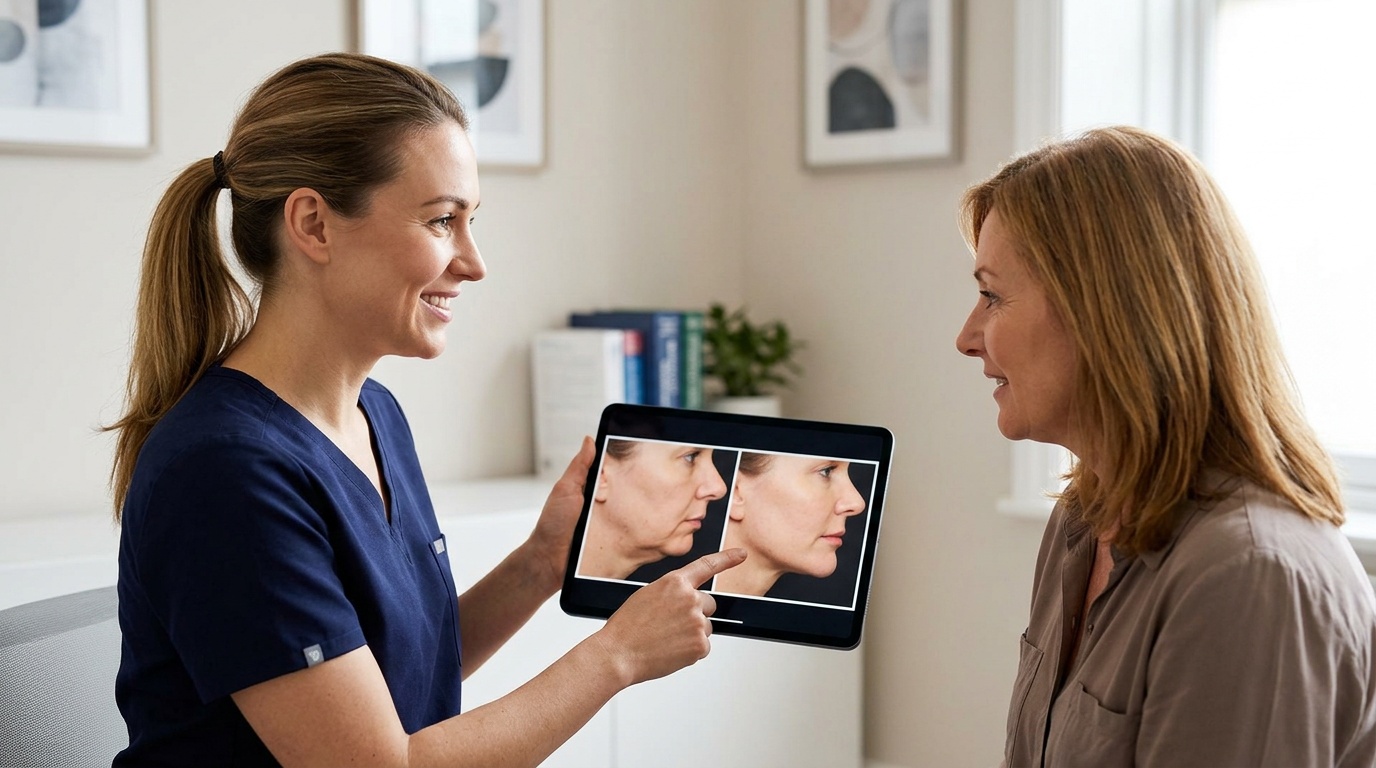
Photographs make an abstract consultation more concrete. They may show how a surgeon's facelift plan addressed the lower face and jawline in particular patients while also revealing what remained unchanged. A mini facelift is one approach within facelift surgery, not a treatment for every sign of facial aging, and improvement in one region does not mean that all laxity or neck concerns were treated.
A gallery can also help you prepare focused questions. Ask how closely a photographed patient’s skin elasticity, facial proportions, age, and tissue laxity compare with yours. Discuss the tissue layer treated, incision location, scar maturation, and timing of each image. This approach is more useful than searching for a photograph that promises a particular result.
Early postoperative images can be difficult to interpret; ask the treating surgeon how to evaluate them. These findings can occur during healing, but concerning symptoms require prompt contact with the surgical team. An early postoperative photograph may not represent the finished result, and personal recovery instructions must come from the treating surgeon.
Cost is a separate question from photographic quality. Mini facelift costs vary widely by surgical scope, anesthesia, facility charges, geographic location, surgeon experience, and follow-up care. Fees vary with surgical scope, anesthesia, facility charges, geographic location, surgeon experience, and follow-up care. Searches for “mini face lift cost near me” or “mini facelift near me” may provide general local information, but proximity alone does not establish qualifications or suitability.
Use photographs as one part of evaluating a surgeon’s communication, credentials, consent practices, and continuity of care. Look for matching views, unaltered documentation, an explanation of timing, and ethical patient consent. The goal is to understand a range of possible changes and discuss whether Facelift surgery aligns with your anatomy, health, and priorities.
How Should You Evaluate Before and After Photos of a Mini Facelift?
Begin with documentation quality rather than the degree of transformation. Look for front, profile, and oblique views taken with comparable lighting, camera distance, head position, and facial expression. The gallery should identify the healing interval and disclose makeup, filters, retouching, or hairstyle changes. Patient consent should also be clear. One person’s contour, scar pattern, or recovery is not a forecast for everyone.
Study whether the visible change remains consistent across several photographs. A comparison may show less jowling or a cleaner jawline while still revealing normal differences in skin texture and facial proportions. Early images can be difficult to interpret because swelling, bruising, temporary tightness, asymmetry, and dressings obscure the developing result. Ask whether later photographs are available and what the surgeon addressed. Makeup should not be the main source of apparent improvement.
| What to examine | Questions to ask during consultation |
|---|---|
| Image consistency | Were the photographs taken with similar lighting, angles, expression, and camera distance? |
| Healing timeline | How long after surgery was each image taken, and which changes may still reflect swelling? |
| Procedure scope | Which areas were treated, and what degree of laxity was present before surgery? |
| Patient similarity | How do the patient’s skin quality, facial structure, age, and tissue descent compare with mine? |
| Ethical presentation | Did the patient consent to publication, and are alterations or makeup clearly disclosed? |
Review cost separately from photographic appeal. A quoted mini facelift cost may include different combinations of surgical fees, anesthesia, facility charges, preoperative assessment, and follow-up visits. A search for “mini face lift cost near me” can provide local starting points, while “mini facelift near me” may identify nearby offices. Distance should not replace review of American Board of Plastic Surgery certification, facility privileges, facial surgery experience, informed consent, and access to the surgeon during recovery.
Bring selected images and written questions to a consultation with a qualified plastic surgeon. Ask which facelift approach may address your laxity, where incisions would be placed, what limitations remain, and which procedure-specific risks may apply to you. The Facelift page at Albert Plastic Surgery provides general education; a consultation is needed to assess your health, anatomy, expectations, and recovery needs.
Frequently Asked Questions
What is a mini facelift, and how does it differ from a full facelift?
A mini facelift is a surgical approach that a surgeon may recommend for limited laxity in the lower face, jowls, or jawline after evaluating the patient. The exact incision pattern, tissue layer treated, anesthesia plan, and recovery depend on the patient. A full facelift generally involves a broader surgical plan for more extensive facial aging. The name “mini” does not establish a standard operation or guarantee a shorter recovery. A consultation is needed to determine whether Facelift surgery fits your anatomy, health, and goals.
Who may be a candidate for a mini facelift?
Potential candidates may have early or moderate lower-face laxity, jowling, or reduced jawline definition and may maintain realistic expectations about improvement and healing. Suitability also depends on medical history, skin quality, facial structure, medications, smoking status, and the ability to follow postoperative instructions. Photographs alone cannot establish candidacy. A qualified plastic surgeon must perform an in-person assessment before recommending a technique.
How much does a mini facelift cost?
Your fee may reflect surgical scope, anesthesia, facility charges, geographic location, surgeon experience, preoperative assessment, and follow-up care. A search for “mini face lift cost near me” may provide general local information, but a personalized quote requires a consultation and a clearly explained treatment plan.
What should recovery look like after surgery?
Postoperative appearance changes over time; your treating surgeon can explain what to expect during healing. Some patients feel comfortable socializing at about two weeks, according to recovery information from Dr. Chasan, though individual timing varies. Early photographs can look unfamiliar and should not be treated as the final result. Contact the surgical team promptly about concerning pain, fever, drainage, sudden swelling, breathing difficulty, or any symptom that seems unusual. The Facelift service page offers general education, while personalized instructions come from your treating surgeon.
How can I identify misleading before-and-after images?
Look for matching angles, lighting, facial expression, camera distance, and image quality. Ask whether makeup, filters, retouching, hair styling, or lighting changes affect the comparison. Request the postoperative timing and clarification about consent. A credible gallery should show healing honestly, including early swelling when relevant, rather than presenting one carefully selected image as a promise of your outcome.