
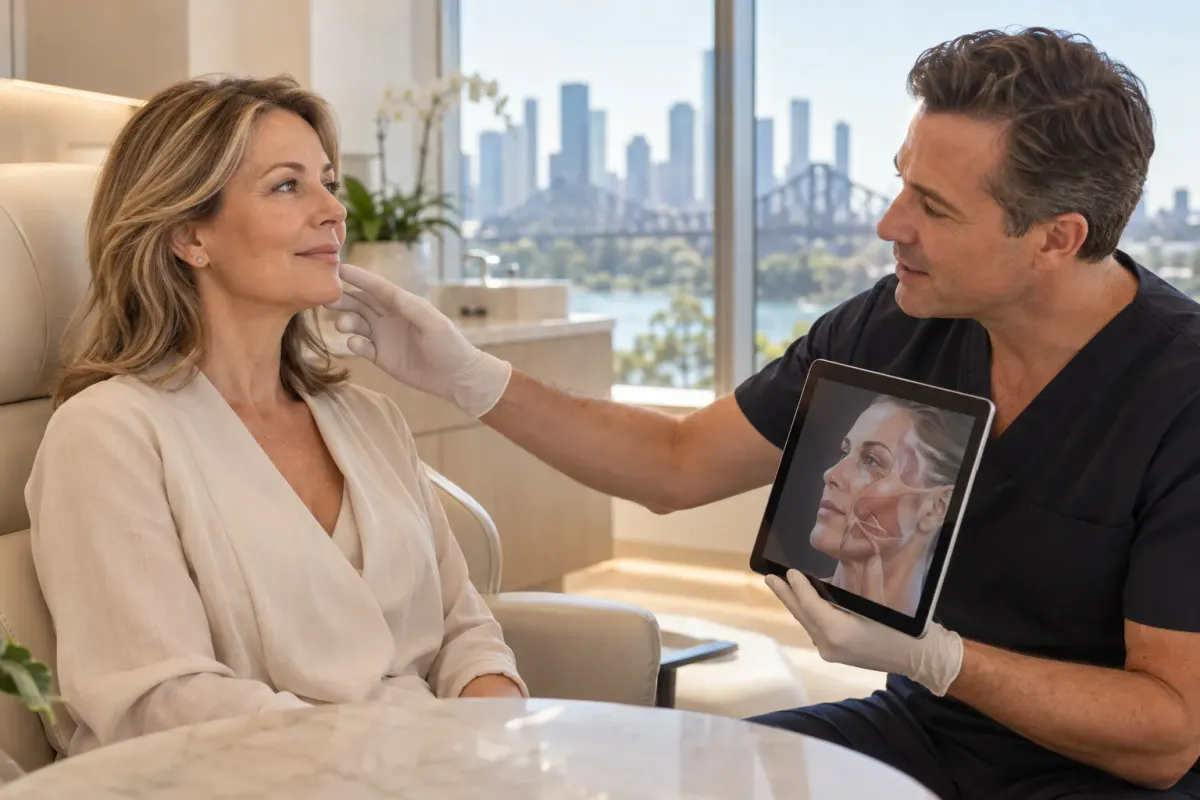
deep plane facelift brisbane
For anyone researching a deep plane facelift brisbane, the central question is what the surgeon releases and repositions beneath the skin. A Deep Plane Facelift works below the superficial musculoaponeurotic system (SMAS), freeing selected facial attachments so deeper tissues can be repositioned together. Suitability requires an individualized assessment by a qualified surgeon.
Key Takeaways
- The defining feature of a deep plane facelift is the layer it works in, releasing structures beneath the SMAS so the deeper facial tissues can be lifted as one unit.
- Because deeper repositioning places less tension on the skin, many patients appreciate the natural-looking result this approach can offer.
- The technique repositions deeper facial tissues rather than simply tightening skin, which is why the results tend to age more gracefully.
- Detailed surgical anatomy knowledge is essential in this approach, so surgeon training and experience deserve careful attention during your research.
- Whether this technique suits you depends on your facial anatomy and goals, which only a qualified surgeon can assess during an in-person consultation.
This guide explains the anatomy, how the technique differs from other facelift approaches, and what a consultation may involve. Dr. Mark Albert is certified by the American Board of Plastic Surgery and is a Fellow of the American College of Surgeons. His practice is in New York City, so readers in Brisbane should independently confirm a local surgeon’s qualifications and care arrangements.
What Is a Deep Plane Facelift and How Does the Surgery Work?
A deep plane facelift releases certain retaining ligaments and works beneath the SMAS, a fibrous layer connected to facial muscles and overlying skin. This allows the surgeon to reposition a connected layer of deeper facial tissue rather than relying on skin pull alone. Incisions, tissue release, and the extent of lifting vary according to anatomy and the agreed surgical plan.
The Anatomy Behind the Procedure: SMAS, Retaining Ligaments and the Deep Plane
The SMAS supports soft tissue across the lower face and connects with structures that move during facial expression. Retaining ligaments anchor facial tissues to deeper structures. With age, changes in skin elasticity, fat position, and tissue support can contribute to cheek descent and jowling. In a deep plane approach, dissection passes beneath the SMAS, with selected ligament release intended to allow movement of the deeper tissue layer.
Why Sub-SMAS Release Allows Vertical, Composite Repositioning
By mobilizing deeper tissue along with the skin, the surgeon can reposition a composite layer in a more vertical direction. The aim is to address descent without depending only on tension at the skin edges. The release and direction of movement depend on anatomy and the surgical plan. No technique guarantees a particular appearance; proportionate results depend on careful planning, tissue handling, and realistic goals.
Deep Plane vs. SMAS vs. Mini Facelift vs. Non-Surgical Options
These approaches differ in the tissue addressed, incision pattern, and extent of surgery. A SMAS facelift modifies or repositions the SMAS, though methods vary. A mini facelift generally involves a more limited surgical plan. Non-surgical options do not surgically release facial ligaments or reposition the same deeper tissues. Terms and techniques can vary among surgeons.
| Approach | General focus | Key distinction |
|---|---|---|
| Deep plane | Deeper facial tissue and selected retaining ligaments | Works beneath the SMAS to mobilize a composite layer |
| SMAS facelift | SMAS layer | Specific modification varies by technique |
| Mini facelift | More limited surgical correction | Extent and areas addressed vary |
| Non-surgical options | Do not surgically reposition deeper facial tissues | Different scope from facelift surgery |
Who Is a Candidate and What Does a Brisbane Consultation Involve?

No single age or facial feature establishes candidacy for a deep plane facelift brisbane. A consultation considers whether surgery fits a person’s facial anatomy, health, expectations, and priorities. General information cannot determine individual suitability; that requires an in-person assessment with a qualified clinician.
Candidacy Factors: Midface Descent, Jowling, Neck Laxity and Skin Quality
A surgeon may consider cheek position, jowl formation, skin elasticity, facial structure, and visible laxity. Neck concerns may also be discussed if they are part of the patient’s goals, though the plan depends on examination and surgical scope. Health history, healing factors, and achievable expectations matter too. A photograph or online description cannot replace an examination.
What a Surgeon Assesses at Consultation: Photos, Goals and Medical History
Expect to discuss the changes you notice and the outcome you hope to achieve. The surgeon may examine facial movement, skin and tissue position, and facial proportions, and take clinical photographs for planning. Medical history, current medications, prior surgery, allergies, and smoking status inform risk assessment. Ask how the proposed technique addresses your concerns, what it may not change, and how follow-up care is organized.
Preparing for Surgery: Medications, Smoking, Clearance and Anesthesia Setting
Preparation is individualized. Give the clinical team a complete medication and supplement list, and do not stop prescribed medication unless the responsible clinician directs you. Smoking is associated with wound-healing complications, so discuss cessation timing with the surgeon before scheduling. The team can explain any needed medical clearance, the anesthesia plan, and the facility; these decisions depend on health, procedure details, and clinician judgment.
- Describe your goals and the facial changes you want addressed.
- Bring an accurate medical, medication, and smoking history.
- Ask about technique, limitations, recovery support, and follow-up.
- Confirm who to contact with concerns before and after surgery.
When comparing a deep plane facelift brisbane with other surgical approaches, ask why the surgeon recommends a particular plan, not just what the technique is called. Dr. Albert’s Deep Plane Facelift page describes his New York City service; it does not establish local availability or suitability in Brisbane.
Verifying Surgeon Credentials in Brisbane: AHPRA, FRACS and US Board Certification
When researching a deep plane facelift in Brisbane, confirm the surgeon has specialist plastic surgery registration, then assess their training and facelift experience. Registration, memberships, and consultation address different questions: whether a practitioner is listed as a specialist, their professional qualifications, and whether their approach fits your needs. Credential checks are a starting point, not a guarantee of results or a substitute for discussing risks, technique, and follow-up.
How to Confirm a Genuine Specialist Plastic Surgeon in Australia
The Australian Health Practitioner Regulation Agency (AHPRA) maintains a public register where you can check registration and any listed specialist registration. Search the surgeon’s name and confirm details against the Specialist Register rather than relying only on a clinic biography or advertising. The Royal Australasian College of Surgeons (RACS) identifies FRACS as Fellowship of the Royal Australasian College of Surgeons. Ask the surgeon to explain their specialist training and experience with facelift operations, including the deep plane approach.
What FRACS, ASPS and ASAPS Membership Mean for Facelift Patients
FRACS is a fellowship qualification; professional society membership is a separate indicator of affiliation. In Australia, ASPS refers to the Australian Society of Plastic Surgeons, and ASAPS refers to the Australasian Society of Aesthetic Plastic Surgeons. Society membership may offer access to professional education and standards, but does not establish a surgeon’s suitability for an individual patient. Confirm qualifications through the relevant official registry, then ask about training, technique, anesthesia, facility, and follow-up.
Comparing on Equal Terms: Dr. Mark Albert and US Board-Certified Standards
Dr. Mark Albert is certified by the American Board of Plastic Surgery and is a Fellow of the American College of Surgeons, indicated by FACS. These are US credentials, not Australian registration or FRACS, and do not establish local Brisbane practice. The American Board of Plastic Surgery is the US certifying board for plastic surgeons. Compare credentials within each country’s system and verify them with the issuing body. Dr. Albert practices in New York City; his profile provides further information about his training and credentials. Albert Plastic Surgery maintains a dedicated service page for Deep Plane Facelift.
| Credential or record | What it helps verify | What to check |
|---|---|---|
| AHPRA Specialist Register | Australian registration and specialist listing | Exact name and registration details |
| FRACS | Fellowship of RACS | Qualification and relevant specialist training |
| ASPS or ASAPS membership | Professional society affiliation | Membership does not replace registry checks |
| American Board of Plastic Surgery certification | US board certification | Verify directly with the certifying board |
Recovery Timeline and Risks: What to Expect Week by Week
Recovery after a Deep Plane Facelift varies with the extent of surgery, individual healing, and the surgeon’s instructions. Swelling, bruising, tightness, and temporary changes in sensation can occur; early appearance is not a reliable guide to the settled result. Use the schedule below as a broad discussion framework, not a personal forecast. Your team should explain activity limits, follow-up visits, and how to reach them with concerns.
Recovery Milestones: From Swelling and Bruising to Return to Work and Social Activity
In the first days, rest and follow your team’s care instructions. During early recovery, swelling and bruising may be noticeable; resume work, exercise, or social plans only when your surgeon advises that your progress supports it. Over subsequent weeks, visible bruising and swelling often settle, while subtle swelling or tightness may take longer. Timing differs by patient and job demands, so arrange flexibility rather than committing to a fixed return date.
| Recovery phase | Possible experience | Planning point |
|---|---|---|
| First days | Swelling, bruising, tightness, and need for rest | Follow the surgeon’s instructions and attend scheduled follow-up |
| Early weeks | Bruising and swelling may remain visible as healing progresses | Confirm timing for work and everyday activities with the care team |
| Later healing | Residual swelling or changes in sensation may take time to settle | Discuss ongoing changes at follow-up rather than judging prematurely |
Understanding Risks, Including Facial Nerve Considerations
Facelift surgery carries risks, including bleeding, infection, scarring, delayed wound healing, skin-healing problems, changes in sensation, and anesthesia-related complications. Facial nerve branches, including the temporal, zygomatic, and marginal mandibular branches, are considered during planning; injury can affect facial movement and may be temporary or lasting. Risk varies with anatomy, technique, and patient-specific factors. Smoking is a recognized risk factor for wound-healing complications and skin slough, so discuss cessation with the surgeon before surgery. Seek urgent medical assessment for sudden difficulty breathing, chest pain, or other severe symptoms.
When Natural-Looking Results Depend on Technique and Surgical Planning
A natural-looking outcome depends on more than the operation’s name. Assessment of facial proportions, tissue movement, skin quality, incision placement, and the amount and direction of repositioning informs the plan. Excessive tension on skin can contribute to an unnatural appearance; appropriate planning aims to respect the patient’s features. No technique guarantees a specific look. Candidacy, recovery, risks, and expected outcomes require individualized assessment with a qualified surgeon.
Deep Plane Facelift Cost in Brisbane and Questions to Ask Before Booking

When budgeting for a deep plane facelift brisbane, consider the quoted fee alongside the surgeon’s qualifications, planned operation, and available aftercare. Australian private pricing is commonly cited at approximately AUD $20,000 to $35,000 or more, depending on complexity. This is a broad guide, not a confirmed Brisbane quote: fees and inclusions vary, and only a clinic can explain its current charges. The Deep Plane Facelift page describes Dr. Mark Albert’s New York City service, not local Brisbane pricing.
What a Brisbane Quote Should Include: Surgeon, Anesthesia, Facility and Follow-Up
Ask for an itemized written estimate showing what the total covers and which costs may be billed separately. A fee may include the surgeon’s professional charge, anesthesia, operating facility, and scheduled follow-up, but inclusions differ. Clarify whether preoperative assessments, after-hours support, medications, or additional visits are included, and how unexpected changes in care would be handled. Compare estimates only when the proposed procedure and care arrangements are equivalent.
| Cost component | What to confirm |
|---|---|
| Surgeon’s fee | Which operation and planned surgical work the fee covers |
| Anesthesia | Whether anesthesia services and assessment are included |
| Facility | Operating location and facility charges included in the estimate |
| Follow-up and support | Scheduled visits, contact arrangements, and fees for additional care |
What Medicare and Private Insurance Do and Do Not Cover in Australia
Do not assume Medicare or private health insurance will pay for a facelift undertaken for cosmetic reasons. Coverage depends on the procedure, applicable rules, policy, and circumstances of treatment. Ask the clinic whether it considers any Medicare item relevant, then verify eligibility directly with Medicare and your insurer. Request written confirmation of any expected rebate, excess, exclusions, or out-of-pocket costs. A quoted surgical fee is not evidence that a benefit will be paid.
Pre-Consultation Question Checklist for Any Clinic
Bring questions about how the proposed technique relates to your goals, qualifications, risk planning, and total cost. Clear answers should explain the recommendation and care pathway without pressure to book.
- What specific tissues do you plan to reposition, and why does this approach fit my concerns?
- Can I verify your specialist registration and relevant facelift training?
- Who provides anesthesia, and where will the operation take place?
- What risks and limitations are relevant to my health and surgical plan?
- What does the written estimate include, and what might be billed separately?
- Who will manage follow-up, and whom should I contact if a concern develops?
Review the answers and estimate before deciding. Candidacy, technique, recovery, risks, and outcomes require individualized clinical assessment. To discuss his New York City practice and Deep Plane Facelift approach, you may request a consultation with Dr. Mark Albert; Brisbane patients should arrange local assessment and confirm local care arrangements independently.
Frequently Asked Questions
How much does a deep plane facelift typically cost in Australia?
Deep plane facelift costs in Australia vary widely by surgeon, facility, anesthesia, and surgical plan, and published price ranges cannot predict an individual quote. Because this guide is educational, suitability and cost require an in-person consultation with a qualified local surgeon. Ask any surgeon you consult for a detailed, written breakdown of fees and what follow-up care is included.
What is the downside of a deep plane facelift?
The main downsides of a deep plane facelift are that it is a more extensive surgical procedure with associated risks such as bleeding, infection, nerve injury, scarring, and prolonged swelling, and recovery takes time. Results vary by patient, no technique guarantees a particular outcome, and candidacy depends on health, anatomy, and expectations confirmed at consultation.
How is a deep plane facelift different from a SMAS facelift?
A deep plane facelift works beneath the SMAS, releasing selected retaining ligaments so a connected layer of deeper facial tissue can be repositioned in a more vertical direction. A SMAS facelift modifies or repositions the SMAS layer, though specific methods vary among surgeons. The right approach depends on your anatomy and goals assessed at consultation.
Who is a good candidate for a deep plane facelift?
Candidacy for a deep plane facelift depends on individual factors such as midface descent, jowling, skin quality, overall health, healing capacity, and realistic expectations rather than any single age or feature. Only an in-person assessment by a qualified surgeon can determine suitability. Photographs or online descriptions cannot replace a clinical examination.
How do I verify a surgeon's qualifications for a facelift in Brisbane?
To verify a Brisbane surgeon's qualifications, confirm their specialist plastic surgery registration on the AHPRA register and separately verify any FRACS qualification, and review their training and facelift experience. Registration, memberships, and consultation quality answer different questions, so ask each surgeon directly about credentials, technique, and follow-up care arrangements.
What should I prepare before facelift surgery?
Facelift preparation typically includes providing a complete medication and supplement list, not stopping any prescribed medication unless directed by the responsible clinician, and discussing smoking cessation because smoking is associated with wound-healing complications. Your surgical team will also explain any medical clearance needed, the anesthesia plan, and the facility based on your health and procedure details.
What happens at a deep plane facelift consultation?
A deep plane facelift consultation usually includes discussing your goals, an examination of facial movement, skin and tissue position, clinical photographs, and a review of your medical history, medications, prior surgery, allergies, and smoking status. Ask how the proposed technique addresses your concerns, what it may not change, and how follow-up care is organized.

