

facelift
A Facelift repositions deeper facial tissues and removes carefully planned excess skin to soften jowls and loose skin along the lower face and neck. The right approach depends on anatomy, skin quality, goals, and a surgeon’s assessment, not the name of a technique alone.
Key Takeaways
- A facelift restores a more youthful contour by lifting the deeper structures of the face, which goes beyond simply trimming loose skin.
- Mini and deep plane techniques each serve different anatomy and goals, so the best option comes from a personalized surgical evaluation.
- Skin quality, the degree of jowling, and the condition of the neck all influence which type of facelift will deliver the most natural result.
- Choosing a board-certified surgeon with proven facelift experience matters more than the technique name on the procedure list.
- Results can last many years when the underlying tissue is repositioned properly and supported with healthy skin care habits.
Dr. Mark Albert is a board-certified plastic surgeon and Fellow of the American College of Surgeons. His approach begins with an individual evaluation: some people may benefit from a limited lift, others may need a broader operation, and some may not be ready for surgery.
What a Facelift Actually Does: Anatomy, SMAS Lifting, and Natural-Looking Results
A surgical lift addresses jowls, loose skin, and softening around the jawline by adjusting underlying support and redraping skin. It does not stop aging or change every facial feature. Understanding the anatomy and limits of surgery helps patients judge whether a proposed plan matches their concerns.
Why a Modern Facelift Lifts More Than Skin: The Role of the SMAS Layer
The SMAS, or superficial musculoaponeurotic system, is a layer of connective tissue and muscle covering the lower face. With age, support in this layer and the overlying skin changes, contributing to jowling and reduced jawline definition. A surgeon may reposition the SMAS and manage skin separately rather than relying on skin tension alone. The plan depends on facial structure, tissue laxity, and the degree of change sought. Pulling skin too tightly is not a substitute for appropriate support.
Facelift Terminology Decoded: Rhytidectomy, SMAS Lift, Deep Plane, and Lower Face Lift
Rhytidectomy is the medical term for a surgical lift of facial tissues. SMAS lift describes an approach that addresses the SMAS layer; deep plane refers to a technique that releases and repositions deeper tissues as a connected unit. “Lower face lift” generally describes the area treated, not one universally defined operation. Terms such as mini and MACS are also used differently across practices, so ask the surgeon to explain the planned tissue work, incision placement, and expected area of change. The word “lift” alone does not specify the operation.
What a Facelift Can and Cannot Fix
Surgery may improve laxity and contour in the lower face and, depending on the plan, the neck. It cannot stop future aging, guarantee a particular appearance, or remove every line or skin-texture change. Results vary with skin elasticity, facial proportions, healing, and tissue changes. A consultation should cover realistic goals, limitations, recovery, and material risks, including bleeding, infection, scarring, nerve injury, and the possibility of revision.
Before-and-After Photos: How to Read Them for Natural, Not Stretched, Results
Review photographs taken at consistent angles, lighting, distance, and expression. Look for a clearer jawline and rested appearance, not simply tighter skin. Check whether the hairline and earlobe appear natural and whether the person still looks like themselves. Ask how long after surgery each image was taken and whether it reflects a concern similar to yours. Photos illustrate possibilities, but cannot predict an individual outcome.
Mini Facelift vs. Deep Plane vs. Full Facelift (and Nanolift™): Which Approach Fits Your Anatomy?
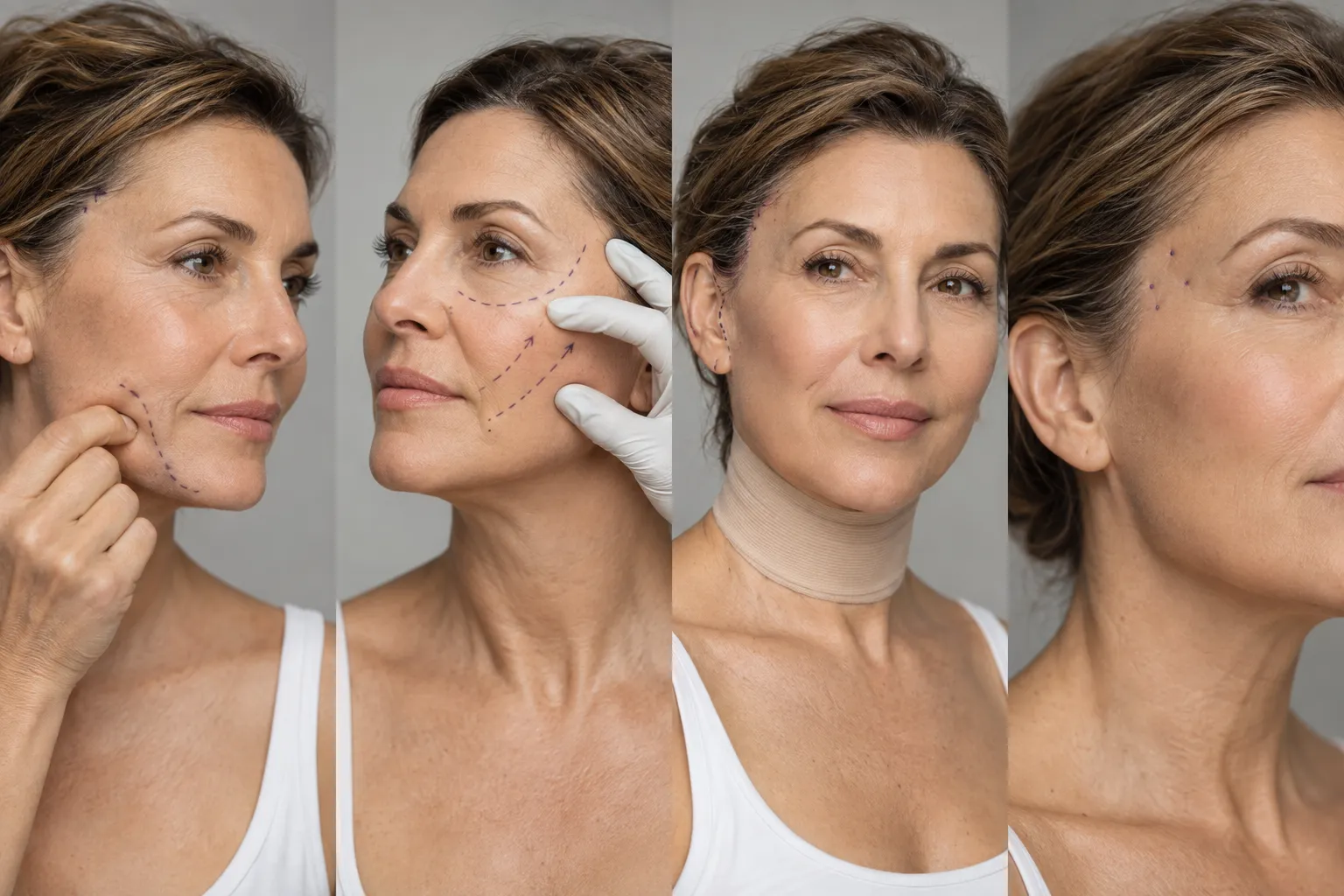
These options differ in incision extent, tissue-release depth, and areas addressed. A limited operation may suit early lower-face laxity, while pronounced jowls or broader skin changes may call for a more extensive plan. Dr. Albert evaluates facial anatomy and goals before recommending an approach. Cost, longevity, downtime, and candidacy vary, so a consultation is needed to discuss individual factors.
Mini Facelift: Who It Suits and What It Achieves
A mini lift typically uses more limited incisions and focuses on mild to moderate laxity, often around the lower face. It may suit localized concerns and limited skin excess, but a smaller scope does not make it right for everyone or mean recovery is negligible. If laxity extends beyond what the approach can address, the main concern may remain unresolved.
Deep Plane Facelift: How It Works and Why Surgeons Choose It for Heavier Jowls
A deep plane approach releases selected retaining ligaments and repositions deeper tissues with the skin. Surgeons may consider it when substantial jowling or lower-face descent calls for broader mobilization. It is not automatically preferable for every patient. The surgeon’s experience, facial anatomy, risk profile, and goals should guide the decision, not a technique label or promise of a particular result.
Full Facelift and Nanolift™: Completing the Technique Spectrum
A full operation generally addresses a wider area than a limited lift, with incision and tissue work tailored to the patient. Nanolift™ is a distinct option within Albert Plastic Surgery’s facial surgery program; its suitability and scope require an individual assessment. Ask what areas will be treated, what tissue will be repositioned, and what limitations remain after surgery.
Mini Facelift vs. Full Facelift: Incision Scope, Downtime, and Candidacy Differences
A mini approach usually involves a more limited incision pattern and treatment area; a full operation can address broader changes and involve more extensive tissue work. Recovery varies by operation and individual. The table offers broad context, not a quote or personal forecast.
| Approach | Typical scope | Cost context | Longevity context | Recovery and possible candidate |
|---|---|---|---|---|
| Mini | More limited lower-face correction | Varies with tissue, genetics, and aging. | May suit selected patients with localized, earlier laxity; recovery varies. | |
| Deep plane | Deeper tissue release and repositioning | Depends on surgeon, facility, anesthesia, and surgical scope. | Individual; no technique can stop aging. | May be considered for more pronounced descent; recovery is individualized. |
| Full | Broader facial treatment area | GoodRx reports a U.S. | Depends on patient factors and ongoing aging. | May suit broader laxity; recovery depends on the operation and healing. |
| Nanolift™ | Scope determined by the planned technique | Requires a personalized estimate. | Individual results vary. | Assessment is needed to determine candidacy and recovery expectations. |
Real Facelift and Mini Facelift Cost: A Transparent Price Breakdown for NYC and Beyond
The price of a Facelift depends on the planned operation, surgeon’s fee, anesthesia, facility costs, and details of care. Published estimates can help you prepare, but are not a personal quote. Ask for an itemized estimate based on the proposed technique and your medical needs, rather than relying on an advertised starting price.
What Goes Into the Price: Surgeon Fee, Anesthesia, and Facility Fee
The surgeon’s fee reflects the operation’s scope and professional services. Anesthesia and facility fees vary with the procedure and location. The estimate may include routine follow-up care. Confirm what is included, which expenses are billed separately, and how the practice handles care if an unexpected issue needs attention.
Mini Facelift Cost vs. Full and Deep Plane Facelift Cost: Typical Ranges
These figures reflect different markets and reporting methods, so they are broad context, not a not assured price or a direct comparison of identical operations.
NYC Facelift Prices vs. National Averages
New York City pricing may differ from national figures because surgeon fees, operating facilities, and anesthesia services vary by location. Treatment scope matters too: limited and more extensive procedures involve different planning and resources. Dr. Mark Albert’s Facelift service page describes care in New York City; a consultation is needed for an individual plan and estimate.
Add-Ons, Financing, and Questions to Ask About Total Cost
Ask whether the written estimate includes the surgeon, anesthesia, facility, follow-up visits, and planned services related to your care. If financing is available, review its terms and total repayment amount with the provider. Do not choose a procedure on price alone. A qualified clinician should explain the proposed operation, limitations, material risks, and costs for your specific plan.
| Cost component | What to confirm |
|---|---|
| Surgeon fee | Which planned surgical services are included? |
| Anesthesia | Is this listed separately, and what does the estimate cover? |
| Facility | Are operating-room and related facility charges included? |
| Follow-up | Which routine visits are part of the quoted total? |
How Long Does a Facelift Last? Honest Longevity Data and What Shortens or Extends Your Results
There is no single duration for every patient. A surgical lift resets visible appearance to a new baseline, but aging continues. Skin elasticity, genetics, weight changes, sun exposure, smoking, healing, and tissue laxity affect results over time. Ask your surgeon what is realistic for your anatomy and goals rather than treating a longevity estimate as a promise.
Longevity by Technique: Mini, Deep Plane, Full, and Non-Surgical Compared
Technique alone does not determine how long a result lasts. A mini lift treats a more limited area, while deeper or broader plans address different patterns of tissue descent. Published surgeon responses collected by RealSelf emphasize that skin quality, genetics, weight stability, and sun and smoke exposure influence longevity. Non-surgical approaches generally have shorter-lived effects; liquid-lift results are commonly described as lasting about six to nine months and may require repeat sessions.
Lifestyle Factors: Smoking, Sun, Weight Changes, and Skincare
Smoking can impair healing, and sun exposure contributes to skin aging. Significant weight changes may alter facial volume and contour, while genetics and natural skin elasticity affect how tissues change. Follow your surgical team’s recovery guidance and discuss nicotine use or health conditions before surgery. Skincare may support skin health, but cannot preserve a surgical result indefinitely or prevent normal aging.
Recovery Timeline and Post-Facelift Maintenance
Recovery depends on the operation, healing, and any complications. Your surgeon should provide instructions for activity, incision care, follow-up, and when to seek prompt medical advice. Swelling and bruising can affect appearance during healing, so early photographs do not represent a settled result.
- Before surgery: Review medical history, risks, medications, and recovery arrangements with your clinician.
- Early recovery: Follow the practice’s instructions and attend scheduled follow-up visits.
- Ongoing care: Maintain stable health habits and contact your surgical team about unexpected symptoms or concerns.
Facelift Without Surgery: Fillers, Thread Lifts, and Energy Treatments: Realistic Limits
A facelift without surgery is not equivalent to an operation. Non-surgical treatments may temporarily change facial contours or skin appearance, but do not surgically reposition descended tissues or remove excess skin. Effects, duration, and risks depend on the method and individual. A qualified clinician can help clarify whether a non-surgical approach addresses your concern or whether its limits make it a poor match.
Am I Too Young or Not Ready Yet? Honest Candidacy and How to Choose the Right Facelift Surgeon

Age alone does not determine whether surgery is appropriate. In your 40s, consider whether lower-face changes match what surgery can address, whether expectations are realistic, and whether health and timing support an operation. A consultation with Dr. Mark Albert can help you understand your options, including whether the Facelift is worth considering now or whether waiting makes more sense. Candidacy, technique, recovery, risks, and outcomes require individual clinical assessment.
The “Grey Area” of Your 40s: When a Mini Facelift Makes Sense and When It Doesn’t
Some people in their 40s have localized early laxity and goals that align with a limited operation. Others have concerns a smaller procedure may not address, or changes that do not yet warrant surgery. An examination helps the surgeon assess skin quality, tissue position, facial proportions, medical history, and your priorities. If a proposed plan seems too limited, ask what concerns would remain and why.
Why a Good Surgeon Tells You When You Don’t Need Surgery Yet
Ethical guidance includes explaining when surgery is unlikely to provide enough benefit to justify recovery and risks. If concerns are mild, expectations cannot be met by the proposed operation, or a health factor needs attention first, a surgeon should discuss those limits without pressure. Dr. Mark Albert is certified by the American Board of Plastic Surgery and is a Fellow of the American College of Surgeons. His role is to assess your goals and anatomy, explain tradeoffs, and support an informed decision, including waiting.
Step-by-Step Checklist: How to Find a Board-Certified Surgeon Near You
When searching for a “facelift near me,” focus on qualifications, communication, and the proposed plan, not a title or photo gallery alone.
- Verify certification by the American Board of Plastic Surgery.
- Ask how often the surgeon performs the specific operation and what training supports that experience.
- Review representative photos, asking about timing, similar anatomy, and differences between each patient’s plan.
- Confirm who provides follow-up care and whom to contact if a concern arises.
- Request a clear discussion of risks, limitations, recovery, and the full written estimate.
Dr. Mark Albert’s professional biography describes his training and credentials. Verify any surgeon’s qualifications through appropriate professional sources.
Questions to Ask at Your Consultation with Dr. Mark Albert
Bring your priorities and ask what the proposed plan is intended to change, what it will not change, and why it fits your anatomy. Clarify the surgeon’s role, anesthesia plan, expected recovery, material risks, and follow-up arrangements. Ask whether waiting is reasonable and what might change that recommendation. A useful consultation should leave you clear about choices and uncertainties, without requiring an immediate decision.
Reasons to consider surgery
- Your concerns align with changes the planned operation can address.
- You understand recovery, risks, and the limits of the expected result.
Reasons to pause
- Your expectations depend on a not assured or exact outcome.
- You feel pressured, or key questions about safety and follow-up remain unanswered.
Frequently Asked Questions
How much does a facelift cost?
Facelift cost varies widely based on the surgeon, facility, anesthesia, and surgical scope. A consultation is the only way to receive an individualized estimate.
What are the downsides of a facelift?
A facelift carries material risks including bleeding, infection, scarring, nerve injury, and the possibility of revision surgery. Surgery cannot stop future aging, guarantee a particular appearance, or remove every line or skin-texture change. Results vary with skin elasticity, facial proportions, and healing.
How long does a facelift usually last?
Facelift longevity varies with individual tissue quality, genetics, and ongoing aging. No technique can stop the aging process, so results change over time. During a consultation, a board-certified plastic surgeon can discuss what outcomes may realistically be expected for your anatomy.
What is a good age to get a facelift?
There is no single ideal age for a facelift, because candidacy depends on anatomy, skin quality, tissue laxity, and personal goals rather than a number. Some people with early laxity may suit a limited approach, while others may benefit from broader surgery or may not be ready for surgery at all.
What is the difference between a mini facelift and a full facelift?
A mini facelift uses more limited incisions and focuses on mild to moderate laxity, often around the lower face. A full facelift addresses a broader treatment area with more extensive tissue work. The right approach depends on your anatomy and goals, which Dr. Mark Albert evaluates individually.
What is a deep plane facelift and who is it for?
A deep plane facelift releases selected retaining ligaments and repositions deeper facial tissues together with the skin. Surgeons may consider it when substantial jowling or lower-face descent calls for broader mobilization, but it is not automatically preferable for every patient. Anatomy, goals, and risk profile should guide the decision.
What should I look for in facelift before-and-after photos?
Look for photos taken at consistent angles, lighting, distance, and expression, showing a clearer jawline and rested appearance rather than simply tighter skin. Check that the hairline and earlobe look natural and that the person still resembles themselves. Ask how long after surgery each image was taken.