
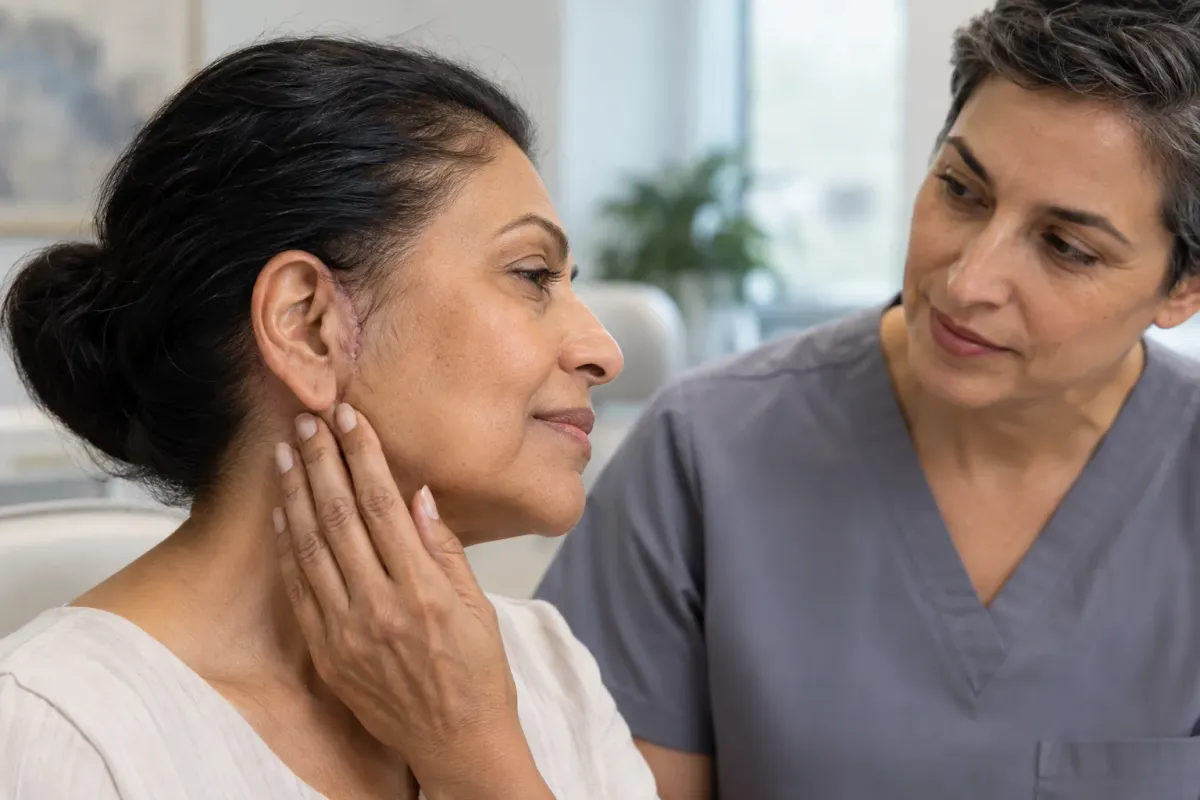
facelift scar care for patients with a history of keloids
A history of keloids does not automatically rule out a Facelift, but it changes the planning conversation. Scar care starts with an honest account of previous scars and an individualized assessment of where incisions would heal.
Key Takeaways
- A history of keloid formation should be disclosed in full during your facelift consultation, including any scars from prior surgery, injuries, or piercings.
- Incision placement and technique can be planned around areas of the scalp, face, and ears where thickened scarring is more likely to develop.
- Early scar management after a facelift may include monitoring, silicone-based care, and other measures your surgeon tailors to your healing history.
- Keloid-prone patients typically benefit from closer follow-up during recovery so any abnormal scarring can be addressed promptly.
- Candidacy for facelift surgery with keloid history varies by patient and requires an in-person evaluation with a qualified plastic surgeon.
Dr. Mark Albert is certified by the American Board of Plastic Surgery and is a Fellow of the American College of Surgeons. His training and facelift practice inform careful discussion of incision placement, closure, and scar risk, without making any individual outcome predictable. A consultation with a qualified clinician is needed to assess candidacy and options.
Can You Get a Facelift if You Have a History of Keloids? The Short Answer
Some people with a keloid history may be candidates for facelift surgery; others may face enough scarring risk that surgery is not advisable. The decision depends on the pattern and severity of prior scars, their locations, personal and family history, and individual health factors. Keloids can extend beyond the original wound and continue growing. No article can determine your personal risk or whether surgery is appropriate.
Why Keloid History Changes the Conversation Before Surgery
A surgeon needs to know how your skin has healed after major operations and smaller injuries. Mention raised scars after ear or body piercings, acne, burns, vaccinations, mole removals, or other cuts, along with any family history. Describe when a scar appeared, whether it spread beyond the original injury, whether it itched or hurt, and what treatment it received. If available, bring records or photographs. This history guides discussion of risk and incision planning, but cannot eliminate uncertainty.
How to Tell Your Surgeon About Past Keloids (and What a Good Surgeon Asks in Return)
Be direct about every raised scar, including one that was treated or has since flattened. A careful consultation explores the scar’s location, growth, symptoms, timing, treatment, and response, along with healing after surgery or injury. Ask how your history could affect incision placement, closure, follow-up, and a plan if a scar thickens. Facelift technique, recovery, risks, and outcomes require individualized clinical assessment. Scar management may also involve a dermatologist when appropriate.
Hypertrophic Scar vs. Keloid: Why the Distinction Changes Your Care Plan
A raised scar is not automatically a keloid. Cleveland Clinic describes keloids as scars that grow beyond the original wound boundary; hypertrophic scars remain within it and may become less prominent over time. Appearance alone can be misleading, so a clinician should assess the history and scar rather than relying on self-diagnosis.
| Feature | Keloid | Hypertrophic scar |
|---|---|---|
| Growth pattern | May extend beyond the original injury | Stays within the wound’s boundary |
| Course | Can keep growing | May regress over time |
| Why it matters | Signals a history that needs careful surgical discussion | Still relevant, but differs in behavior and assessment |
How Keloid-Prone Incision Planning Differs: Where Facelift Scars Go and Why Placement Matters
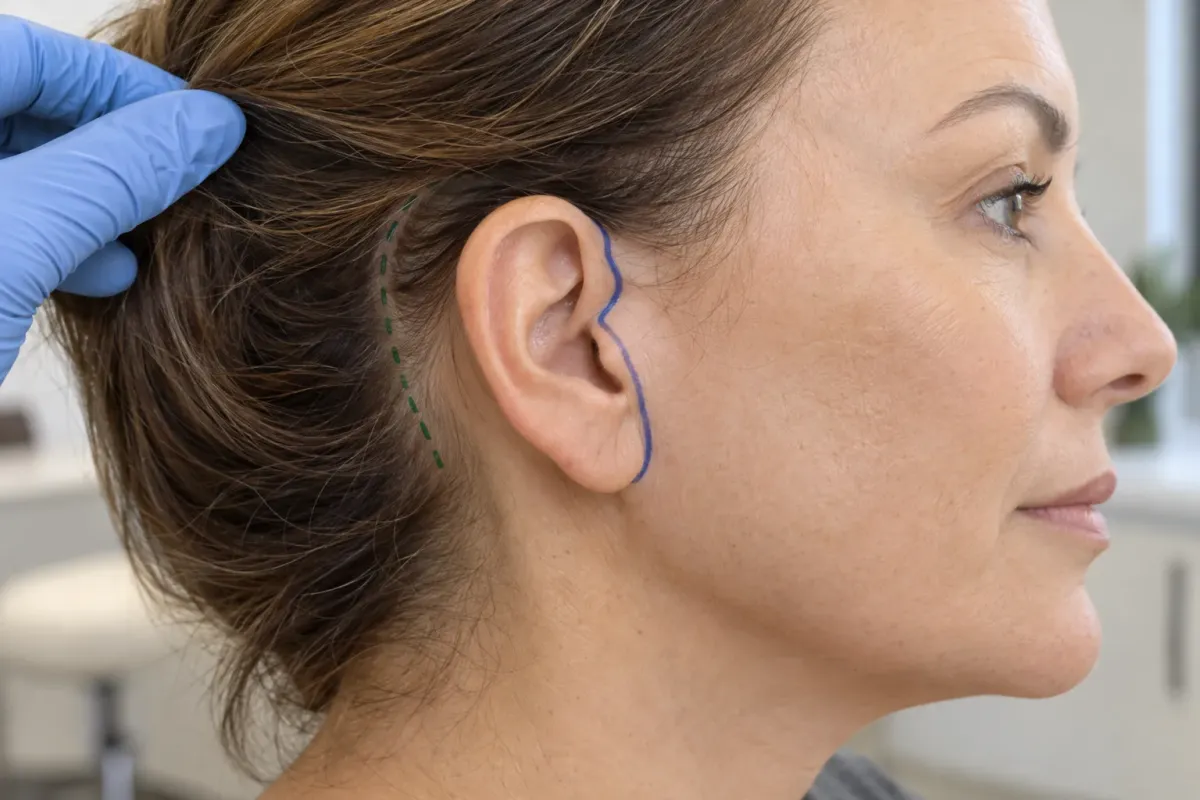
What Typical Facelift Incisions Look Like (and How Planning Shifts for Keloid-Prone Patients)
Facelift incisions are commonly placed around the ear, with their exact course shaped by the technique, anatomy, and surgical plan. A keloid history may prompt closer attention to scar-prone areas, incision paths, and how closure tension is distributed. Planning balances access and healing with scar visibility and location; there is no single incision pattern for every patient. Ask your surgeon to explain the proposed locations on your anatomy and how your prior scars inform the plan.
Why Earlobes and the Postauricular Crease Are the Highest-Risk Zones
The ear and the crease behind it deserve particular attention because they are part of common facelift incision paths and can be exposed to movement, pressure, and friction. A published case report in Plastic and Reconstructive Surgery Global Open describes periauricular keloids along facelift scars in a patient with repeated mechanical stretch and friction from a motorcycle helmet. This report illustrates a possible concern, not a prediction for every patient. Discuss regular sources of rubbing or pressure, including helmet straps, during preoperative planning.
Tension, Layered Closure, and the Truth About 'Scarless Facelift' Marketing
How skin edges are brought together matters: a layered closure can help distribute tension beneath the skin rather than placing all strain on the surface. It cannot guarantee a flat or inconspicuous scar, especially for someone prone to keloids. A facelift requires incisions, so “scarless facelift” should not be taken literally. The goal is to plan and place scars thoughtfully, not promise that they will be invisible. Dr. Albert’s Facelift information provides a starting point; a consultation is needed to discuss how an individual scar history may affect the plan.
A Week-by-Week Keloid-Prone Facelift Scar Care Calendar: From Suture Removal to 12 Months
Facelift scar care for patients with a history of keloids requires a plan that follows the incision as it heals, with instructions tailored to the operation and the individual. This calendar is a general guide, not a substitute for your surgeon’s directions. Keep scheduled follow-ups, and contact your care team if an incision opens, becomes increasingly painful, or shows signs of infection. Do not start scar treatments until the incision is closed and your clinician confirms they are appropriate.
Weeks 1-6: Protecting the Incision While It Closes
Early care centers on clean, protected incisions and avoiding unnecessary pulling or rubbing. Follow your surgeon’s wound-care instructions, including guidance on washing, dressings, and suture removal. Avoid applying silicone, ointments, or adhesive tape to an open or draining incision unless your clinician specifically instructs you to do so. A healing incision may look pink or feel firm; its appearance alone cannot determine whether a raised scar is developing.
| Time after surgery | General focus | What to discuss with your care team |
|---|---|---|
| Weeks 1-2 | Protect the incision and follow wound-care directions. | Changes in drainage, redness, swelling, or discomfort. |
| Weeks 2-6 | Continue follow-up and limit rubbing or tension near the ear. | When the incision is sufficiently closed for scar care. |
| Weeks 6-12 | Watch for persistent thickening, itch, or growth. | Whether examination or early scar treatment is appropriate. |
| Months 3-12 | Maintain the agreed scar routine and follow-up schedule. | Any change in texture, symptoms, or scar boundaries. |
Weeks 6-12: Early Warning Signs a Scar Is Becoming Raised
Tell your surgeon about a scar that is progressively thickening, becoming firm or itchy, feeling tender, or extending beyond the incision line. A keloid can grow past the original wound boundary, while other raised scars behave differently; assessment belongs with a clinician, not a home checklist. Report a change promptly rather than waiting for a routine visit if the area is growing or symptoms are worsening.
Months 3-12: Silicone, Taping, Tension Avoidance, and Follow-Up Cadence
Once the incision is fully closed and the clinician approves, silicone gel or sheeting may be considered as part of scar care. Ask how to apply it, how long to use it, and whether tape is suitable for the skin near your ear. Reduce repeated friction and pressure: check where sunglasses rest, and avoid a helmet strap that rubs the incision. Keep follow-up visits at the interval your surgeon recommends, with dermatology input if appropriate.
The Emotional Side of Scar-Watching: Anxiety Is Common and Worth Mentioning
Close attention to a healing scar can bring worry, disappointment, or second-guessing, especially when changes are gradual. Tell your care team if concern is affecting sleep, mood, or daily activities. Photographs taken at consistent intervals, if your clinician recommends them, can help document change without repeated mirror-checking. Ask your clinician what support is available if you are finding the process difficult.
Treating a Raised Facelift Scar: Realistic Steroid Injection Rounds and Adjunct Options
A raised scar after a Facelift needs an examination to determine what it is and whether treatment is appropriate. There is no single approach for every keloid: location, size, depth, symptoms, and prior response all matter. Treatment may involve a dermatologist working with the surgeon, particularly when a scar is near the ear or continues to change. Each option has limitations, and outcomes vary.
Intralesional Corticosteroid Injections: Why One Round Is Usually Not the Plan
Intralesional corticosteroid injections are used to soften and flatten some raised scars, but treatment commonly involves a series of sessions rather than one visit. The number and spacing depend on the scar’s response and the clinician’s assessment. A larger or persistent keloid may need repeated treatment, and injections can have side effects, including changes in skin thickness or color. Ask what improvement would look like, when progress will be reviewed, and what alternatives would be considered if the scar does not respond.
Adjunct Therapies Compared: 5-FU With Steroid, Cryotherapy, Laser, Botulinum Toxin, Pressure, and When Radiation Is Considered
Mayo Clinic and Medscape describe several approaches used in keloid care, sometimes in combination. Their suitability for a facelift scar requires individualized assessment.
5-fluorouracil with steroid: May be considered by a clinician for selected raised scars. Cryotherapy: Freezing treatment may be considered, with skin color changes among possible concerns. Laser: May target scar redness or texture, but does not guarantee scar removal. Botulinum toxin: Has been reported as an adjunct, not a universal treatment. Pressure: May be considered where a suitable device can apply pressure safely. Radiation: In selected cases, specialists may coordinate it after surgical removal; it is not a routine measure for every scar. Excision alone can be followed by recurrence, so the treatment plan needs to address that risk.
When to Seek Treatment for a Spreading or Growing Scar
Contact your surgeon or dermatologist if a scar steadily enlarges, extends beyond the incision, becomes increasingly itchy or painful, or interferes with movement or daily comfort. Seek urgent medical care for rapidly worsening redness, warmth, drainage, fever, or severe pain, which may indicate a problem beyond scar growth. A clinician can assess the area and discuss whether treatment or closer follow-up is warranted. Facelift surgery and scar treatment decisions require individualized medical advice.
Which Scar Products Are Worth Buying, and Which Are a Waste of Money?
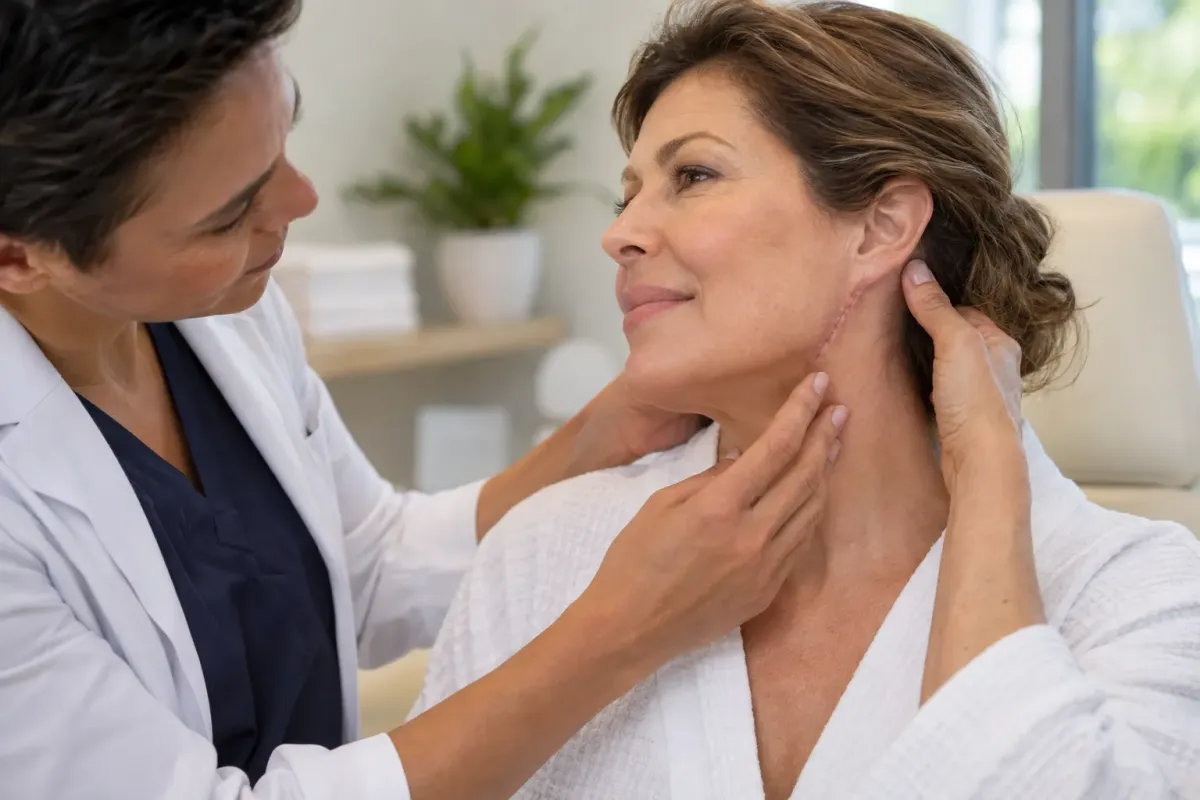
For a healing Facelift incision, the most useful purchase is often a simple silicone product, used only after the skin has closed and your clinician approves. Many scar creams and specialty oils have limited evidence for preventing or flattening keloids. A product cannot replace follow-up or treatment if a scar begins to thicken. Choose based on the incision’s location, your skin’s tolerance, and your surgeon’s instructions rather than packaging or promises.
Silicone Gel and Sheeting: What the Evidence Supports and How to Use Them
Silicone gel and sheeting are commonly used for scar management. Dermatology guidance supports starting silicone after an incision has closed, not on open, draining, or irritated skin. Gel may be easier to apply around the ear’s curves; sheeting needs a secure fit and must not pull on healing skin. Follow the product directions and your clinician’s advice about wear time and duration. Stop and ask for guidance if you develop a rash, persistent itching, or skin breakdown. Silicone may help improve scar appearance for some people, but it does not guarantee keloid prevention.
Worth Buying vs. Skip: A Practical Product Table
Keep the routine modest. Confirm that the incision is ready for topical care and that the product will not interfere with your surgeon’s plan.
| Product or category | Practical verdict | Buying guidance |
|---|---|---|
| Silicone gel | Worth considering | Choose a medical-grade product with clear use directions; gel may suit curved areas near the ear. |
| Silicone sheeting | Worth considering if it fits comfortably | Look for flexible sheets that stay in place without tugging or irritating the incision. |
| Scar oils and vitamin E creams | Usually not a priority | Do not assume a premium price or “scar” label means proven keloid prevention. |
| Multi-ingredient scar kits | Review before purchasing | Check ingredients and ask your clinician whether each item is appropriate for your healing skin. |
Questions to Bring to Your Facelift Consultation
Use the appointment to establish who will monitor the incision and what to do if its texture changes. A dermatologist may be part of scar care when the surgeon considers that useful. Ask:
- When should I start silicone, and which form fits my incision location?
- How should I protect the area from friction or pressure?
- Which changes should prompt a call before my next visit?
- If the scar becomes raised, who will assess it and discuss treatment?
Planning Facelift Scar Care With Dr. Mark Albert
Dr. Mark Albert is certified by the American Board of Plastic Surgery and is a Fellow of the American College of Surgeons. His Facelift planning begins with an individualized assessment; candidacy, technique, recovery, risks, and outcomes vary by patient. A consultation is an opportunity to discuss your scar history, product choices, and follow-up plan without assuming a particular result.
Learn about Facelift with Dr. Albert, or request a facelift consultation with Dr. Mark Albert to discuss your questions and individual circumstances.
Frequently Asked Questions
Can I get a facelift if I have a history of keloids?
Some people with a keloid history may be candidates for facelift surgery, while others may face enough scarring risk that surgery is not advisable. The decision depends on the pattern, severity, and location of prior scars, personal and family history, and individual health factors. A consultation with a qualified clinician is needed to assess candidacy and options.
Will a facelift cause keloids on my face or neck?
A facelift cannot be not assured to heal without keloids in someone prone to them, because no article or surgeon can predict an individual outcome. Keloid history changes the planning conversation, including incision placement, closure technique, and follow-up. During a consultation, ask how your specific scar history could affect incision paths and what the plan would be if a scar thickens.
How do I tell my surgeon about my keloid history before surgery?
Be direct about every raised scar, including one that was treated or has since flattened, and mention scars after piercings, acne, burns, vaccinations, or mole removals along with any family history. Describe when the scar appeared, whether it spread beyond the original injury, whether it itched or hurt, and what treatment it received. Records or photographs can help guide incision planning.
What does keloid-prone facelift scar care look like week by week?
Keloid-prone facelift scar care follows the incision as it heals, beginning with clean, protected incisions and avoiding pulling or rubbing during the first six weeks. Early care follows your surgeon's wound-care instructions, including washing, dressings, and suture removal. Do not start scar treatments until the incision is closed and your clinician confirms they are appropriate.
Are silicone sheets or gels worth it for keloid-prone facelift scars?
Silicone products should not be applied to an open or draining incision unless your clinician specifically instructs it, and no scar treatment can guarantee a flat or inconspicuous scar in someone prone to keloids. Once the incision is closed and your care team confirms timing, silicone therapy may be part of an individualized scar management plan, sometimes involving a dermatologist.
What is the difference between a keloid and a hypertrophic scar?
A keloid grows beyond the original wound boundary and can keep growing, while a hypertrophic scar stays within the wound's boundary and may become less prominent over time. The distinction changes the surgical discussion and care plan. Appearance alone can be misleading, so a clinician should assess the scar and its history rather than relying on self-diagnosis.
Where do facelift incisions go, and why does placement matter for keloid-prone patients?
Facelift incisions are commonly placed around the ear, with the exact course shaped by technique, anatomy, and the surgical plan. The earlobes and the crease behind the ear deserve particular attention because they can be exposed to movement, pressure, and friction. A keloid history may prompt closer attention to incision paths and how closure tension is distributed.

