

high smas vs deep plane facelift
Choosing between a high SMAS facelift and a deep plane facelift requires comparing the facial layer released, the structures repositioned, and the direction of tissue movement. In a high smas vs deep plane facelift comparison, the right choice depends on anatomy, skin quality, descent, and the surgeon’s ability to plan a measured lift rather than simply tighten skin.
Key Takeaways
- The high SMAS facelift elevates the superficial musculoaponeurotic system as a distinct layer, which provides more natural repositioning of the midface, while the deep plane lift releases selected retaining ligaments for a single‑unit redraping that can address heavier facial descent.
- Vector selection differs critically: a high SMAS approach typically uses a more vertical vector to restore youthful cheek volume, whereas the deep plane technique permits a diagonal or curved vector that lifts the jowl and neck simultaneously without distorting the mouth.
- Longevity of a deep plane facelift often exceeds that of a high SMAS lift because the deeper dissection releases the zygomatic‑cutaneous and masseteric ligaments, allowing the SMAS and skin to move as a unit under less tension and reducing the rate of recurrent sagging.
- Your individual anatomy and degree of skin laxity determine the better choice; a high SMAS lift works best for patients with mild to moderate jowling and good skin elasticity, while the deep plane technique suits those with more pronounced ptosis or heavy, sun‑damaged skin.
I am Dr. Mark G. Albert, MD, FACS, founder of Albert Plastic Surgery. As a board-certified plastic surgeon and Fellow of the American College of Surgeons, I approach facelift planning around anatomy, proportion, nerve safety, and realistic tissue behavior. This discussion is general education. Candidacy, technique, recovery, risks, and outcomes require individualized clinical assessment.
Understanding Your Facelift Options: High SMAS vs. Deep Plane Explained
The Core Question: What's the Difference?
A high SMAS facelift elevates and repositions the superficial musculoaponeurotic system, or SMAS, at a higher level across the cheek and midface. A deep plane facelift releases selected retaining ligaments and moves the skin, fat, and deeper soft-tissue envelope together. The distinction concerns which tissues are mobilized, how freely they move, and whether the vector suits the patient’s facial structure.
Anatomical Foundation: The SMAS and Deeper Layers
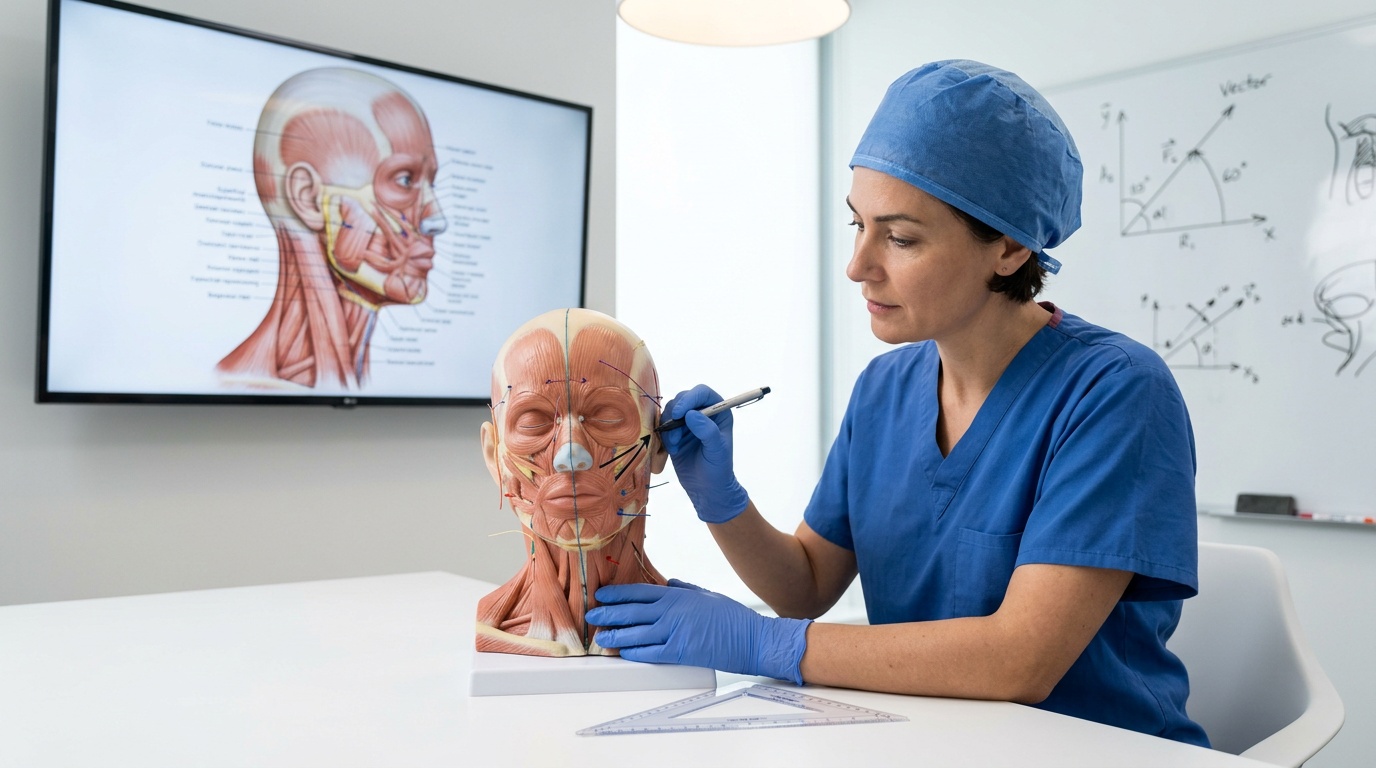
The SMAS is connective tissue beneath the skin and subcutaneous fat. It connects with facial expression muscles and transmits movement across the cheek, jawline, and neck. Beneath it are deeper fat compartments, facial muscles, retaining ligaments, and structures associated with the facial nerve. The surgeon selects a dissection plane that permits useful movement while protecting anatomy and preserving expression.
“Deep plane” describes a plane beneath the SMAS in selected areas, not a promise of a better result for every patient. A Mini Facelift may be considered for limited laxity, but it is not a substitute for broader surgery when cheek, jawline, or neck descent requires greater mobilization.
Why This Comparison Matters for Natural Results
A natural result depends on balanced tissue repositioning, not maximum tension. Excessive lateral pull can flatten the cheek or create a tight ponytail appearance. A vertical or oblique vector may better restore the relationship between the cheek, nasolabial region, jowl, and jawline while preserving recognizable features, movement, and proportion.
Anatomical Planes and Vector Physics: How Tissues Are Repositioned
The Superficial Musculoaponeurotic System (SMAS): More Than Just Skin
The SMAS is a fibrous network connected to facial muscles, ligaments, and soft-tissue compartments. When folded, advanced, or lifted, it changes support beneath the skin and can reduce the need to place all tension on the skin closure. This may help create a stable contour and less pulled appearance. Movement varies with facial width, tissue weight, elasticity, and the location of laxity.
The Deep Plane: Accessing Deeper Support Structures
Deep plane dissection proceeds beneath the SMAS in selected regions. Releasing retaining ligaments can allow the cheek and midface soft-tissue unit to move together. This may support vertical or superomedial repositioning when descent follows that pattern. The approach requires detailed knowledge of facial nerve anatomy, transition zones, tissue thickness, and safe mobilization limits. It is a different route through facial soft tissues, not simply a more aggressive operation.
High SMAS: A Focused Approach to the SMAS Layer
A high SMAS facelift elevates the SMAS at a higher level than traditional lower SMAS techniques, influencing the cheek and midface as well as the jawline. Moving the SMAS separately from the skin lets the surgeon plan a vector less dependent on lateral skin traction. It may suit upper cheek descent, early jowling, or a need for controlled lower-face support. The dissection pattern is individualized.
Deep Plane Facelift: Elevating Deeper Connective Tissues
In a deep plane facelift, selected retaining ligaments are released and a connected layer of deeper facial soft tissue is elevated. This may improve continuity between the cheek and jawline when several adjoining compartments have descended. The approach can create a substantial vertical component without relying only on outward tension, but it does not eliminate aging, skin-texture concerns, or individual healing differences.
Understanding Facial Vectors: Vertical Lift vs. Lateral Pull
Facial vectors describe tissue movement. A lateral vector pulls toward the ear; a vertical or superomedial vector directs tissue upward and inward. Neither is universally correct. A broad face with heavy tissue, a narrow face with thin skin, and isolated jowling may each require a different strategy. “Vertical” describes movement, while “deep plane” describes the dissection level.
| Feature | High SMAS approach | Deep plane approach |
|---|---|---|
| Primary plane | High-level SMAS dissection or repositioning | Plane beneath the SMAS in selected facial regions |
| Tissue movement | SMAS support is moved with controlled skin redraping | Deeper soft-tissue layers may move as a more connected unit |
| Vector potential | Can provide vertical, oblique, or tailored movement | Often permits a strong vertical or superomedial component |
| Anatomic priority | SMAS support, cheek position, jawline, and skin distribution | Retaining ligament release, cheek mobility, and facial nerve awareness |
Comparing High SMAS and Deep Plane Facelifts: Candidacy, Recovery, and Longevity
Who is an Ideal Candidate for Each Approach?
Candidacy depends less on age than on descent, skin elasticity, soft-tissue weight, and facial proportions. A high SMAS facelift may suit visible jowling, cheek descent, and laxity that can be repositioned through controlled SMAS elevation. A deep plane facelift may suit connected cheek and midface descent when releasing selected retaining ligaments could permit vertical repositioning. Neither approach is preferable for every face.
Planning should also consider general health, healing capacity, prior facial surgery, expectations, and the amount of change surgery can provide. Some patients with limited laxity may be candidates for a Mini Facelift. It is not interchangeable with a full facelift when descent extends across the cheek, jawline, and neck. Candidacy, technique, recovery, risks, and outcomes require individualized clinical assessment.
| Consideration | High SMAS facelift | Deep plane facelift |
|---|---|---|
| Primary tissue level | Higher SMAS layer, with planned elevation and repositioning | Plane beneath the SMAS, with selected ligament release |
| Typical vector planning | Controlled vertical, oblique, or combined movement | Often supports vertical or superomedial movement of connected tissues |
| Best matched concerns | Jowls, cheek descent, and lower-face laxity suited to SMAS support | Broader cheek and midface descent involving deeper soft tissues |
| Recovery considerations | Swelling and bruising vary with dissection and individual healing | Deeper mobilization may produce a more substantial early recovery period |
The “Grey Area” in Your 40s: Navigating Early Signs of Aging
Patients in their early or mid-40s may receive conflicting advice. The relevant question is not whether someone is “old enough,” but whether cheek, jawline, or neck descent can be improved without forcing a result beyond the anatomy. Early jowling, a softened mandibular border, and downward cheek movement can occur when skin laxity appears modest.
A high SMAS facelift, deep plane facelift, or Mini Facelift may each suit different anatomy. The decision should follow examination of facial movement, skin quality, tissue thickness, and descent direction rather than a social media label or fixed age threshold.
Realistic Recovery Timelines: Beyond Social Media Myths
Recovery is staged. Bruising, swelling, tightness, altered sensation, and uneven early contours may occur first. Patients may become presentable before healing is complete, and firmness or numbness can persist after routine activities resume. Deep plane facelift recovery may differ from recovery after a high SMAS operation because dissection and mobilization differ.
Online photographs may be affected by makeup, lighting, filters, camera angle, and timing. A responsible timeline includes incision care, activity limits, follow-up visits, and a gradual return to work and social settings. Your surgeon should describe a likely range rather than promise a fixed number of days.
Longevity: How Long Can You Expect Results to Last?
Patients ask, “How long does SMAS facelift last?” Published clinical discussions generally describe SMAS-based improvement as lasting many years, with duration influenced by elasticity, genetics, sun exposure, weight fluctuation, and biological aging. Deep plane repositioning may maintain a lifted contour for a similarly extended period, but it does not stop future descent or skin-quality changes.
Longevity means persistence of improvement, not permanent preservation of a youthful appearance. Vector selection, tissue handling, and skin assessment may matter as much as the named technique.
Addressing Jowls and Neck Contour with Each Technique
Jowls develop when cheek and lower-face tissues descend over the mandibular border. Both approaches can address them when the plane and vector match the anatomy. A high SMAS facelift provides controlled SMAS support; a deep plane facelift mobilizes connected cheek tissues after selected ligament release. The intended result is a defined, natural cheek-to-jawline transition rather than a pulled line toward the ear.
Neck contour depends on the lower face, jawline, and neck tissues. The operation must follow examination of laxity, tissue distribution, and the cervicofacial envelope. A vertical facelift describes movement, while high SMAS and deep plane describe anatomical approaches. These terms do not guarantee a particular neck result.
Risks, Considerations, and Achieving Balanced Facial Rejuvenation
Potential Risks and Complications: Nerve Preservation and Safety
Facelift surgery involves dissection around the facial nerve, blood vessels, retaining ligaments, and soft-tissue compartments. Potential complications include bleeding, infection, fluid collection, delayed healing, visible scars, asymmetry, contour irregularity, prolonged swelling, altered sensation, and hairline or sideburn changes. Temporary weakness can occur when facial nerve branches are irritated. Permanent nerve injury is uncommon, but no technique eliminates that possibility. Deep plane complications require direct discussion because the operation enters deeper layers.
Safety planning includes medical history, medications and supplements, smoking or nicotine exposure, prior facial surgery, healing concerns, and anesthesia. Your surgeon should explain warning signs such as rapidly increasing swelling, significant bleeding, fever, drainage, severe pain, or new facial weakness. Candidacy, technique, recovery, risks, and outcomes require individualized clinical assessment.
The Role of Skin Quality: Why Surgery Is Not the Only Answer
A facelift repositions descended tissues but does not erase every surface change. Fine lines, pigmentation, sun damage, enlarged pores, and texture changes may remain after the cheek and jawline are lifted. Skin thickness, elasticity, hydration, and sun exposure affect how smoothly skin settles. This distinction supports realistic expectations.
Ask to see consistent before-and-after photographs with comparable views and a reasonable healing interval. Photographs inform discussion but cannot predict how your tissues will respond.
The Dual-Component Approach: Structural Lifting Meets Skin Surface Treatments
Balanced rejuvenation separates two goals: repositioning descended tissues and addressing skin condition. A high SMAS facelift or deep plane facelift may improve jowls, cheek descent, and selected neck contours. Neither is designed to correct every wrinkle or surface irregularity. Keeping these goals separate avoids placing excessive tension on skin to solve a surface concern.
At Albert Plastic Surgery, I evaluate facial proportion, tissue mobility, skin quality, expression, and laxity direction before discussing surgery. A Mini Facelift may suit limited, localized laxity, but it has its own indications, limits, and recovery considerations.
Why Individualized Planning Is Paramount
Technique names can oversimplify the decision. Planning may depend on facial width, cheek position, elasticity, tissue weight, neck anatomy, prior procedures, and proportionate goals. There is no universal winner in a high smas vs deep plane facelift comparison. A qualified surgeon should explain the plane, vector, incision design, recovery, limitations, and risks for your anatomy.
My role as a board-certified plastic surgeon and Fellow of the American College of Surgeons is to connect technique with safety and realistic goals. The objective is to preserve recognizable features while addressing descent within the limits of your tissues and healing response.
Making Your Informed Decision: What to Ask Your Surgeon
Key Questions for Evaluating Your Facelift Options
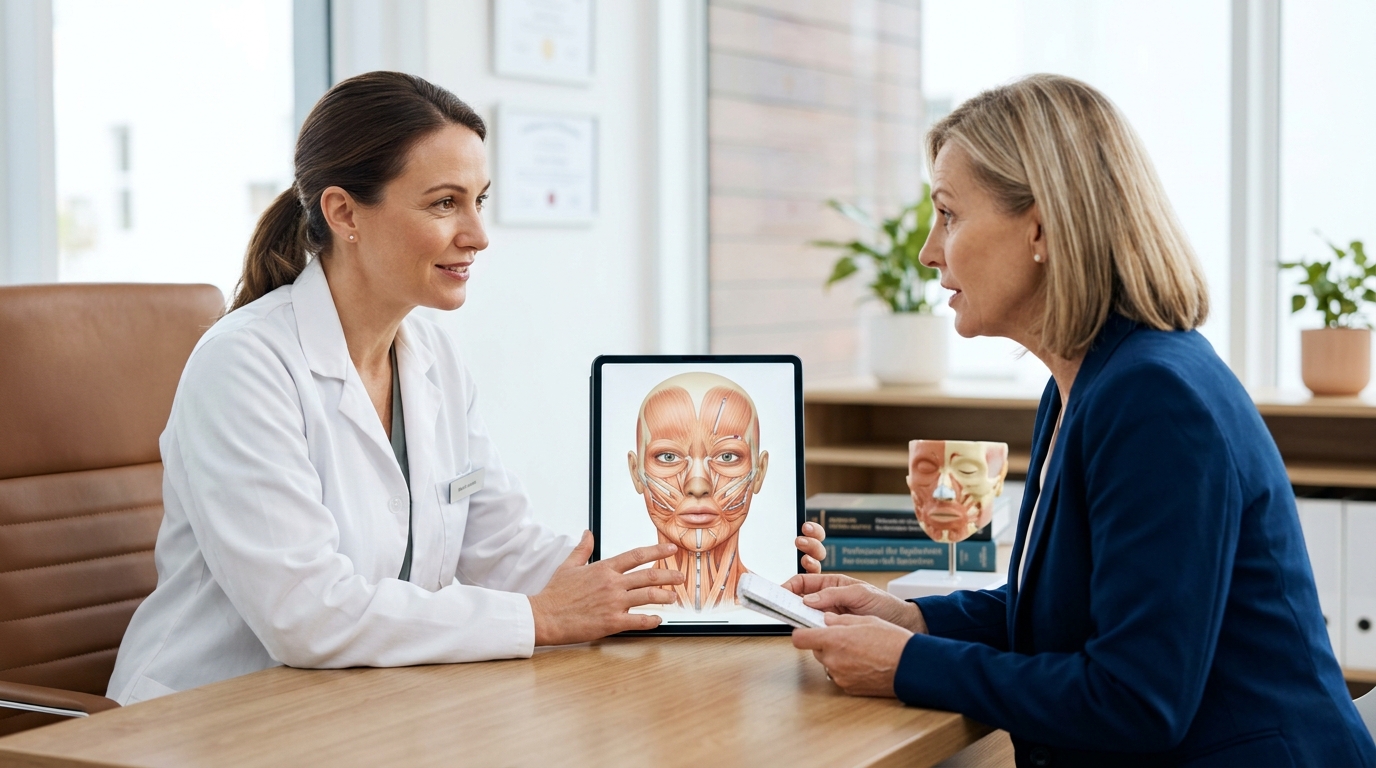
Ask which anatomical plane is recommended and why it matches your descent. Discuss the vector, cheek and jawline treatment, scar locations, anesthesia, activity restrictions, follow-up schedule, and complications. Ask how the recommendation differs from a high SMAS facelift, deep plane facelift, or Mini Facelift, and what the operation cannot improve.
Understanding the Consultation Process
A meaningful consultation includes medical history, facial examination, priorities, and realistic postoperative expectations. Your surgeon should explain swelling, bruising, numbness, incision healing, changing contours, and recovery limits. You should have time to consider the information without pressure.
Choosing a Qualified Facial Plastic Surgeon
Verify board certification, facility credentials, facelift training, and postoperative care. Dr. Mark G. Albert, MD, FACS, is certified by the American Board of Plastic Surgery and is a Fellow of the American College of Surgeons. An informed decision should be based on anatomy, communication, safety practices, and continuity of care, not a procedure label alone.
Frequently Asked Questions
Is a deep plane facelift really better than a high SMAS facelift?
A deep plane facelift is not universally better than a high SMAS facelift because the appropriate technique depends on facial anatomy, tissue descent, skin quality, and the surgeon’s treatment plan. Deep plane surgery may move connected cheek tissues after selected ligament release, while high SMAS surgery provides controlled SMAS repositioning with individualized skin redraping.
How long does a high SMAS facelift last?
A high SMAS facelift can provide long-lasting improvement, though it does not stop the aging process or guarantee permanent results. Longevity varies with skin elasticity, tissue weight, genetics, lifestyle, and surgical planning. An individualized consultation is needed to discuss expected durability, recovery, risks, and whether another procedure may be appropriate later.
What is the new facelift everyone is getting?
The deep plane facelift is often described online as a newer facelift, but it is not the right choice for everyone. The procedure releases selected retaining ligaments and repositions deeper facial tissues, while high SMAS, traditional SMAS, mini facelift, or other approaches may better fit different patterns of laxity.
Does a SMAS facelift look natural?
A SMAS facelift can look natural when tissue movement, facial proportions, and skin redraping are planned carefully. High SMAS surgery can reduce reliance on lateral skin tension by repositioning support beneath the skin, though results vary with anatomy, healing, technique, and the patient’s starting features.
How much younger does a SMAS facelift make you look?
A SMAS facelift does not produce a predictable number of years of age reduction because outcomes vary by facial aging, skin quality, anatomy, and healing. The goal is typically to reposition descended tissues and restore proportion while preserving recognizable features, not to create a not assured age or fixed appearance.
What are the main risks of high SMAS and deep plane facelifts?
High SMAS and deep plane facelifts can involve risks such as bleeding, infection, scarring, asymmetry, changes in sensation, hairline or skin changes, nerve injury, and the need for revision. Deep plane surgery also requires careful management of retaining ligaments and facial nerve anatomy, so individualized evaluation is essential before choosing an approach.

