
how is a mini facelift performed
Understanding how is a mini facelift performed begins with its anatomic purpose: the operation repositions selected tissues of the lower face rather than simply tightening skin. A surgeon evaluates the cheek, jowls, jawline, skin quality, facial proportions, and laxity before selecting incision and SMAS-support methods.
The Mini Facelift is a focused option for appropriately selected patients. Albert Plastic Surgery maintains a dedicated live service page for Mini Facelift. Candidacy, technique, recovery, risks, and outcomes require individualized clinical assessment with a qualified plastic surgeon.
Understanding the Mini Facelift: Who It’s For and What It Addresses
A mini facelift usually involves short incisions around the ear, limited elevation of facial tissues, and structural treatment of the SMAS layer beneath the skin. The surgeon repositions or tightens this supporting layer, redrapes skin without excessive tension, removes measured redundant tissue, and closes the incisions in layers. The operation varies according to facial anatomy, skin elasticity, retaining ligaments, and early aging changes.
Defining the Mini Facelift and Its Target Areas
A mini facelift generally focuses on early laxity in the lower cheek, nasolabial region, jowls, and jawline. Its boundaries are more limited than those of a broader facial lift. It may improve mild cheek descent and softening along the mandibular border, but it does not automatically correct every facial or neck concern.
“Mini” describes the scope of tissue elevation and correction, not one standardized operation. A surgeon may use a short-scar approach with direct SMAS suturing, a small SMAS flap, or plication. The objective is support beneath the skin so the skin rests smoothly rather than carrying the full corrective tension.
Ideal Candidates: Navigating the 40s “Grey Area” of Early Facial Aging
Patients in their mid-30s through late 40s are commonly represented among those seeking a mini lift, according to demographic information from the American Society of Plastic Surgeons. Age alone does not determine suitability. A patient may be considered when early jowling, lower-cheek descent, or reduced jawline definition is visible and results from tissue laxity rather than volume or skin texture alone.
Mini Facelift Candidacy Checklist
- Mild to moderate laxity concentrated in the lower face.
- Early jowls or a less defined jawline.
- Reasonable skin elasticity and stable general health.
- Realistic expectations about improvement, scars, and recovery.
- Understanding that surgical planning must be individualized after an examination.
Limitations: When a Mini Facelift Is Not the Right Choice
A limited lift may not provide adequate correction for substantial skin excess, pronounced lower-face descent, marked neck laxity, platysma banding, or aging extending beyond the lower cheek and jawline. A more extensive facelift may be considered after clinical evaluation. The choice depends on the anatomy requiring correction, not the shortest incision or fastest recovery.
A mini facelift cannot stop aging or guarantee a fixed duration of improvement. Research summaries commonly describe longevity of five to ten years, with variation related to skin quality, genetics, sun exposure, and aging biology. Consultation should address whether the operation matches the patient’s anatomy and expectations.
Step-by-Step Surgical Procedure: From Preoperative Marking to Closure
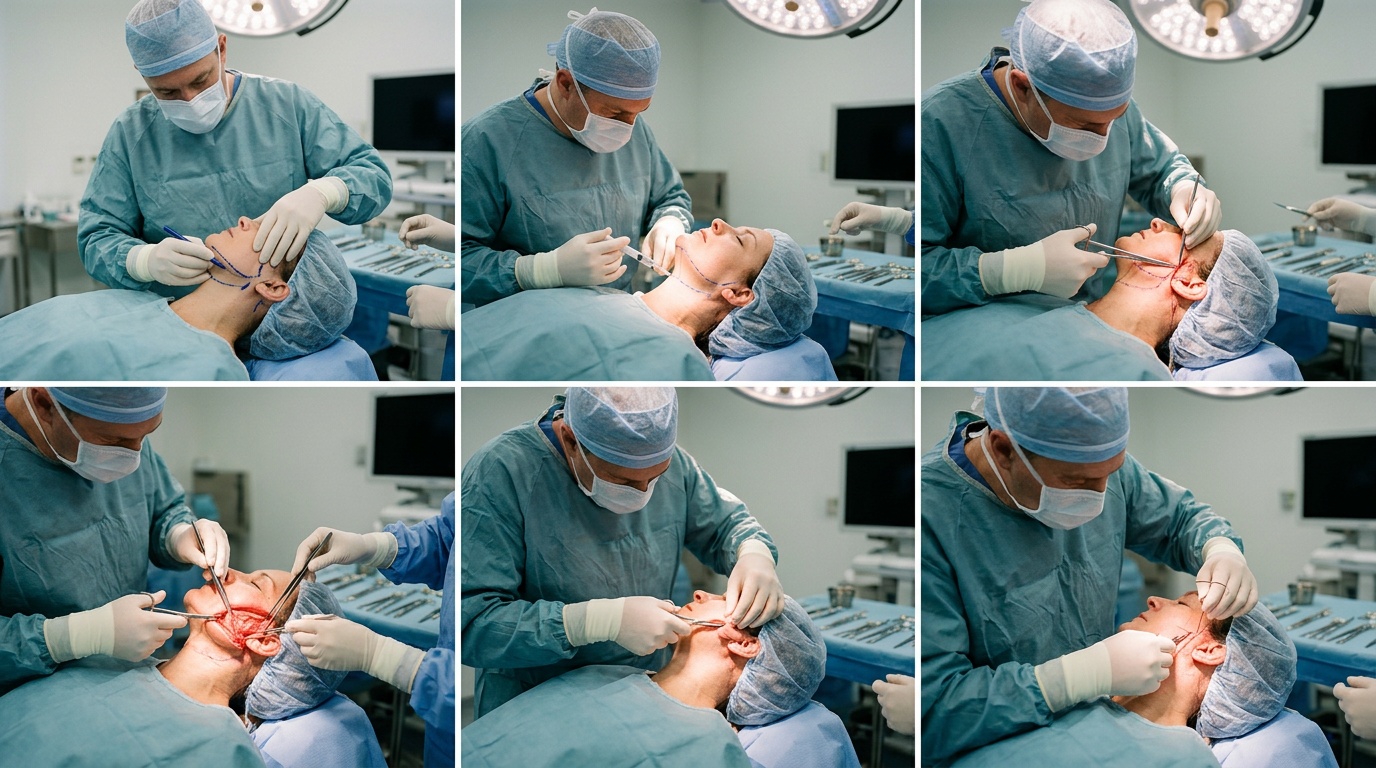
For readers asking how is a mini facelift performed in the operating room, the sequence usually follows a structured plan. The operation commonly takes about 90 minutes to two and a half hours, though duration changes with anatomy, technique, anesthesia, and correction required. This description is educational, not a prediction of an individual procedure.
Preoperative Planning and Surgical Markings
Before surgery, the surgeon reviews medical history, medications, allergies, prior operations, skin quality, facial movement, and goals. Examination identifies jowling, cheek descent, skin redundancy, and neck changes. Photographs may support planning and postoperative comparison but do not replace examination.
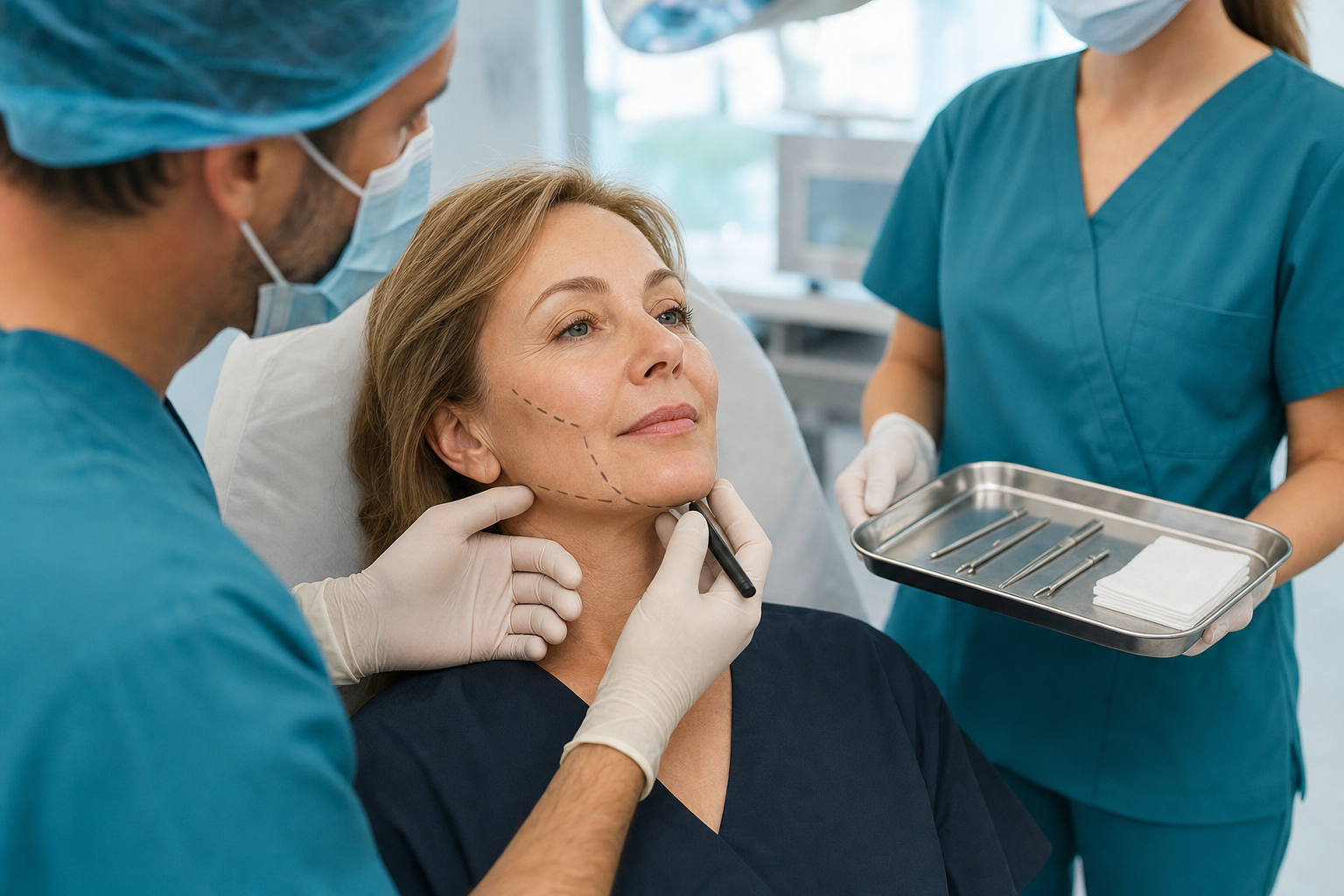
With the patient upright, markings outline the preauricular incision, tissue-elevation area, skin-redraping direction, and SMAS-treatment limits. They may also identify asymmetry and the mandibular border, helping keep correction proportionate rather than applying a uniform pull.
Anesthesia Options: Local With Sedation Versus General Anesthesia
A mini facelift may use local anesthesia with monitored sedation or general anesthesia. The decision depends on the operative plan, health, anxiety level, surgeon preference, anesthesia evaluation, and facility protocols. Local anesthesia numbs the area; sedation promotes relaxation; general anesthesia creates controlled unconsciousness with continuous monitoring.
Both approaches involve considerations involving breathing, blood pressure, medication reactions, nausea, and postoperative alertness. An anesthesia professional reviews these factors. Patients should provide complete medication and health histories and follow individualized instructions.
Incision Placement: Preauricular and Retroauricular Lines With Scar Considerations
The incision commonly begins near the preauricular crease and may continue around the earlobe into a short retroauricular segment behind the ear. Length and position depend on laxity and technique. The surgeon seeks access while respecting hair-bearing skin, cartilage, and the ear’s natural contours.
Scars are permanent skin changes, even when they become less noticeable. Early color, firmness, numbness, or unevenness can change during healing. Careful tissue handling, closure, skin-edge protection, and postoperative adherence may support maturation, but an invisible scar cannot be not assured.
SMAS Layer Management: Techniques for Structural Support
The SMAS, or superficial musculoaponeurotic system, is a fibrous layer connected with facial muscles and overlying soft tissue. A key point in understanding how is a mini facelift performed is that the procedure is not intended to rely on skin traction alone. The surgeon may tighten the SMAS with sutures, fold or plicate it, or create a limited SMAS flap.
Dissection must remain in selected tissue planes to protect facial nerve branches and preserve skin blood supply. The surgeon works within planned lower-face boundaries, addressing cheek and jawline while avoiding unnecessary elevation. This structural step distributes tension beneath the skin and supports a less pulled appearance.
Skin Redraping and Removing Excess Tissue
After deeper support is positioned, skin is redraped in a vector suited to the patient’s anatomy. The surgeon avoids using skin as the primary lifting structure. Excess skin is measured after deeper tissues are set; removing too much can cause distortion, tightness, or an unnatural contour.
Skin edges are checked for color, perfusion, and alignment before trimming. The goal is a smooth cheek, jowl, and jawline transition while preserving facial expression and ear position. Improvement is refined rather than a complete reversal of every aging change.
Layered Closure and Scar Minimization Strategies
Closure is usually performed in layers so deeper tension is supported before the skin is joined. Suture materials and removal schedules depend on the surgeon. Incisions are checked for alignment, bleeding, and tissue tension before dressings are applied.
Written instructions should cover wound care, activity, sleeping position, medications, and follow-up. Avoiding incision pressure and attending examinations help the team monitor healing. Closure protects skin, preserves the ear’s contour, and supports scar maturation.
Comparing Mini Facelift with Full and Deep Plane Facelifts: Surgical Differences and Outcomes
The main difference among a Mini Facelift, traditional full facelift, and deep plane facelift is the extent and depth of tissue mobilization. A Mini Facelift generally addresses early lower-cheek, jowl, and jawline laxity. A full facelift may treat the lower face and neck more broadly. A deep plane facelift releases selected retaining ligaments and repositions deeper cheek tissues as a unit. The appropriate method depends on anatomy, descent, skin elasticity, and desired treatment areas.
Technical Differences in SMAS Handling and Tissue Elevation
In a Mini Facelift, SMAS support may involve plication, direct suturing, or a limited flap within the lower-face area. Skin elevation is usually more restricted. A full facelift may allow broader SMAS treatment and skin redraping. Deep plane surgery places dissection beneath the SMAS in selected areas, mobilizing skin and deeper soft tissue together rather than treating skin alone.
These are not interchangeable labels for one operation. The surgeon may modify plane, incision length, and tissue direction according to retaining ligaments, facial nerve anatomy, cheek descent, and skin redundancy. Structural support reduces reliance on skin tension, but no technique guarantees a particular appearance or duration.
Anatomical Boundaries: What Each Procedure Targets
| Facelift approach | Typical anatomical focus | Scope of tissue movement |
|---|---|---|
| Mini Facelift | Lower cheek, early jowls, and jawline | More limited elevation and SMAS treatment |
| Full facelift | Broader lower face, jawline, and selected neck changes | More extensive skin and supporting-layer mobilization |
| Deep plane facelift | Midface and lower-face descent involving deeper soft tissue | Dissection beneath the SMAS with release of selected retaining ligaments |
These boundaries describe common patterns, not fixed rules. A Mini Facelift does not automatically address marked platysma laxity, substantial neck excess, or aging extending through the midface. A full or deep plane approach may be considered when descent crosses several regions, but the decision requires examination rather than an age threshold or preference for the shortest scar.
Recovery and Downtime Variations
Recovery varies with dissection plane, tissue movement, incision length, anesthesia, and healing. A Mini Facelift often involves a more focused field, while broader or deeper surgery can produce more swelling, bruising, numbness, and restrictions. Research summaries commonly describe approximately seven to ten days of social and professional downtime, though healing may require longer.
When to Consider a More Extensive Facelift Procedure
A more extensive facelift may be discussed when laxity affects the neck, midface, lower face, or multiple layers beyond a limited lift. A board-certified plastic surgeon should explain the dissection plane, SMAS strategy, incisions, recovery, scars, risks, and limits. Understanding how is a mini facelift performed includes recognizing when its focused design may not match the distribution of aging.
Recovery After a Mini Facelift: Timeline, Expectations, and Patient Guidance
Recovery after a Mini Facelift depends on tissue movement, anesthesia, healing, and health. Initial swelling and bruising commonly improve enough for social and professional activities within approximately seven to ten days, though firmness, numbness, or mild asymmetry may last longer. Your surgeon’s instructions take priority because care, activity limits, follow-up, and medication guidance vary by technique.
Immediate Postoperative Care and Dressing Protocols
After surgery, the face is usually supported with a light dressing or bandage to protect incisions and limit early swelling. Before discharge, the team reviews wound care, sleeping position, bathing, activity, and approved medications. Arrange transportation and adult support according to the surgical center’s instructions. Do not remove, tighten, or replace dressings unless directed.
Typical Recovery Milestones: Day 1, Days 3-5, Day 7, and Two Weeks
| Time period | What patients may notice | Usual focus of care |
|---|---|---|
| Day 1 | Swelling, tightness, bruising, and mild drainage may be present. | Rest, head elevation, incision protection, and the first follow-up if scheduled. |
| Days 3-5 | Bruising may become more visible before it fades; swelling can remain uneven. | Short walks as permitted, continued wound care, and avoidance of strenuous activity. |
| Day 7 | Many patients look more presentable, although firmness and discoloration may remain. | Clinical review, possible suture management, and gradual activity progression. |
| Two weeks | Early healing is more established, but subtle swelling and altered sensation can persist. | Return to activities only as cleared, with continued scar protection and follow-up. |
Managing Swelling, Bruising, and Sensory Changes
Swelling is often greatest during the first several days and may be uneven. Bruising can migrate downward while resolving. Temporary numbness, tingling, tightness, or sensitivity near the ear and cheek may occur as sensory nerves recover. Head elevation, wound care, and avoiding bending, heavy lifting, heat, and facial pressure may support healing when approved. Do not massage tissues or apply products without clinical direction.
Suture Removal and Scar Maturation
Suture timing depends on incision location, closure material, and assessment. Early scars may be pink, firm, raised, or uneven before softening and fading. Maturation continues for months. Sun protection and scar care should begin only when incisions have healed adequately and the team approves.
Signs Indicating the Need for Prompt Medical Attention
Contact the surgical team promptly for rapidly increasing one-sided swelling, persistent bleeding, worsening pain, spreading redness, cloudy drainage, fever, incision separation, skin color changes, shortness of breath, chest pain, or sudden altered facial movement. These symptoms do not establish a diagnosis but warrant timely assessment. In an emergency, seek immediate emergency care.
Addressing Common Concerns: Natural Appearance, Neck Contouring, and Surgical Safety

Ensuring Natural-Looking, Proportionate Results
A natural result depends on measured repositioning, preserved facial movement, suitable skin redraping, and respect for existing proportions. The goal is not a fixed or overly tight expression. Healing varies, and refinement develops as swelling settles.
Why a Mini Facelift Does Not Typically Address Significant Neck Banding
A focused lift primarily treats the lower cheek, jowls, and jawline. Pronounced platysma banding, substantial neck skin excess, or laxity below the mandibular border may lie outside its usual boundaries. The surgeon must examine the neck to determine whether the operation can address the concern.
Understanding Anesthesia Risks and How They Are Managed
Local anesthesia with sedation and general anesthesia each involve potential risks, including medication reactions, breathing problems, blood pressure changes, nausea, and delayed alertness. Medical history, medications, allergies, fasting instructions, monitoring, and facility standards guide planning, but no operation or anesthetic is lower-risk.
Realistic Expectations and the Importance of Individualized Consultation
When considering how is a mini facelift performed, remember that the operation is a tailored surgical plan, not a fixed recipe. A qualified plastic surgeon should explain expected improvement, limitations, scar placement, recovery restrictions, and the continuation of aging. Careful consultation supports an informed decision without promising a particular result.
Frequently Asked Questions
What is the downside of a mini facelift?
A mini facelift may provide less correction for significant skin excess, pronounced neck laxity, deep facial descent, or platysma banding than a more extensive facelift. Mini facelift risks can include scarring, bleeding, infection, temporary numbness, asymmetry, and changes in healing, while results vary with anatomy, skin quality, technique, and aging.
What is the average cost of a mini facelift?
The average cost of a mini facelift varies by surgeon, geographic location, anesthesia, facility fees, surgical technique, and the extent of correction required. A consultation provides a personalized estimate after examination and treatment planning, and patients should ask which fees are included rather than relying on a national average.
What is the best age for a mini facelift?
The best age for a mini facelift is determined by facial laxity and treatment goals, not by age alone. Patients in their mid-30s through late 40s may be considered when mild to moderate lower-face laxity, early jowls, or reduced jawline definition are present, subject to an individualized examination.
Can a 70 year old have a mini facelift?
A 70-year-old may be considered for a mini facelift if overall health, facial anatomy, skin quality, and the degree of laxity support that approach. Age alone does not determine candidacy, but substantial skin excess or neck laxity may call for a different procedure after medical and surgical evaluation.
What is the best cosmetic procedure for a 70 year old woman?
The best cosmetic procedure for a 70-year-old woman depends on the specific concerns, such as jowling, neck laxity, volume loss, or skin texture changes. A mini facelift may suit selected lower-face aging, while a broader facelift or nonsurgical treatment may be discussed after reviewing health, medications, anatomy, goals, and expected limitations.
How long does a mini facelift usually take?
A mini facelift usually takes about 90 minutes to two and a half hours, though operative time varies with anatomy, anesthesia, surgical technique, and the corrections required. The procedure commonly includes short incisions near the ear, treatment of the SMAS supporting layer, skin redraping, removal of measured excess skin, and layered closure.