
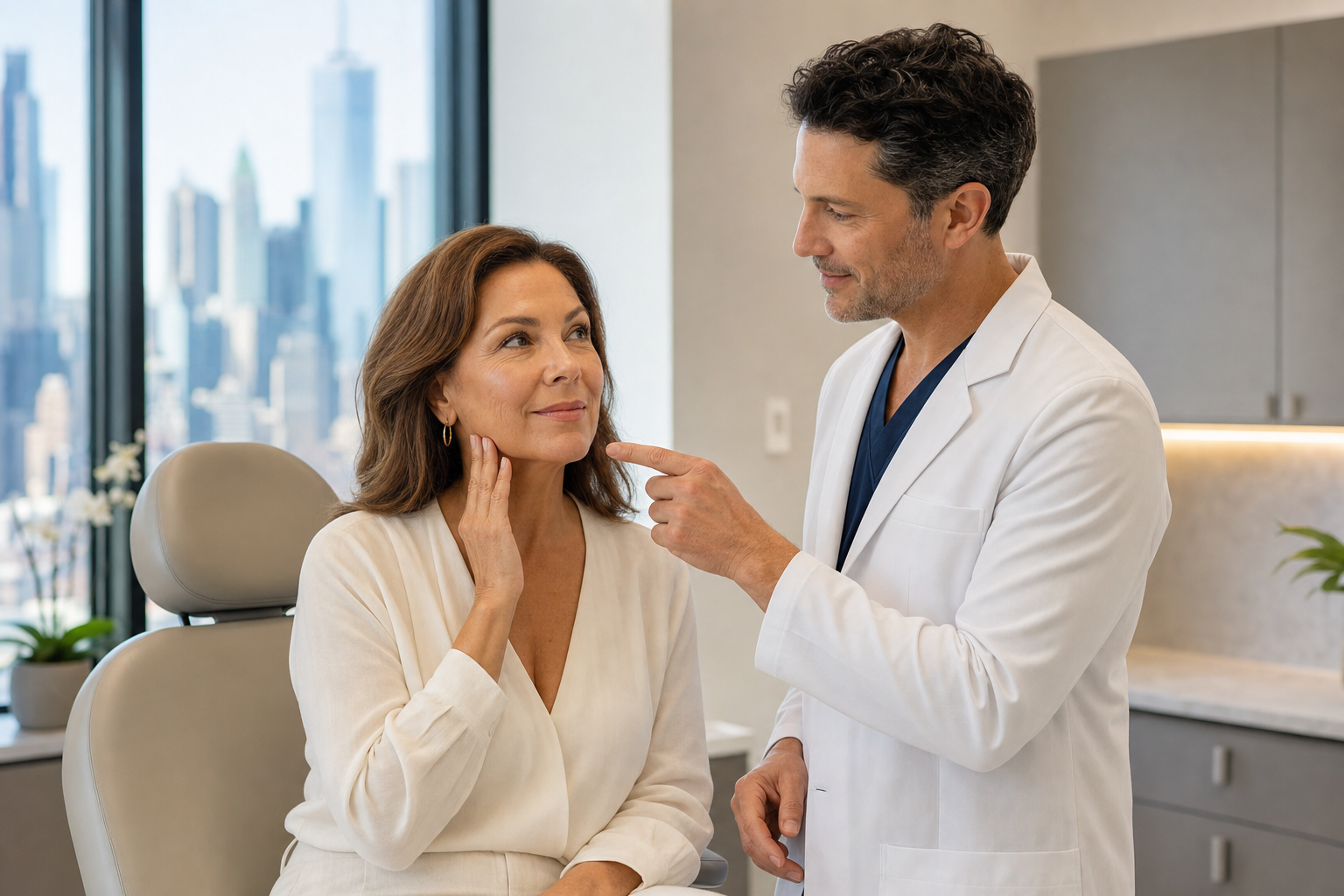
how much is a mini facelift in nyc
If you are asking, “how much is a mini facelift in NYC,” a realistic private Manhattan estimate is approximately $18,000 to $35,000 or more when surgeon, facility, anesthesia, and routine follow-up are included. The final quote depends on tissue laxity, jowl correction, surgical setting, and technique after examination.
Key Takeaways
- A mini facelift in a private Manhattan practice typically costs $18,000 to $35,000 when factoring in the surgeon's fee, facility charges, anesthesia, and standard follow-up visits.
- The final price varies based on the degree of skin laxity, the need for jowl correction, the surgical setting, and the specific technique selected after a physical examination.
- Choosing a board-certified plastic surgeon with extensive experience in facial rejuvenation can help reduce the risk of an unnatural or over-lifted appearance.
- Patients should schedule a consultation to receive a precise quote, since the procedure is customized to each person's anatomy and aesthetic goals.
- Understanding the full cost breakdown, including facility and anesthesia fees, is essential for comparing mini facelift options in the New York City area.
Dr. Mark G. Albert, MD, FACS of Albert Plastic Surgery plans the Mini Facelift around facial structure rather than a fixed package. He is certified by the American Board of Plastic Surgery and a Fellow of the American College of Surgeons. Candidacy, technique, anesthesia, recovery, risks, and outcomes require individualized clinical assessment.
Understanding Mini Facelift Costs in NYC: What to Expect
For a private Manhattan practice, reported all-inclusive mini facelift pricing commonly falls between $18,000 and $35,000 or more. High-end customized procedures may begin around $30,000. These are planning ranges, not personal quotes, and should be confirmed during consultation. The American Society of Plastic Surgeons reports a national average facelift surgeon fee of $9,281, excluding anesthesia, operating-room facility expenses, and postoperative care. That national figure is not an all-in NYC price.
The All-In Pricing Dilemma: Why Simple Ranges Mislead
A low advertised number may represent only the surgeon’s fee. A useful estimate identifies expected charges, including operating-room access, credentialed staff, anesthesia, administrative support, garments, follow-up visits, and postoperative care. Consultation should separate the facelift cost from optional services. This helps prevent unexpected add-ons and supports informed surgical planning.
Key Cost Components: Surgeon, Facility, and Anesthesia Fees
The surgeon’s fee reflects examination, planning, surgical time, technical judgment, and follow-up. The facility fee covers the operating environment, nurses, supplies, monitoring, and recovery area. Anesthesia charges depend on the method and qualified professional providing it. A dedicated mini facelift may take approximately 90 to 150 minutes under local anesthesia with oral sedation or twilight intravenous sedation, according to published procedure-cost discussions, though duration varies with anatomy and scope. Verify facility accreditation, including standards associated with AAAASF, AAAHC, or Quad A.
| Cost element | What it may include | Question to ask |
|---|---|---|
| Surgeon fee | Consultation, operative planning, surgical expertise, and scheduled follow-up | Which visits and postoperative services are included? |
| Facility fee | Operating room, clinical staff, supplies, monitoring, and recovery area | Is the facility appropriately accredited? |
| Anesthesia fee | Anesthesia assessment, medication, monitoring, and recovery support | Who provides anesthesia, and what method is planned? |
| Additional charges | Laboratory testing, prescriptions, or services requested outside the facelift plan | Which charges are required, optional, or excluded? |
Factors Influencing Your Specific Quote
Your estimate may change with skin elasticity, lower-face laxity, jowl position, neck involvement, prior facial surgery, scar pattern, and structural support needs. A limited incision does not always mean a limited operation. Deeper repositioning or a broader treatment area may require another plan. Request a written, itemized estimate after examination, covering technique, anesthesia, facility, follow-up, and circumstances that could alter the fee.
Mini Facelift vs. Full Facelift vs. Deep Plane Facelift: Cost and Scope
Defining the Mini Facelift: Targeting Jowls and Lower Face
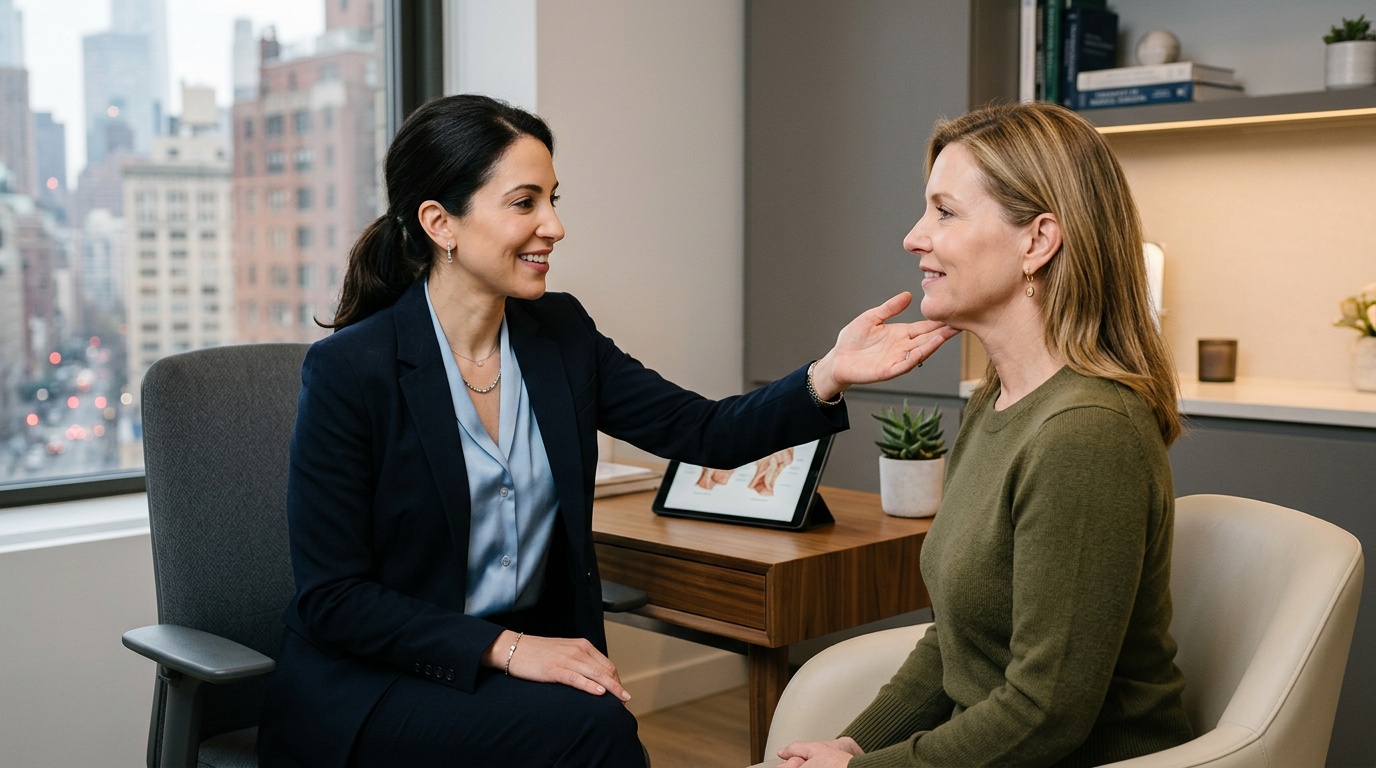
A mini facelift generally addresses early to moderate lower-face laxity, including mild jowling along the jawline. Incisions and dissection may be more limited than in a broader facelift, though the plan varies by anatomy. The goal is not to pull skin tightly. A natural result depends on tissue repositioning, incision placement, and a scope suited to the degree of aging. Mini face lift cost for early jowls cannot be determined from age or photographs alone.
When a Full or Deep Plane Facelift Might Be Indicated
A full facelift may be considered when laxity extends into the cheeks, jawline, and neck. A deep plane facelift works at a deeper anatomic level and may be selected for broader tissue descent. Neither label automatically indicates a better choice. Assessment includes facial layers, skin quality, ligamentous attachments, symmetry, and the relationship between cheeks, jawline, and neck. More extensive surgery generally requires more planning and facility resources, which can increase the fee.
Comparing Procedure Scope and Associated Costs
| Approach | Typical scope | Cost considerations |
|---|---|---|
| Mini Facelift | Lower face and early jowling, with a more limited surgical field | Often less extensive, though individualized technique and facility fees remain significant |
| Full Facelift | Broader correction of facial and jawline laxity, sometimes including the neck | Greater operative scope may involve additional surgical and anesthesia time |
| Deep Plane Facelift | Deeper repositioning for selected patterns of cheek and lower-face descent | Specialized planning and technical demands may affect the overall estimate |
When comparing how much is a mini facelift in NYC with a full or deep plane procedure, compare anatomy treated, not only price. A lower fee may reflect narrower scope, while a higher fee may reflect a more comprehensive operation. A consultation with Dr. Albert can determine whether the Mini Facelift matches your concerns or another technique better suits your facial structure and goals.
Navigating Candidacy: The Early 40s 'Grey Area' and Jowl Correction
Is Age 40-45 Too Young for a Mini Facelift?
Age 40 to 45 is neither automatically too young nor, by itself, a reason to proceed. Candidacy depends on laxity, elasticity, proportions, genetics, weight changes, and goals. One person in the early 40s may have meaningful jowling, while another may have a subtle change that surgery would not improve proportionately. The useful first question is whether surgery addresses a genuine structural concern.
A limited facelift does not prevent future aging or create a permanently fixed jawline. It is intended for selected lower-face laxity, often early jowls and descent along the mandibular border. A qualified surgeon should explain whether improvement would be visible, balanced, and worth incisions, healing, scarring, and surgical risk. Candidacy, technique, recovery, risks, and outcomes require individualized clinical assessment.
Assessing Early Jowling and Lower Facial Laxity
Early jowling may reflect cheek descent, changing ligament support, and a less defined cheek-to-jawline transition, not excess skin alone. Consultation assesses the lower face at rest and with movement, skin quality, symmetry, chin and jaw proportions, and tissue that can be repositioned without excessive tension. A photograph or edited “mini facelift before and after” image cannot provide the same information.
Why Restraint Is Key: When Waiting Is the Best Option
Waiting may be appropriate when laxity is mild, the concern is mainly skin texture, or expected change is too small to justify surgery. Operating before sufficient descent is present can produce an overtreated appearance without solving the concern. Additional time may also be advised when expectations are shaped by social media images, recent weight fluctuation, or a desire to halt normal aging. Waiting is a valid clinical decision.
Dr. Mark G. Albert's Approach to Candidacy Screening
Dr. Albert, certified by the American Board of Plastic Surgery and a Fellow of the American College of Surgeons, evaluates the skin envelope, deeper tissues, jowls, and jawline before recommending surgery. Consultation should address realistic correction, incision pattern, anesthesia, facility, recovery, scar care, and material risks, including when a Mini Facelift is too limited or unnecessary.
Avoiding Botched Results: Mini Facelift Risks and Surgeon Vetting
The Perils of Discount Procedures: Recognizing Red Flags
A low fee does not show whether essential services are included or whether surgery is properly planned. Warning signs include pressure to schedule, omitted anesthesia or facility charges, limited complication discussion, unclear credentials, and promises of a scarless or not assured result. Be cautious when one operation is presented as suitable for every face or edited images are the main evidence. A discount procedure may involve an inappropriate setting, inadequate follow-up, or excessive skin tension.
Ask who performs each part of surgery, where it occurs, who provides anesthesia, and how postoperative concerns are handled. The facility should meet recognized ambulatory surgical standards, such as accreditation associated with AAAASF, AAAHC, or Quad A. Financial clarity cannot replace training, planning, and continuity of care.
Common Mini Facelift Complications to Avoid: Pixie Ears and Sweep Lines
A botched mini face lift may show excessive traction, under-correction, or poorly placed incisions. Pixie ear deformity, also called lobule distraction, can pull the earlobe downward or change its relationship to the cheek. Tragal blunting may reduce definition at the ear opening. Visible sweep lines, abrupt hairline change, widened scar, contour irregularity, hematoma, infection, persistent numbness, and facial asymmetry are also possible. These risks vary and cannot be eliminated entirely.
Natural-looking surgery requires more than skin removal. Closure should be tension-conscious, with deeper tissue support when indicated. Under-correction may leave the jowl, while over-tightening can look pulled. Revision may be harder because of scar tissue, altered anatomy, and reduced tissue mobility.
Dr. Mark G. Albert's Method for Natural, Proportionate Outcomes
Dr. Albert matches the operation to anatomy rather than applying the same maneuver to every lower face. Planning considers skin thickness, facial balance, tissue descent, jawline contour, ear anatomy, incision placement, and believable correction during expression. The objective is proportion, not a visibly tightened face. Patients should understand what a Mini Facelift can address and what may remain.
When reviewing photographs, look for consistent lighting, neutral expression, visible ears and hairlines, and full lower-face views. Photos cannot predict an individual result, but they can prompt questions about contours, scars, facial movement, and ear shape. Consultation remains necessary.
Your Checklist for Vetting a NYC Facelift Surgeon
- Confirm certification by the American Board of Plastic Surgery and review the surgeon’s formal training.
- Ask how often the surgeon performs facelift surgery and who will conduct the operation.
- Request an individualized explanation of the recommended technique and its limits.
- Discuss risks such as bleeding, infection, nerve injury, asymmetry, scarring, hairline changes, pixie ear, tragal blunting, and revision surgery.
- Verify the facility’s accreditation, anesthesia plan, emergency protocols, and postoperative access.
- Request an itemized estimate that separates the surgeon, facility, anesthesia, prescriptions, and follow-up charges.
- Ask what happens if healing is slower than expected or a complication develops.
- Choose adequate time for reflection rather than allowing financial or scheduling pressure to drive the decision.
These questions help evaluate a mini face lift cost near me without treating price as proof of quality. The safest choice is the plan that fits your anatomy, goals, health, and willingness to accept surgical limitations.
Mini Facelift in NYC vs. New Jersey: Geographic Cost Comparisons and Consultation Essentials

Understanding Geographic Price Disparities
Location is one factor when asking, “how much is a mini facelift in NYC.” Private Manhattan pricing commonly falls between $18,000 and $35,000 or more with surgeon, facility, anesthesia, and routine follow-up. Northern New Jersey fees are often reported between $12,000 and $22,000. These are planning ranges. Differences may reflect facility overhead, staffing, operating-room costs, anesthesia, and surgical scope.
| Location | Reported planning range | What may influence the estimate |
|---|---|---|
| Private Manhattan | $18,000 to $35,000 or more | Surgeon expertise, private facility, anesthesia, operative scope, and follow-up services |
| Northern New Jersey | $12,000 to $22,000 | Facility expenses, local overhead, anesthesia structure, and the selected technique |
A lower regional estimate may exclude later charges. Ask whether the quote includes facility, anesthesia professional, supplies, postoperative visits, and routine healing concerns. Travel, transportation, lodging, and access to the surgical team also affect cost and recovery. Compare complete plans, not isolated surgeon-fee advertisements.
What a Consultation with Dr. Mark G. Albert Entails
Consultation with Dr. Albert should cover concerns, medical history, prior facial procedures, medications, smoking or nicotine exposure, and expectations. He can assess elasticity, jowl position, lower-face descent, symmetry, ear anatomy, and the cheek-to-jawline relationship. The Mini Facelift should be judged against your anatomy, not a fixed package.
Discuss incision placement, anesthesia, setting, recovery, scarring, swelling, numbness, asymmetry, bleeding, infection, nerve-related complications, under-correction, and revision. Dr. Albert is certified by the American Board of Plastic Surgery and a Fellow of the American College of Surgeons. Candidacy and outcomes cannot be determined through an article.
Preparing for Your Facelift Consultation: Questions to Ask
Bring a written list of priorities and ask:
- Which areas of my lower face would this operation address, and which concerns would remain?
- Why is this technique appropriate for my skin laxity and jowl anatomy?
- Who will perform the surgery, provide anesthesia, and manage postoperative care?
- Is the facility accredited by AAAASF, AAAHC, Quad A, or another recognized organization?
- Does the estimate include surgeon, facility, anesthesia, supplies, prescriptions, and follow-up visits?
- What changes could alter the quote after examination or during surgical planning?
- What symptoms require an urgent call, and how can I reach the practice after surgery?
Request time to review the estimate and consent materials before scheduling. The decision should reflect anatomy, health, goals, budget, and willingness to accept surgical limitations. For a personalized answer to “how much is a mini facelift in NYC,” schedule a consultation with Dr. Albert rather than relying on a search result or promotional starting price.
Frequently Asked Questions
Is a mini facelift worth the money?
A mini facelift may be worth the cost for someone whose goals and facial laxity match the procedure’s scope. In New York City, an all-inclusive estimate commonly ranges from $18,000 to $35,000 or more. Value depends on the planned correction, surgeon and facility qualifications, recovery, risks, and whether a different facelift technique would better fit the anatomy.
What’s the best age for a mini facelift?
The best age for a mini facelift depends on facial laxity, jowling, skin elasticity, genetics, and personal goals rather than a specific number. Adults in their early 40s may be candidates, while some people benefit from another approach. A consultation with Dr. Albert is needed to assess candidacy, technique, risks, and expected recovery.
How long will a mini facelift last?
A mini facelift can provide lasting improvement, but it does not stop normal facial aging and results vary among patients. Longevity depends on skin quality, tissue changes, lifestyle factors, surgical technique, and the extent of laxity treated. Individual outcomes and the possibility of future procedures should be discussed during a clinical consultation.
How does a 60-year-old look before and after a mini facelift?
A 60-year-old may have visible jowls, lower-face laxity, or neck changes before a mini facelift, while the postoperative appearance depends on anatomy and the procedure selected. A mini facelift may not address broader cheek or neck laxity. Before-and-after images cannot predict an individual result, so assessment and discussion of risks are required.
What are the downsides of a mini facelift?
The downsides of a mini facelift can include surgical risks, scarring, swelling, bruising, changes in sensation, asymmetry, infection, bleeding, unsatisfactory contour, and possible revision surgery. A mini facelift also has a more limited scope and may not address significant cheek or neck laxity. Individual risks, recovery, and alternatives require consultation with a qualified surgeon.
How much does a mini facelift cost in NYC when all fees are included?
A mini facelift in NYC commonly costs about $18,000 to $35,000 or more when surgeon, facility, anesthesia, and routine follow-up are included. The final estimate can change with the surgical plan, tissue laxity, jowl correction, anesthesia method, and facility. Request a written, itemized quote after examination to identify included and excluded charges.