

is a deep plane facelift safe
Whether is a deep plane facelift safe depends on anatomy, surgical judgment, patient health, and postoperative monitoring. The technique repositions deeper facial tissues rather than relying on skin tension alone, but every facelift carries risks, including bleeding, infection, temporary nerve weakness, scarring, and an unsatisfactory aesthetic result.
Key Takeaways
- Deep plane facelift safety depends on the surgeon's precise knowledge of facial anatomy and each patient's medical condition.
- By lifting deeper facial layers, this technique reduces skin tension and may produce more natural, longer-lasting results.
- Bleeding, infection, temporary nerve weakness, and scarring are recognized risks that require close postoperative observation.
- Careful patient selection and clear communication about realistic outcomes help minimize the chance of an unsatisfactory result.
- The surgeon's judgment during the procedure directly affects the balance between a successful lift and avoiding complications.
This guide explains safety principles involving facial nerve anatomy, vascular preservation, composite tissue movement, and tension-free closure. Candidacy, technique, anesthesia, recovery, risks, and outcomes require individualized assessment with a qualified clinician.
Introduction: Demystifying Deep Plane Facelift Safety
A deep plane facelift can be performed safely when a properly trained surgeon selects the technique carefully and works within known facial anatomy. The operation releases selected retaining ligaments and mobilizes a composite layer containing skin, subcutaneous tissue, and the superficial musculoaponeurotic system, often called the SMAS. This may distribute lifting forces through deeper tissues instead of placing excessive pull on the skin.
What Is a Deep Plane Facelift and Why Is Safety Paramount?
A deep plane facelift is performed beneath the SMAS in a defined gliding plane. The surgeon releases specific facial ligaments so descended cheek and jawline tissues can be repositioned with less dependence on skin traction. Depth alone does not determine safety. Accurate anatomical knowledge, controlled tissue handling, hemostasis, patient selection, and a plan suited to facial structure all matter.
Patients commonly fear permanent facial paralysis, visible ear distortion, severe scars, or an unnatural pulled appearance. Those concerns deserve direct discussion. Deep plane surgery is not lower-risk, and hematoma remains a recognized complication across facelift procedures. The objective is controlled tissue movement that protects nerve branches and skin blood supply while producing proportionate results.
Dr. Mark G. Albert, MD, FACS: A Foundation of Expertise
Dr. Mark G. Albert, MD, FACS of Albert Plastic Surgery is certified by the American Board of Plastic Surgery and is a Fellow of the American College of Surgeons. His training includes plastic surgery residency and chief residency at the University of Massachusetts Medical School, followed by an aesthetic plastic surgery fellowship at Manhattan Eye, Ear, and Throat Hospital. He is also Program Director of the MEETH Aesthetic Plastic Surgery Fellowship and an Assistant Clinical Professor of Surgery at the Zucker School of Medicine at Hofstra/Northwell.
This background provides context for an anatomy-first discussion, not a guarantee of an individual result. Dr. Albert evaluates tissue laxity, skin quality, facial proportions, medical history, medications, and goals before determining whether a deep plane approach is appropriate. A Mini Facelift may suit selected patients with limited concerns, but the operation cannot be determined from photographs or general information alone.
Understanding the Deep Plane Technique’s Safety Profile
Research summarized in StatPearls through the National Center for Biotechnology Information describes facial nerve injury as an established facelift risk, with temporary weakness generally improving as nerve function recovers. Research findings provided for this guide indicate that permanent facial nerve injury occurs in less than 1 percent of deep plane facelift cases performed by experienced specialists. This is not a personal prediction or guarantee.
Questions about anesthesia, bleeding control, nerve protection, wound healing, and emergency access belong in consultation. The same assessment applies to a second Mini Facelift discussion, since a shorter operation is not automatically suitable for every face.
The Anatomy of Safety: How Deep Plane Dissection Protects Your Face
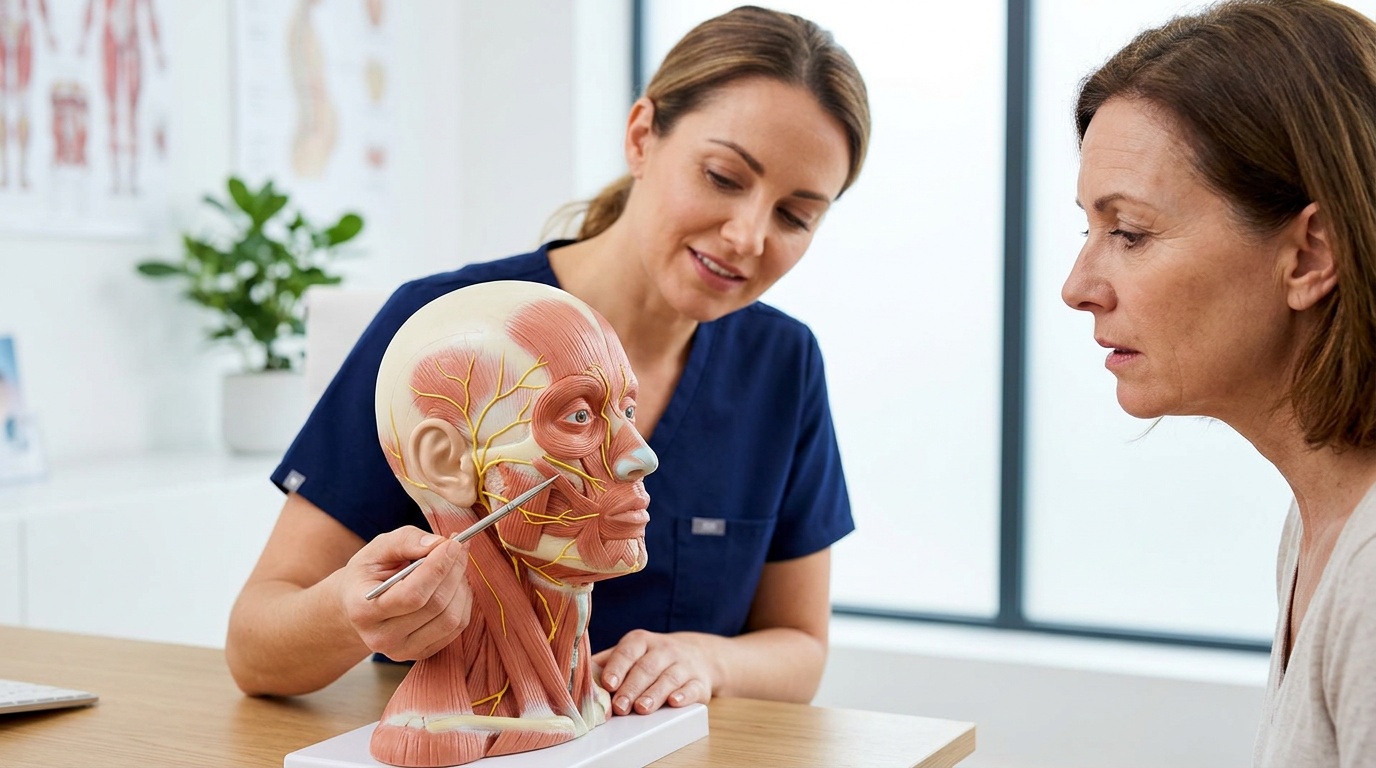
Facial Nerve Anatomy: Mapping the Branches and Minimizing Risk
The facial nerve controls muscles responsible for expression. Its branches travel through regions related to the parotid gland, SMAS, retaining ligaments, and deeper soft tissues. During deep plane surgery, the surgeon works in a recognized sub-SMAS gliding plane and releases selected ligaments under anatomical control. This does not eliminate nerve injury risk, but it provides a defined route for tissue mobilization.
Temporary neuropraxia can occur when a nerve is stretched, compressed, or affected by swelling. Weakness may resolve over several weeks to months. Transection or permanent injury is uncommon but serious. Experience with facial anatomy, gentle retraction, and restraint during ligament release contribute to nerve safety.
Vascular Supply: The Deep Plane Advantage for Skin Health
Skin viability depends on arterial inflow and venous drainage. Wide subcutaneous undermining can disrupt portions of the subdermal vascular plexus, especially when tissue is thinned, placed under tension, or affected by smoking and other healing risks. Deep plane dissection may preserve more supporting connections because it occurs beneath the SMAS while skin and subcutaneous tissues remain together as a composite flap.
Research findings supplied for this guide indicate that skin flap ischemia and necrosis occur less frequently in deep plane rhytidectomy than with wide subcutaneous undermining, attributed to preservation of the intact subdermal plexus. This is an anatomical comparison, not a promise. Skin quality, prior surgery, circulation, nicotine exposure, medical conditions, and technique still matter.
The Sub-SMAS Plane: Preserving Circulation Through Composite Dissection
The SMAS is a fibromuscular layer connecting facial muscles, fascia, and skin-supporting structures. In a deep plane facelift, the surgeon may elevate skin, subcutaneous tissue, and SMAS together after releasing selected retaining ligaments. This composite movement shifts cheek, jowl, and jawline tissues as a unit and may reduce shearing between layers while preserving vascular continuity.
Tension-Free Closure: How Deep Anchoring Improves Healing and Scarring
Excessive skin tension can widen scars, stress the earlobe, compromise small blood vessels, and contribute to a pulled appearance. Deep plane techniques aim to transfer lifting forces to deeper supporting tissues, allowing skin to lie over the new contour with less traction. This may support natural movement and reduce strain along hairline and ear incisions.
Tension-free closure does not mean scar-free healing. Genetics, skin behavior, wound care, infection prevention, and individual healing affect scars. Natural results require appropriate tissue repositioning rather than simply tightening skin.
Clinical Safety Benchmarks: Deep Plane Facelift vs. Traditional Techniques
Comparing Complication Rates: Hematoma, Seroma, and Infection
When patients ask, “is a deep plane facelift safe compared with a traditional SMAS facelift,” the answer depends on more than the technique name. Hematoma remains the most common surgical complication across rhytidectomy procedures, occurring in approximately 1 to 4 percent of patients according to research findings provided for this guide. Seroma, infection, delayed wound healing, and fluid collection are less frequent but possible. Blood pressure control, medication review, meticulous hemostasis, anesthesia planning, and postoperative observation influence risk.
A deeper plane does not automatically create a higher complication rate. It changes where tissue is mobilized around retaining ligaments, the SMAS, and facial nerve branches. Safety depends on selection, anatomical knowledge, operative discipline, and prompt management of bleeding. StatPearls, available through the National Center for Biotechnology Information, identifies hematoma, infection, nerve dysfunction, skin injury, and unfavorable scarring among recognized facelift risks.
| Safety consideration | Deep plane facelift | Traditional SMAS facelift |
|---|---|---|
| Tissue movement | Mobilizes a composite layer after selected ligament release, allowing deeper support to carry lifting forces. | May reposition or tighten the SMAS separately from the overlying skin, depending on the operative design. |
| Facial nerve protection | Requires controlled work in relation to the sub-SMAS plane and known nerve pathways. | Requires careful management of nerve branches at the boundaries of the chosen dissection plane. |
| Skin blood supply | May preserve more of the subdermal plexus when skin and subcutaneous tissue remain connected as a composite flap. | Vascular preservation depends on the extent of undermining, flap thickness, tissue handling, and patient factors. |
| Primary limitations | More demanding anatomical dissection and meaningful risks of bleeding, nerve weakness, and wound complications. | Skin tension and tissue separation can affect contour, scar behavior, and flap viability in selected patients. |
Facial Nerve Injury: Understanding Temporary vs. Permanent Risks
Temporary neuropraxia may occur when a nerve is stretched, compressed, or affected by swelling. Research findings supplied for this guide report that temporary weakness may resolve over several weeks to months, while permanent facial nerve injury occurs in less than 1 percent of deep plane facelift cases performed by experienced specialists. This population estimate is not an individual prediction.
Surgeons protect nerve branches by understanding their usual course, using controlled dissection, limiting traction, and avoiding unnecessary disruption. Anatomy varies, and prior surgery or scar tissue can alter the dissection. Any new facial weakness requires prompt communication with the surgical team and clinical assessment.
Skin Flap Viability: Why Deep Plane May Reduce Necrosis
Skin flap ischemia and necrosis occur when blood flow is insufficient for oxygenation and healing. Wide subcutaneous undermining can interrupt portions of the subdermal vascular plexus, especially when a flap is thin, stretched, or affected by impaired circulation. In deep plane rhytidectomy, skin, subcutaneous tissue, and SMAS may remain connected as a composite flap while dissection occurs beneath the SMAS. Research findings provided for this guide indicate that ischemia and necrosis occur significantly less frequently with deep plane rhytidectomy than with wide subcutaneous undermining, partly because the intact subdermal plexus may be preserved.
Nicotine exposure, diabetes, vascular disease, previous facial surgery, infection, excessive tension, and individual healing can still affect viability. Technique should be selected after assessment of circulation and tissue quality.
Scarring and Ear Lobe Distortion: A Tension-Free Perspective
Visible scarring and an elongated or pulled earlobe can result when closure relies excessively on skin. Deep anchoring aims to place support in deeper tissues so skin rests over the repositioned contour with less traction. This may reduce stress around the ear and hairline, but cannot guarantee an inconspicuous scar or prevent every contour change.
Scar width, color, thickness, hairline changes, earlobe position, and facial balance depend on incision design, tissue handling, genetics, wound care, and healing. A natural appearance requires proportionate tissue movement, not simply tighter closure.
Patient Candidacy and Surgeon Selection: Your Role in Deep Plane Facelift Safety
Optimal Health Criteria for Deep Plane Facelift Surgery
Candidacy begins with overall health, not age alone. The surgeon may review cardiovascular and respiratory health, blood pressure, diabetes control, nicotine exposure, medications and supplements, prior facial procedures, bleeding history, skin quality, and expectations. Patients should disclose relevant medical information because uncontrolled conditions or impaired healing can increase hematoma, infection, skin injury, and delayed recovery risks.
Good candidacy also involves realistic goals. A deep plane facelift can reposition selected areas of laxity, but cannot stop future aging, correct every skin-quality concern, or guarantee symmetry. A limited Mini Facelift may suit some patients with localized changes, while others may need a different plan.
The Indispensable Role of Board Certification: ABPS and Facial Fellowship Training
Patients should verify certification by the American Board of Plastic Surgery, relevant hospital privileges, formal plastic surgery training, and focused facial surgery experience. Fellowship training in aesthetic plastic surgery can provide additional exposure to facial rejuvenation, planning, and complication management. Credentials do not eliminate risk, but establish a meaningful foundation for surgical judgment.
Dr. Mark G. Albert, MD, FACS of Albert Plastic Surgery is certified by the American Board of Plastic Surgery and completed an aesthetic plastic surgery fellowship at Manhattan Eye, Ear, and Throat Hospital. He is Program Director of the MEETH Aesthetic Plastic Surgery Fellowship and an Assistant Clinical Professor of Surgery at the Zucker School of Medicine at Hofstra/Northwell.
Dr. Mark G. Albert’s Approach to Individualized Safety Planning
Dr. Albert’s planning process is individualized rather than formulaic. Facial proportions, skin elasticity, jowl position, cheek descent, neck laxity, prior procedures, health history, and goals affect technique selection. Consultation should address facility standards, anesthesia, bleeding prevention, nerve protection, incision placement, postoperative monitoring, and urgent concerns.
Questions to Ask Your Surgeon: Ensuring You Understand the Risks and Benefits
Before deciding, ask:
- Why is this facelift technique appropriate for my anatomy and goals?
- Which tissue plane will be dissected, and how will facial nerve branches be protected?
- What are the surgeon’s protocols for blood pressure control, hemostasis, anesthesia, and hematoma evaluation?
- Where will incisions be placed, and what changes may occur around the ear or hairline?
- What symptoms require an urgent call after surgery?
- Which risks are more relevant because of my medical history, medications, skin quality, or prior procedures?
- What alternatives, including a Mini Facelift when clinically appropriate, should be considered?
- Who provides follow-up care, and how can the surgical team be reached after the operation?
Navigating Recovery and Long-Term Safety

Understanding the Deep Plane Facelift Recovery Timeline
Is a deep plane facelift safe during recovery? Safety depends on following individualized instructions, attending visits, and reporting unexpected changes. Swelling, bruising, tightness, numbness, and temporary asymmetry are common early experiences while tissues settle. The initial healing period is not the time to judge final contour. Dr. Albert will provide guidance about activity, incision care, sleeping position, medications, and resuming routines.
Recognizing Signs of Complications Post-Surgery
Rapidly enlarging swelling, increasing one-sided pain or pressure, active bleeding, fever, spreading redness, drainage, shortness of breath, or sudden facial weakness requires prompt contact with the surgical team. A hematoma may need urgent assessment, so patients should not wait for a routine appointment when symptoms change quickly. No operation is lower-risk; written emergency instructions and reliable practice access are part of postoperative planning.
Maintaining Results and Long-Term Facial Harmony
Long-term safety includes protecting the result while recognizing that aging continues. Follow-up assesses scars, sensation, facial movement, contour, and tissue settling. A Mini Facelift is a separate, individualized option and requires examination. Patients considering a Mini Facelift or future facial surgery should discuss timing, scar tissue, anatomy, and prior operative details with a qualified clinician.
Frequently Asked Questions
What is the safest type of facelift?
The safest facelift is the technique that matches a patient’s anatomy, health, goals, and surgeon’s experience. A deep plane facelift can be performed safely by a properly trained surgeon, though it still carries risks such as bleeding, infection, temporary nerve weakness, scarring, and an unsatisfactory result. Individual evaluation is necessary.
What is the downside of a deep plane facelift?
The downside of a deep plane facelift is that it is a complex operation with risks that include hematoma, infection, temporary or permanent nerve injury, skin healing problems, scarring, and an undesirable aesthetic result. Recovery and surgical risk vary with anatomy, medical history, medications, nicotine exposure, and operative technique.
What is the best age to get a deep plane facelift?
The best age for a deep plane facelift depends more on facial changes and overall health than on a specific number. Candidates may have noticeable laxity in the cheeks, jawline, or neck and enough skin and tissue descent to benefit from surgery. A qualified clinician must assess candidacy individually.
Does a deep plane facelift really last 10 years?
A deep plane facelift may provide results that remain noticeable for many years, but no facelift can promise a specific duration such as 10 years. Aging, sun exposure, skin quality, genetics, weight changes, and lifestyle continue after surgery. Longevity and outcomes vary, so expectations should be discussed during consultation.
What is the most regretted cosmetic surgery?
No single cosmetic surgery is the most regretted for every patient. Regret may occur when expectations are unrealistic, the procedure does not match the patient’s anatomy or goals, complications develop, or communication is incomplete. Careful consultation, informed consent, and review of alternatives and risks can help patients make a considered decision.
Is a deep plane facelift safer than a traditional facelift?
A deep plane facelift is not automatically safer than a traditional facelift because safety depends on anatomy, surgical judgment, tissue handling, and postoperative monitoring. The technique may distribute lifting forces through deeper tissues and preserve selected vascular connections, yet risks such as bleeding, nerve weakness, scarring, and healing problems remain.