

is deep plane facelift better
When patients ask, “is deep plane facelift better,” the most accurate answer is that no technique is universally superior. A deep plane facelift and a traditional SMAS facelift reposition different anatomical layers. The appropriate choice depends on facial structure, skin quality, tissue descent, goals, and examination. The objective is a natural, proportionate improvement suited to the individual.
Key Takeaways
- A deep plane facelift lifts the deeper facial layers as a single unit, which can create a more dramatic and lasting result for patients with significant tissue descent.
- Traditional SMAS facelifts address the superficial muscular aponeurotic system and are often better suited for patients who need moderate lifting with less risk of prolonged swelling.
- The best facelift technique matches each patient’s unique facial anatomy, skin elasticity, and aesthetic goals rather than following a one-size-fits-all approach.
- During a consultation, physical examination reveals how the face ages and which layer lifting method will produce the most natural, proportionate outcome.
Dr. Mark Albert, a board-certified plastic surgeon and Fellow of the American College of Surgeons, evaluates facelift surgery through anatomy rather than marketing labels. This comparison explains how deep plane and SMAS techniques differ, what each can accomplish, and why an in-person consultation is necessary before selecting a procedure.
Understanding Your Facelift Options: Deep Plane vs. Traditional SMAS
Introduction: Navigating the Nuances of Facial Rejuvenation
A facelift repositions descended facial tissues and refines the contour of the jawline, cheeks, and neck. It is not simply a matter of pulling skin tighter. Beneath the skin are fat compartments, connective tissue, retaining ligaments, the superficial musculoaponeurotic system, and branches of the facial nerve. The surgical plane determines which structures are released, repositioned, or left undisturbed.
A traditional SMAS facelift addresses the SMAS through repositioning, tightening, or plication. A deep plane facelift proceeds beneath the SMAS in selected areas and releases certain retaining ligaments, allowing a broader soft-tissue unit to move. Both approaches require careful dissection and knowledge of facial anatomy. The label alone does not determine the quality of an outcome.
The Core Question: Is a Deep Plane Facelift Better for You?
Whether a deep plane facelift is better depends on the pattern of aging revealed by examination. Patients with descent through the cheek and midface may benefit from structural mobilization rather than placing most tension on the skin. Others may have concerns addressed with a different design, including a Mini Facelift when the degree and location of laxity suit that operation.
The issue is whether the selected plane, vector, incision design, and extent of release match your anatomy. A consultation should also address limitations: facelift surgery does not erase every wrinkle, correct all skin-texture changes, or stop future aging.
Dr. Mark Albert's Approach: Prioritizing Anatomical Understanding and Personalized Care
At Albert Plastic Surgery in New York City, Dr. Mark Albert places physical examination at the center of technique selection. He assesses skin laxity, cheek descent, jowling, neck contour, facial proportions, prior surgery, and the relationship between surface changes and deeper movement. This helps determine whether a deep plane facelift, SMAS facelift, or Mini Facelift is appropriate.
Dr. Mark G. Albert, MD, FACS, completed plastic surgery residency and chief residency at the University of Massachusetts Medical School, followed by an aesthetic plastic surgery fellowship at Manhattan Eye, Ear, and Throat Hospital. His approach emphasizes informed consent, facial nerve safety, individualized planning, and continuity of care.
How We Evaluate Facelift Techniques: Criteria for Superior Results

Defining “Better”: Beyond Marketing Hype to Clinical Effectiveness
“Better” should describe a suitable match between anatomy, goals, technique, and recovery expectations. A meaningful comparison asks where tissue is descending, which structures require mobilization, how much correction is appropriate, and whether the result is likely to remain natural during expression. A deeper dissection is not automatically more effective, and a traditional SMAS technique is not automatically limited.
Key Evaluation Factors: Anatomy, Natural Aesthetics, Recovery, and Longevity
The comparison should include lifting vector, midface movement, jawline definition, neck laxity, scar placement, facial nerve considerations, swelling, recovery demands, and expected durability. The American Society of Plastic Surgeons describes deep plane surgery as releasing key facial ligaments, which can reduce reliance on skin tension. That principle may support a softer appearance, though results vary and no technique eliminates surgical risk.
The Role of the Surgeon’s Expertise and Individualized Planning
Facelift surgery requires knowledge of facial nerve branching, retaining ligaments, vascular anatomy, tissue thickness, and how movement in one region affects facial balance. Experience also informs incision planning, skin handling, hemostasis, and postoperative monitoring. These details matter when the goal is a refreshed appearance that does not look windswept or overly tight.
Dr. Mark Albert Presents: Deep Plane Facelift vs. Traditional SMAS Facelift
The Deep Plane Facelift: Anatomical Release for Natural Elevation
A deep plane facelift mobilizes facial soft tissue beneath the SMAS in selected regions. Releasing retaining ligaments can allow the cheek, midface, and lower facial tissues to move as a connected unit. Because the lift is not dependent on pulling skin alone, it may support a more vertical correction in appropriately selected patients.
The Traditional SMAS Facelift: Addressing Superficial Layers
A traditional SMAS facelift works with the superficial musculoaponeurotic system, a fibrous layer connecting facial muscles and soft tissue. Depending on the patient’s needs, the SMAS may be tightened, folded, repositioned, or otherwise managed to improve jowling and neck definition. This approach can suit patients whose concerns are concentrated in the lower face and neck.
Key Anatomical Differences: Understanding the SMAS and Beyond
The central distinction is the plane of dissection and degree of ligament release. Deep plane surgery moves beneath the SMAS where broader tissue mobilization is planned. SMAS techniques address the SMAS itself without the same pattern of sub-SMAS release. Neither approach is universal; tissue movement must be balanced with facial nerve safety and individual anatomy.
The Vector of Lift: Vertical Restoration vs. Lateral Pull
Facial aging often involves downward movement of the cheek and lower face, not only outward skin laxity. A vertical or superolateral vector may restore position naturally for some patients. Excessive lateral skin traction can create a tight or windswept appearance. Vector selection, limited skin tension, and facial proportions matter more than a particular label.
| Feature | Deep Plane Facelift | Traditional SMAS Facelift |
|---|---|---|
| Primary anatomical focus | Selected sub-SMAS tissue planes and retaining ligaments | SMAS repositioning, tightening, or plication |
| Typical structural goal | Move connected cheek and lower-face tissues with less dependence on skin traction | Improve jowling and lower-face or neck laxity through SMAS management |
| Midface considerations | May permit broader cheek mobilization in appropriately selected anatomy | May focus more directly on lower-face and neck contour |
| Decision point | Extent of descent, ligament release, nerve anatomy, and surgeon judgment | Location of laxity, tissue quality, goals, and surgeon judgment |
Impact on Midface and Nasolabial Folds: Addressing Volume and Contour
When retaining ligaments are released, the cheek can be repositioned with surrounding soft tissue rather than treated as isolated skin. This may soften the transition beside the nose and improve midface contour for selected patients. A facelift does not remove every nasolabial fold; folds also reflect expression, skin quality, and volume changes. The goal is a balanced contour, not a frozen or featureless face.
Skin Quality Considerations: What Facelifts Can and Cannot Change
A facelift addresses tissue descent, laxity, and contour. It does not fundamentally correct sun damage, fine surface lines, pigmentation, or poor texture. Thin or damaged skin can affect visible creasing and scar behavior. Consultation should distinguish structural aging from surface aging before deciding that a deeper operation is better.
Realistic Expectations: Candidacy, Recovery, and Results
Who is an Ideal Candidate for a Deep Plane Facelift?
A deep plane facelift may suit an adult with visible descent through the cheek, midface, jawline, or neck who wants structural repositioning rather than a skin-only pull. Candidates generally have realistic goals, reasonable health, and enough laxity to justify surgery. The answer to “is deep plane facelift better” requires assessment of proportions, retaining ligaments, elasticity, prior procedures, medications, and healing factors.
- Noticeable cheek or lower-face descent, jowling, or neck laxity
- Understanding that a facelift does not erase fine lines or change skin texture
- Willingness to follow surgical and postoperative instructions
- Acceptance that scars, swelling, asymmetry, nerve-related complications, bleeding, infection, and revision surgery remain possible risks
Who Might Benefit More from a Traditional SMAS Approach or Alternative?
A traditional SMAS facelift may be a better match when laxity is concentrated in the lower face and neck while the midface remains supported. For more limited laxity, a Mini Facelift may be considered when Dr. Albert determines that its scope matches the patient’s goals. Candidacy, technique, recovery, risks, and outcomes require individual assessment.
The Deep Plane Facelift Recovery Journey: A Week-by-Week Timeline
Early recovery can look more dramatic than the eventual result. Dressings, swelling, bruising, tightness, numbness, and fatigue may occur, although each course differs. Peak swelling generally improves substantially by days 10 to 14. The American Society of Plastic Surgeons notes that deep plane surgery involves release of key facial ligaments, affecting planning and early tissue response.
| Period | Typical milestones |
|---|---|
| Days 1 to 3 | Swelling and bruising are often most noticeable. Rest, head elevation, wound care, and close follow-up are emphasized. |
| Days 4 to 14 | Bruising usually fades gradually, swelling begins to settle, and visible signs of surgery may remain. |
| Weeks 3 to 6 | More than 80% of edema is reported to clear within six weeks, though firmness, numbness, and subtle asymmetry may persist. |
| Several months | Incisions soften, sensation evolves, and facial contour becomes easier to assess as tissues mature. |
Managing Swelling and Discomfort: What to Expect Post-Surgery
Discomfort is managed through individualized instructions from the surgical team. Patients may experience pressure, tightness, altered sensation, or difficulty recognizing their face during the first days. Contact the practice promptly for concerning bleeding, rapidly increasing swelling, fever, severe pain, drainage, breathing difficulty, or symptoms that differ from provided instructions. A qualified clinician must assess postoperative concerns directly.
Addressing the “Unnatural Look” Fear: How Deep Plane Techniques Minimize Over-tightening
A deep plane approach may reduce dependence on skin traction by repositioning connected soft tissues after ligament release. This can support a natural vector and reduce a windswept appearance. It does not guarantee a particular result. Conservative skin management, incision design, facial nerve awareness, and proportionate movement remain necessary.
Longevity and Maintenance: What to Anticipate Over Time
Research summaries commonly describe deep plane facelift results as persisting approximately 10 to 15 years, though longevity varies with age, genetics, skin quality, sun exposure, weight changes, and tissue characteristics. A facelift does not stop aging or create permanent skin quality. The Mini Facelift has its own indications and durability considerations.
Beyond the Lift: Complementary Procedures and Long-Term Skin Health
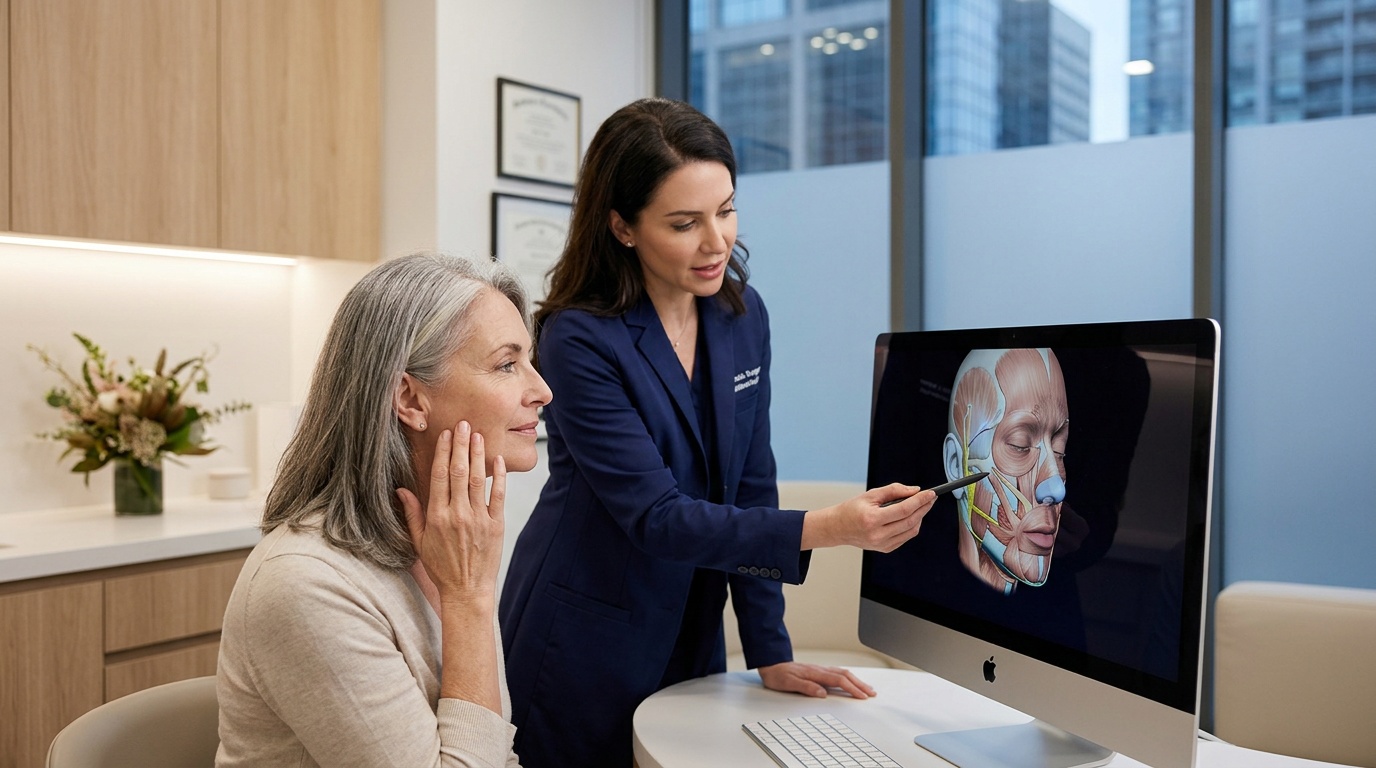
The Structural Boundary: Why Facelifts Address Deep Tissues, Not Surface Texture
A facelift repositions descended tissues, improves laxity, and refines cheek, jawline, and neck contours. It does not erase sun damage, pigmentation, fine wrinkles, enlarged pores, or texture changes. A patient may have a smoother jawline while still seeing expression lines or uneven texture. Dr. Albert separates structural aging from surface aging so expectations remain realistic.
Optimizing Full-Face Harmony: The Role of Fat Grafting and Adjunct Procedures
Facial balance also depends on volume, cheek projection, temple contour, and transitions between regions. Dr. Mark Albert can explain whether the planned facelift addresses the patient’s concerns or whether additional facial planning deserves discussion. Recommendations must reflect examination, medical history, proportions, and priorities. A Mini Facelift may suit limited laxity when its scope matches the patient’s goals.
Improving Skin Quality: Medical Skincare and Laser Resurfacing as Essential Partners
Long-term skin care remains separate from lifting surgery. Ultraviolet protection, hydration, and a clinician-directed plan may support skin condition. Surface treatments may be discussed for fine lines, discoloration, or texture, but those decisions require separate medical assessment. Genetics, sun exposure, weight changes, facial movement, and age continue to influence appearance.
When to Consider a Deep Plane Facelift vs. Other Rejuvenation Modalities
A deep plane facelift may be appropriate when descended cheek, midface, lower-face, or neck tissue requires structural repositioning. It is less suited to goals limited to fine lines or discoloration. A traditional SMAS facelift or Mini Facelift may fit a different distribution of laxity. At Albert Plastic Surgery in New York City, Dr. Albert’s consultation centers on examination, facial nerve awareness, tissue quality, incision planning, and proportionate goals.
Making Your Decision: Consultation and Next Steps
Questions to Ask Your Surgeon About Deep Plane vs. SMAS
Ask where tissue has descended, which plane is recommended, what retaining ligaments may require release, and how the vector will affect the cheek, jawline, and neck. Ask what the operation cannot correct, how scars are planned, how facial nerve safety is addressed, and whether a Mini Facelift’s limited scope matches your laxity.
The Importance of a Personalized Consultation with Dr. Mark Albert
Dr. Mark Albert is certified by the American Board of Plastic Surgery and is a Fellow of the American College of Surgeons. His evaluation considers proportions, elasticity, soft-tissue descent, prior surgery, health history, and goals. An in-person examination allows the recommendation to reflect your anatomy rather than a generic procedure name.
Understanding Risks, Limitations, and Achieving Proportionate Outcomes
Facelift surgery carries risks including bleeding, infection, unfavorable scarring, asymmetry, altered sensation, hairline or earlobe changes, facial nerve injury, wound-healing problems, and possible revision surgery. Recovery, anesthesia, candidacy, and outcomes vary. No surgeon can guarantee a specific appearance or eliminate normal aging.
Your Journey to Rejuvenation Starts Here
If you are still asking, “is deep plane facelift better,” bring that question to consultation rather than relying on marketing claims. The answer depends on the tissues needing repositioning, the remaining skin, and the result that fits your features. Schedule a facelift consultation with Dr. Mark Albert to discuss whether a deep plane facelift, SMAS facelift, or Mini Facelift is appropriate for your anatomy and goals.
Frequently Asked Questions
What is the downside of a deep plane facelift?
The downsides of a deep plane facelift can include more extensive dissection, swelling, bruising, temporary numbness, scarring, asymmetry, infection, bleeding, and facial nerve injury. The technique may offer meaningful movement of descended cheek and lower-face tissues for selected patients, but it is not automatically better than a SMAS facelift and requires individualized planning.
What is the best age to have a deep plane facelift?
The best age for a deep plane facelift depends on facial aging, tissue descent, skin quality, health, and personal goals rather than a specific number. A consultation with Dr. Mark Albert can determine whether deep plane, SMAS, or another facelift approach matches the patient’s anatomy and expectations.
What is the most natural-looking facelift?
The most natural-looking facelift is the technique that repositions the right facial tissues without placing excessive tension on the skin. Deep plane and SMAS facelifts can both produce natural-looking results when properly matched to facial structure, tissue descent, and desired correction, though outcomes vary and no operation stops future aging.
Does a deep plane facelift really last 10 years?
A deep plane facelift may provide improvement that lasts many years, but a 10-year result is not not assured. Longevity varies with age, genetics, sun exposure, skin quality, weight changes, lifestyle, and surgical planning, and facelift surgery does not stop normal aging or correct every wrinkle and skin-texture change.
What is the most regretted cosmetic surgery?
No single cosmetic surgery is universally the most regretted, because satisfaction depends on expectations, anatomy, risk tolerance, and the quality of decision-making. Facelift patients may feel dissatisfied when goals are unrealistic or limitations are not understood, so a detailed consultation should cover alternatives, risks, scars, recovery, and possible need for additional treatment.