

mini facelift at 70
Age alone does not determine whether a Mini Facelift is appropriate. For a mini facelift at 70, the more useful questions are whether your health supports elective surgery and whether a limited lift can address the areas that concern you. A personal evaluation helps answer both.
Key Takeaways
- Age by itself is not the deciding factor for a mini facelift candidacy.
- Overall health and the ability to tolerate elective surgery matter more than the number on your birthday cake.
- A mini facelift works best when it can address the specific areas causing concern, such as mild jowls or lower facial laxity.
- A personal consultation with a board-certified plastic surgeon is the most reliable way to determine whether a limited lift fits your goals.
Dr. Mark Albert is certified by the American Board of Plastic Surgery and is a Fellow of the American College of Surgeons. He considers facial anatomy, general health, goals, and the planned scope of surgery when discussing facelift options. The right plan should aim for a natural-looking change while acknowledging limits and risks.
Is 70 Too Old for a Mini Facelift? The Short Answer from Dr. Mark Albert
No, 70 is not automatically too old. A mini facelift may suit someone with mild to moderate looseness around the lower face, including early jowling, whose health and goals fit a limited operation. More visible skin laxity can give a surgeon tissue to reposition, but age does not guarantee a stronger result or make someone a suitable candidate. The decision depends on an in-person assessment, not a birthday.
Why Age 70 Can Be a Candidacy Advantage, Not a Barrier
Some people in their 70s have lower-face laxity that makes a change in jawline contour easier to see than it might be in a younger person with little looseness. Having tissue that can be repositioned does not mean a limited lift can correct every sign of aging. A mini lift focuses on a defined area; it does not necessarily address substantial neck looseness or changes higher in the midface. Dr. Albert can explain whether the planned scope aligns with the areas you want treated.
Health Matters More Than Birthdays: How Surgeons Screen Septuagenarians
Age does not reveal the full picture of surgical risk. A clinician reviews medical history, current health, medications, prior surgery, healing considerations, and conditions that may affect anesthesia or recovery. Your goals and ability to follow postoperative instructions also matter. The evaluation may lead to a different surgical plan, further medical assessment, or a recommendation against surgery. Candidacy, technique, anesthesia, recovery, risks, and outcomes require individualized clinical assessment.
Why Many 70+ Patients Prefer Local Anesthesia Over General Anesthesia
Concern about general anesthesia can be part of the decision, but local anesthesia is not appropriate for every patient or facelift plan. The choice depends on the procedure’s extent, medical history, the surgeon and anesthesia team’s assessment, and the setting. Ask what type of anesthesia is proposed, who will administer it, what monitoring is used, and whether the plan could change. A discussion of local anesthesia should be specific to your case, not a promise that surgery will avoid general anesthesia.
Mini Facelift vs Full Facelift at 70: Which One Fits Your Anatomy?
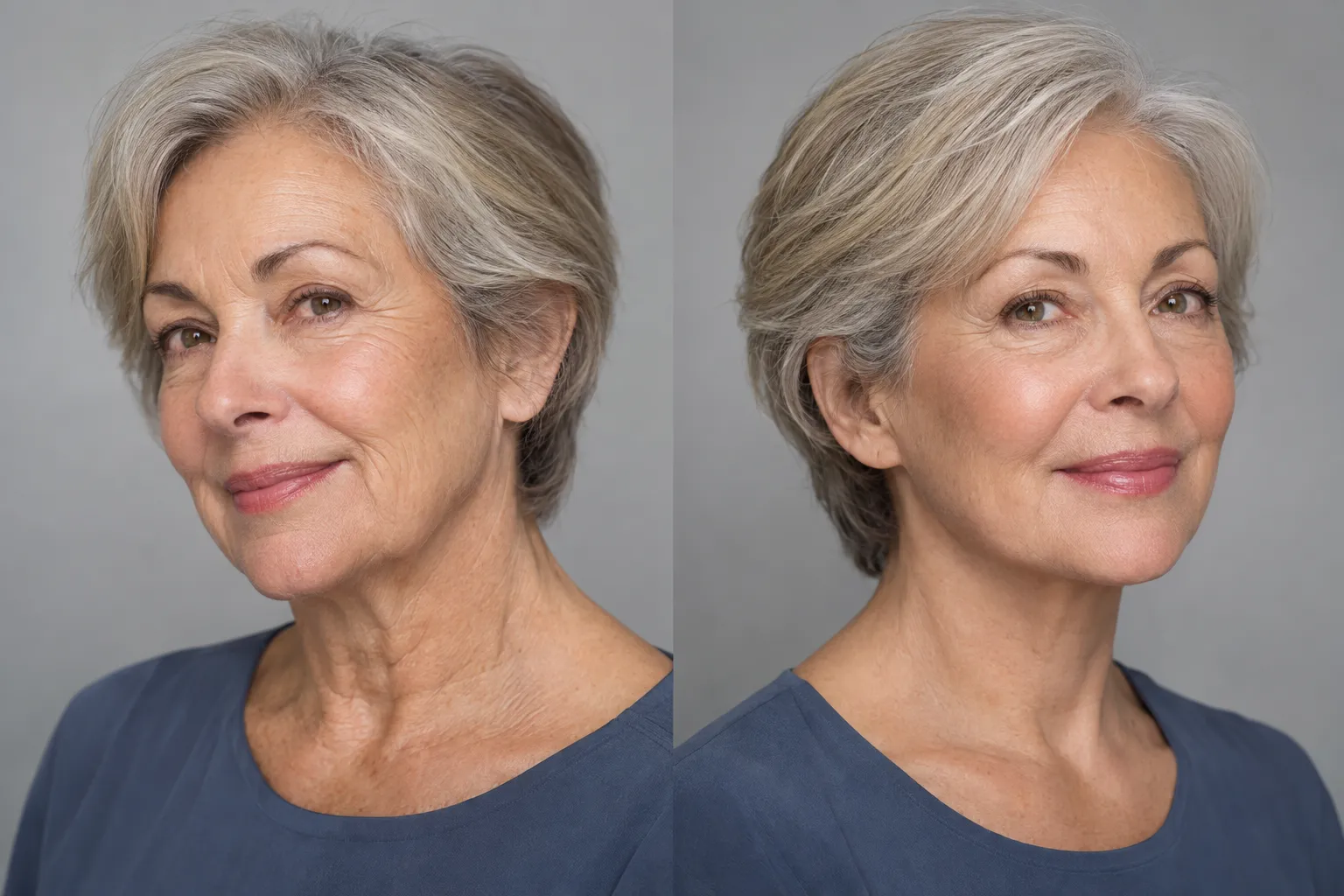
The choice is primarily about anatomy and treatment goals, not age. A mini facelift can address selected changes in the lower face, while a more extensive facelift may be considered when looseness extends beyond that area. The label alone does not specify what will be treated: ask the surgeon to explain the planned tissue work, incision placement, anesthesia, and limitations. Agreement about jawline, neck, and midface goals can help prevent a mismatch between expectations and the proposed operation.
What a Mini Facelift Treats and What It Doesn’t
A mini facelift generally targets early jowls and laxity around the lower face. It may refine the jawline, but it is not automatically a solution for pronounced neck skin laxity, neck banding, or midface descent. If the neck is a major concern, treating only the lower face could leave the overall result feeling incomplete. Identify the changes you notice most and ask which ones the proposed plan can reasonably address.
Mini Facelift vs Full Facelift Comparison: Incisions, Scope, Anesthesia, and Recovery
Incision patterns and recovery depend on the surgeon’s technique and your treatment plan. In general, a mini procedure has a narrower treatment scope than a full facelift. A broader operation may address more areas, with corresponding differences in surgical extent and healing. Neither option has one standard anesthesia plan. Ask Dr. Albert to describe the tradeoffs for your anatomy rather than choosing by procedure name alone.
| Consideration | Mini Facelift | Full Facelift |
|---|---|---|
| Typical focus | Selected lower-face laxity and jowls | Broader facial laxity, as indicated by the plan |
| Scope | More limited | More extensive |
| Anesthesia | Individualized; local anesthesia may be discussed | Individualized to the procedure and patient |
| Recovery | Depends on surgical extent and personal healing | Depends on surgical extent and personal healing |
When Dr. Albert Recommends Adding Neck or Deep Plane Work Instead
If neck laxity is a prominent concern, Dr. Albert may discuss a plan that includes the neck rather than a lower-face-only lift. When facial descent extends beyond what a mini lift can address, he may also discuss whether a Deep Plane Facelift better fits the patient’s anatomy and goals. These are not automatic additions. A recommendation should follow examination and discussion of the expected benefits, limitations, risks, and recovery associated with the proposed scope.
Mini Facelift Results, Longevity, and Before-and-After Expectations in Your 70s
A mini lift can create a visible change when the treatment area matches the concern, but it cannot stop ongoing aging or promise a particular degree of change. Before-and-after photographs are examples of individual outcomes, not predictions. Duly Health reports that results from aging-face surgery generally last about seven years, with variation related to individual factors and skin care. Ask how the planned operation may affect your concerns and what it will leave untreated. Realistic expectations include improvement in selected contours, not a return to an earlier appearance.
Mini Facelift Cost at 70: Transparent Pricing Breakdown
For a Mini Facelift at 70, the price depends on surgical scope, anesthesia, and facility, not age alone. Published figures can help set expectations, but they are not an individual quote. The Kaplan Center reports a RealSelf average of about $7,525, with reported prices ranging from $2,900 to $18,000. Those figures describe a broad range, not a not assured or typical charge at a specific practice.
What a Mini Facelift Costs: Surgeon Fee, Anesthesia, and Facility Fees
A written estimate should explain which services are included and which may be billed separately. Ask whether the surgeon’s fee, anesthesia services, facility charges, preoperative care, and follow-up visits are itemized. The total can also reflect the technique and extent of the operation. If your plan includes additional areas, confirm how that changes the estimate rather than assuming a base fee covers every part of care.
| Cost component | What to be clear |
|---|---|
| Surgeon’s fee | Which planned surgical services are included? |
| Anesthesia | What type is planned, and how is it billed? |
| Facility | Are operating-room and facility charges included? |
| Follow-up care | Which postoperative visits are part of the estimate? |
Mini Facelift Cost vs Full Facelift Cost at 70
A limited operation may cost differently from a broader facelift, but there is no reliable comparison without knowing what each plan includes. Compare a mini lower face lift estimate with a full facelift estimate only when treatment areas, anesthesia, facility, and follow-up services are clear. Choosing a smaller operation solely to reduce cost may not address your main concerns.
Why NYC Pricing Differs From National Averages
Fees vary by location, surgeon, facility, anesthesia plan, and operative scope. National averages combine different practices and procedures, so they may not reflect New York City pricing or your proposed surgery. Treat online figures as general context, then request a personalized, itemized estimate after an examination.
Questions to Ask About Pricing at Your Consultation
Ask for the full expected cost in writing, which services are included, whether additional fees may arise, and how changes to the surgical plan affect the estimate. Confirm the follow-up schedule and whom to contact with concerns after surgery. Dr. Mark Albert can discuss the proposed plan and its costs during an individualized consultation; the estimate should correspond to that plan, not a generic price range.
Mini Facelift Recovery Week by Week: What to Expect in Your 70s
Recovery varies with surgical extent, general health, and individual healing. Being 70 does not by itself predict how quickly bruising or swelling will resolve. Plan for help at home during the initial period, follow the surgeon’s instructions, and allow flexibility in social and work plans. This timeline is a general guide, not a promise; your care team should explain what to expect for your operation.
Days 1-2: Early Healing and Managing Discomfort
In the first days, rest and follow instructions for incision care and activity. Bruising, swelling, tightness, and discomfort can occur. Duly Health reports that oral pain medication is typically needed for only one to two days among its patients, but individual needs differ. Contact your surgical team if symptoms concern you, worsen unexpectedly, or do not match the guidance you received.
Week 1: Bruising Fades and Return to Daily Activities
During the first week, visible bruising and swelling may remain, even as some people gradually resume light daily tasks. Duly Health reports that most patients return to client-facing work around day seven. That is a general observation, not a deadline: comfort, healing, job demands, and your surgeon’s advice should guide your plans. Avoid scheduling an important event around an assumed recovery date.
Weeks 2-4: Swelling Settles and Social Confidence Returns
Bruising often becomes less noticeable over time, while residual swelling and firmness can take longer to settle. Appearance may change from week to week, so early photographs are not a final assessment of the result. Follow activity guidance and attend scheduled visits. Seek prompt medical advice for concerning changes, including increasing redness, drainage, fever, sudden swelling, or significantly worsening discomfort.
How Mini Facelift Recovery Compares to Full Facelift Recovery
A more limited operation may involve a narrower area of healing, while a broader facelift can involve more extensive surgical work. That does not establish a fixed recovery advantage for every patient. The procedure, anesthesia plan, health factors, and healing response shape the experience. Ask your surgeon which activities will be restricted and when they can resume based on your examination and operative plan.
Medical Clearance, Medications, and Healing Support for Older Adults
Before surgery, the clinical team reviews your health history, medications, and conditions that may affect anesthesia, bleeding, or healing. Do not stop or change prescribed medication unless the clinician managing your care gives specific instructions. Arrange transportation and practical support for early recovery, and keep follow-up appointments. Candidacy, recovery, risks, and outcomes require individualized clinical assessment.
Is a Mini Facelift at 70 Right for You? Candidacy Checklist and Next Steps

A Mini Facelift may be worth discussing if your concerns match its limited treatment scope and your health supports elective surgery. The decision is not based on age alone. Use the points below to prepare for a personalized evaluation, not to determine your own candidacy.
Candidacy Checklist for a Mini Facelift in Your 70s
- Your main concern is clear: Identify the facial changes you want to address, such as jowling or reduced jawline definition. Be prepared to discuss whether neck or midface changes also matter to you.
- Your expectations are realistic: Consider whether improvement in selected areas would meet your goals, even if the operation does not address every sign of aging.
- Your health history is ready for review: Bring an accurate list of medications, supplements, medical conditions, and prior surgeries. The surgical team can determine whether further medical assessment is needed.
- You can plan for recovery support: Consider transportation, help at home, follow-up visits, and flexibility in your schedule while healing.
- You understand the tradeoffs: Ask about the proposed technique, anesthesia, alternatives within facelift surgery, material risks, and areas that may remain untreated.
A limited lift is not automatically the right choice because it may involve less extensive surgery. If it cannot address your main concerns, a different facelift plan or deciding against surgery may be more appropriate. The recommendation should account for your anatomy, health, priorities, and tolerance for risk.
Questions About Anesthesia, Cost, and Visible Results
Is 70 too old? No age alone rules out surgery, but only an individualized medical assessment can determine candidacy. Can local anesthesia be used? It may be discussed, though the plan depends on the operation and patient. What will it cost? The estimate depends on the planned scope and included fees; request an itemized quote rather than relying on a general online figure. Will the change be noticeable? That depends on your starting anatomy and the areas treated. No surgeon can promise a particular degree of change.
Scheduling a Consultation with Dr. Mark Albert
During a consultation, Dr. Mark Albert can examine your facial anatomy, discuss your health history and goals, and explain whether a Mini Facelift fits the changes you hope to address. Dr. Albert is certified by the American Board of Plastic Surgery and is a Fellow of the American College of Surgeons. Ask for a clear explanation of the proposed plan, limitations, risks, recovery expectations, and itemized costs. A consultation is an opportunity to gather information; you can take time to consider the recommendation before deciding.
Frequently Asked Questions
Can a 70 year old have a mini facelift?
Yes, a 70 year old can be a candidate for a mini facelift, since age alone does not determine eligibility. What matters most is whether your general health supports elective surgery and whether a limited lift can address the areas that concern you. An in-person evaluation with a board-certified plastic surgeon like Dr. Mark Albert is needed to assess candidacy.
What are the downsides of a mini facelift?
The main downside of a mini facelift is its limited scope: it targets lower-face laxity and early jowls but does not correct pronounced neck looseness, neck banding, or midface descent. Results also vary by individual, cannot stop ongoing aging, and generally last about seven years. If the neck is a major concern, treating only the lower face may leave the result feeling incomplete.
Is a mini facelift or a full facelift better at 70?
The better choice at 70 depends on your anatomy and treatment goals, not your age. A mini facelift addresses selected changes in the lower face, while a full facelift may be more appropriate when looseness extends to the neck or midface. Ask your surgeon to explain the planned tissue work, incisions, anesthesia, and limitations before deciding.
Can a 75 year old get a facelift?
A 75 year old may be able to have a facelift if their health supports elective surgery and their goals fit the planned scope. Surgeons screen older patients by reviewing medical history, medications, healing considerations, and anesthesia risk rather than relying on age alone. Some evaluations lead to a different plan, further medical assessment, or a recommendation against surgery.
Why might older patients prefer local anesthesia for a mini facelift?
Many patients in their 70s have concerns about general anesthesia, so local anesthesia is often discussed as an option for a mini facelift. Whether it is appropriate depends on the procedure's extent, your medical history, and the assessment of the surgeon and anesthesia team. Ask who will administer the anesthesia, what monitoring is used, and whether the plan could change.
When might a mini facelift not be enough for someone in their 70s?
A mini facelift may not be enough when neck laxity is a prominent concern or when facial descent extends beyond the lower face. In those situations, Dr. Albert may discuss a plan that includes neck work or whether a Deep Plane Facelift better fits your anatomy and goals. Such recommendations follow an examination and a discussion of benefits, limitations, risks, and recovery.
How long do mini facelift results last in your 70s?
Mini facelift results in your 70s generally last about seven years, according to Duly Health, though this varies with individual factors and skin care. A mini lift can create a visible change when the treatment area matches your concern, but it cannot stop ongoing aging or promise a specific degree of improvement. Realistic expectations include refinement of selected contours, not a return to an earlier appearance.