

mini facelift recovery process
The mini facelift recovery process is measured in stages rather than one fixed number of days. Many patients return to desk work and light public activities within 7 to 10 days, while swelling, bruising, incision changes, and tissue settling continue for several weeks. Online images rarely show normal healing fluctuations.
Key Takeaways
- Returning to desk work within four to seven days is realistic, but full tissue healing and resolution of visible changes take several more weeks.
- Swelling and bruising peak in the first two to three days, then gradually improve over the following two weeks as the skin and deeper layers settle.
- Incision lines remain slightly pink or raised for months; final scar maturation often takes six to twelve months after surgery.
- Online recovery photos can be misleading because they rarely capture normal daily variations in swelling and bruising that occur during healing.
- Sleeping with the head elevated and avoiding strenuous activity for the first two weeks helps reduce swelling and supports stable healing.
A Mini Facelift may offer a limited approach for selected patients, but candidacy, technique, anesthesia, recovery, risks, and outcomes require individual assessment. This timeline is general education, not a substitute for instructions from your operating surgeon.
Understanding the Mini Facelift Recovery Journey: What to Expect
The Honest Reality: Bridging Social Media Hype and Clinical Milestones
Online recovery photographs often show a dressing change or polished appearance several days after surgery, not the full healing course. During the first week, swelling may shift, bruising may change color, and the jawline may look temporarily firm or uneven. Peak swelling and ecchymosis commonly occur between 48 and 72 hours. A patient may feel ready for a short outing while still showing visible signs of surgery.
Recovery depends on the amount of skin and soft-tissue work, healing behavior, age, skin characteristics, medical history, and adherence to postoperative instructions. A short procedure does not mean immediate full recovery. Early care should protect healing rather than conceal every visible change.
Dr. Mark Albert's Perspective on Mini Facelift Recovery
Dr. Mark Albert considers facial anatomy, skin quality, tissue laxity, proportion, and the patient’s desired degree of change. Initial hemostasis is followed by inflammation, early tissue repair, and later remodeling. These phases overlap, so improvement is progressive rather than perfectly linear.
The mini facelift recovery process should be discussed through milestones: supervision, the first follow-up, possible return to work, and activity restrictions. Dr. Mark Albert, MD, FACS, is certified by the American Board of Plastic Surgery and a Fellow of the American College of Surgeons. Recommendations for an individual patient require examination and an individualized surgical plan.
Who Is a Candidate for a Mini Facelift?
A Mini Facelift may suit an adult with early to moderate skin laxity, softening along the lower face, or less defined jowls who wants a focused facelift approach. General health, realistic expectations, and willingness to follow restrictions matter. Consultation also considers facial structure, elasticity, previous surgery, medications, smoking status, and conditions affecting wound healing or anesthesia.
This approach cannot stop aging, correct every facial concern, or guarantee a particular degree of definition. More advanced laxity may require another facelift plan, and similar concerns may have different anatomical causes. An in-person evaluation determines whether a Mini Facelift is appropriate and what recovery expectations are reasonable.
Your Mini Facelift Recovery Timeline: A Surgeon-Guided Roadmap

The following milestones are common, not a fixed prescription. The mini facelift recovery process varies with technique, incision pattern, anesthesia, tissue response, and surgeon instructions. A 2024 recovery overview from The Kaplan Center describes a similar pattern: early swelling and bruising may increase before settling, followed by gradual improvement.
The First 48 Hours: Immediate Postoperative Care and Rest
Rest and observation are central during the first two days. A responsible adult may need to remain available as directed. Mild drainage, tightness, swelling, tenderness, and reduced sensation near the incisions can occur. Keep the head elevated if instructed. Avoid bending, straining, rubbing the face, or changing dressings or medications independently.
Days 3 to 7: Navigating Peak Swelling, Bruising, and Initial Comfort
Swelling and bruising often become most apparent between the second and third days. Bruising may extend toward the neck or under-eye region before fading. Tightness and an unfamiliar appearance can be unsettling, but visual changes alone do not show whether healing is normal. Contact the surgical office about unexpected changes.
Week 1: First Follow-Up and Gentle Activity Resumption
The first follow-up commonly reviews incision appearance, swelling, bruising, comfort, and wound healing. Timing depends on the surgeon’s protocol and operation. Some patients begin short walks and limited household activity, while exercise, heavy lifting, bending, and activities that raise blood pressure remain restricted. Desk work may be possible near the end of the first week, though discoloration can affect readiness for public settings.
Weeks 2 to 4: Subduing Swelling and Returning to Normalcy
During weeks 2 to 4, bruising usually becomes less prominent and facial movement often feels more natural. Research summaries from Cincy Facial Plastics and The Kaplan Center report that many patients return to desk jobs and light outings within 7 to 10 days, though this is not not assured. Around 80 percent of visible swelling may resolve by weeks 3 to 4, while firmness, mild asymmetry, or numbness may remain. Resume makeup, hair care, driving, and exercise only as instructed.
Six Weeks and Beyond: Approaching Final Results and Long-Term Healing
At about six weeks, many patients look substantially more settled, but the final result may still develop. Scar maturation, sensory recovery, softening of tight areas, and contour refinement continue gradually. Research cited by Georgia Plastic reports that tissue remodeling can continue for 6 to 12 months. This does not mean visible swelling lasts that long; deeper tissues and scars may mature after daily routines resume.
| Recovery stage | Common milestones | Practical expectation |
|---|---|---|
| First 48 hours | Rest, monitoring, swelling, tightness | Plan for assistance and limited activity |
| Days 3 to 7 | Peak bruising and swelling, early follow-up | Appearance may be more noticeable before improving |
| Weeks 2 to 4 | Less discoloration, ongoing tissue settling | Many patients resume desk work and light outings |
| Six weeks and later | More stable contours, scar and sensory maturation | Final refinement may continue for months |
Mastering Postoperative Care: A Step-by-Step Clinical Protocol
After a Mini Facelift, home care supports wound healing and helps identify changes that need medical attention. Written instructions take priority because dressing type, incision location, anesthesia, medications, and tissue work differ. Arrange transportation and assistance as directed, keep the first days quiet, and do not change wound care or medication without guidance.
Essential Home Care: Managing Discomfort, Swelling, and Hydration
Rest with your head elevated as instructed, including during sleep if recommended. Walk gently around the home, but avoid bending at the waist, lifting, straining, or activities that cause facial throbbing. Swelling may increase during the first 48 to 72 hours. Use only approved comfort measures and medications. Do not apply ice, heat, creams, or pressure to an incision unless instructed.
Hydration supports general recovery, and small balanced meals may be easier to tolerate. Follow medication instructions and keep a record of fluids, medication timing, swelling changes, and questions for follow-up. The goal is steady healing, not rapid elimination of swelling.
Incision Care and Scar Management Near the Ear
Keep incisions around the ear clean and protected according to the operative plan. Wash your hands before touching them and use only the prescribed cleansing, dressing, ointment, and showering schedule. Do not pick crusting, pull adhesive, scrub, or apply cosmetics before permission. Brushes, combs, clips, and heat can irritate healing tissue.
Early redness, firmness, itching, or uneven texture may change as the incision strengthens. Sun protection becomes relevant once the wound has healed sufficiently, with timing and product determined by your clinician. Scar visibility depends on placement, skin, tension, genetics, healing, and aftercare. No protocol guarantees an imperceptible scar.
Understanding Sensory Changes: Numbness and Facial Tightness
Reduced sensation, tingling, firmness, and tightness along the cheek, jawline, or ear may occur as superficial tissues recover. The face may feel less flexible, and sensation may return unevenly. Avoid repeatedly pressing or massaging numb areas because irritation or pressure may be difficult to detect.
Keep scheduled visits and contact the office when symptoms do not follow the expected course. Dr. Mark Albert can assess the incision, tissue response, sensation, and contour, then tailor guidance to the individual Mini Facelift plan.
Resuming Physical Activity Safely: A Phased Approach
Advance activity in stages. Begin short, easy walks when permitted, and delay strenuous exercise, heavy lifting, deep bending, vigorous household work, and movements that increase facial pressure until cleared. Blood pressure elevation can contribute to bleeding or swelling, so return to exercise gradually.
Work, driving, outings, and exercise require separate consideration. Feeling comfortable at a desk does not mean tissues are ready for running or weight training. Base progression on incision healing, swelling, energy, medications, and examination.
Navigating the Psychological Environment of Recovery
Addressing Early Distortion Anxiety and Contour Concerns
The mini facelift recovery process can affect emotional wellbeing as well as physical comfort. Puffiness, firmness, bruising, uneven swelling, and altered movement may create a temporary appearance unlike the expected result. This can feel especially unsettling when online photographs suggest recovery is nearly complete within days. Early contour changes do not by themselves prove a poor outcome, but new or worsening changes should be discussed with the surgeon.
Assess progress through scheduled visits rather than repeated mirror checks or daily photographs. Lighting, camera angle, expression, and swelling can exaggerate differences. Record symptoms and questions, and tell the surgical team if anxiety persists, disrupts sleep, or makes instructions difficult to follow.
Managing Expectations for Social Re-Entry and Public Appearance
Return to work or social activities depends on bruising, swelling, energy, job demands, privacy, and setting. Many patients resume desk work and light outings within 7 to 10 days, but discoloration or tightness may remain. A brief gathering may feel manageable before a photographed event, presentation, or extended travel. Flexible plans allow healing to continue without added pressure.
Choose public activities without heat, exertion, crowding, or accidental facial contact. Your surgeon should determine when makeup, hair care, driving, exercise, and longer outings are appropriate.
The Importance of Patience and a Realistic Outlook in Healing
Healing includes inflammation, tissue repair, and scar maturation. Visible improvement may occur before deeper tissues settle. Firmness, numbness, asymmetry, and scar color can change after ordinary routines resume. Recovery differs according to anatomy, technique, health, and tissue response.
When to Seek Clinical Attention: Recognizing Red Flags
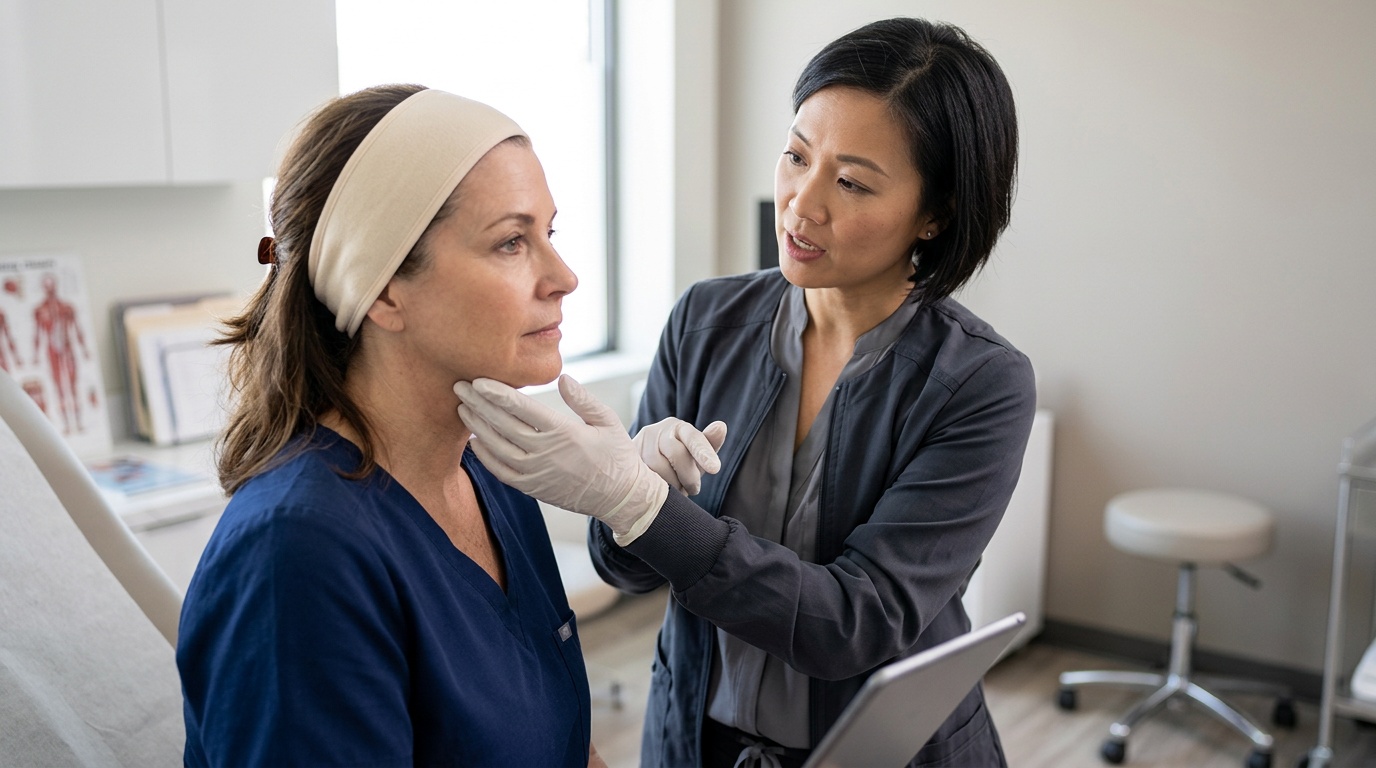
Signs of Hematoma, Infection, or Compromised Blood Supply
Contact the surgical office promptly for rapidly increasing one-sided swelling, expanding bruising, persistent bleeding, marked redness, warmth, drainage, fever, wound separation, or skin that becomes unusually pale, dusky, or dark. Sudden or severe changes should not wait for a scheduled visit.
Persistent or Worsening Pain: What It Might Indicate
Pain that intensifies rather than improves, becomes strongly one-sided, or occurs with swelling, fever, drainage, or altered sensation warrants clinical advice. General information cannot determine the cause. Follow the prescribed pain plan and do not add medication without professional direction.
Contacting Dr. Albert's Office: Your Guide to Postoperative Support
Keep office contact information available and ask which number to use after hours. Describe when a change began, whether it is progressing, its location, associated symptoms, and relevant activity. Dr. Mark Albert and the postoperative team can determine whether office assessment, urgent evaluation, or emergency care is appropriate. For severe or life-threatening symptoms, seek emergency medical attention immediately.
Frequently Asked Questions About Mini Facelift Recovery
How long does the mini facelift recovery process truly take?
Many patients resume desk work within 7 to 10 days, while swelling, sensation, scars, and tissue remodeling continue longer. Recovery varies.
When can I return to work and social events?
Light activities may resume during the first or second week, subject to clearance, bruising, energy, and job demands.
Why does swelling and bruising peak around days 2 and 3?
Inflammation and fluid movement can increase after surgery, so swelling and ecchymosis commonly peak between 48 and 72 hours.
How should I care for incisions near the ear?
Follow the prescribed cleansing and dressing plan. Avoid picking, scrubbing, pressure, and unapproved products until sufficiently healed.
Is tightness or numbness along the jawline normal after a Mini Facelift?
Temporary tightness, firmness, tingling, or reduced sensation can occur. Report worsening, severe, or unexpected symptoms to the surgical office.
Frequently Asked Questions
How long does it take to look normal after a mini facelift?
Mini facelift recovery often allows desk work and light public activities within 7 to 10 days, but visible healing continues for several weeks. Swelling and bruising commonly peak 48 to 72 hours after surgery, while firmness, numbness, mild asymmetry, and scar changes may last longer. Individual timing depends on the technique, health, and healing response.
How painful is mini facelift recovery?
Mini facelift recovery commonly includes tightness, tenderness, swelling, and reduced sensation near the incisions, with discomfort varying among patients. The first few days may feel more uncomfortable as swelling develops, and prescribed care should be followed exactly. Contact the surgical office about pain that is severe, worsening, or accompanied by unexpected changes.
What is the worst day after a facelift?
The second or third day is often the most noticeable period after a mini facelift because swelling and bruising commonly peak between 48 and 72 hours. Bruising can change color or extend toward the neck and under-eye area before fading. Visual changes alone do not confirm whether healing is normal, so concerning symptoms should be reported to the surgeon.
Can you show me pictures of my mini facelift recovery from day one?
Mini facelift recovery pictures can illustrate common changes, but they cannot predict how an individual patient will heal. Day one may show dressings, swelling, tightness, drainage, or bruising, while the appearance can change during the first week. Surgeon-approved images are more useful when viewed with clinical guidance and realistic expectations.
Can you show me some pictures of a mini facelift before and after?
Mini facelift before-and-after pictures can demonstrate possible changes in the lower face, jawline, or jowls, but results vary by anatomy, skin quality, technique, and healing. Photographs do not establish candidacy or guarantee a similar outcome. A consultation with Dr. Mark Albert can address whether this approach fits a patient’s goals and anatomy.
When can I exercise after a mini facelift?
Mini facelift recovery usually requires avoiding exercise, heavy lifting, bending, and activities that raise blood pressure until the operating surgeon allows them. Gentle walking may be appropriate for some patients during the first week, based on individual instructions. Resuming exercise too early can place stress on healing tissues, so timing should be confirmed at follow-up.