

modified deep plane facelift
A modified deep plane facelift uses selective release of facial retaining ligaments and repositioning of deeper tissues instead of relying on skin tension alone. The goal is balanced elevation of the midface and lower face while preserving movement and avoiding an overfilled or pulled appearance. Dissection, vector, anesthesia, and recovery vary with anatomy and require an in-person consultation with a qualified plastic surgeon.
Key Takeaways
- A modified deep plane facelift lifts the midface and lower face by freeing selected retaining ligaments, allowing deeper tissue to move as a unified layer.
- Working beneath the skin rather than tightening it helps preserve natural facial movement and limits the risk of an overdone or windswept appearance.
- Details such as the depth of dissection, the direction of the lift, and the type of anesthesia are planned around each patient's unique anatomy.
- Recovery experiences vary widely, so an in-person consultation with a board-certified plastic surgeon remains the best way to understand what your individual result and healing timeline may look like.
What Makes a Facelift “Modified”?
“Modified” describes a tailored deep-plane operation, not one fixed procedure. Rather than releasing every ligament or moving every deep fat compartment, the surgeon identifies which structures limit elevation and which should remain intact. The SMAS, platysma, connective tissue, and selected fat compartments may be repositioned as a composite layer, allowing a relatively tension-free skin closure. Dr. Mark Albert evaluates tissue descent, skin quality, facial proportions, and the cheek-to-lower-face relationship before choosing the plan.
Standard vs. Modified Deep Plane Release
A traditional SMAS facelift primarily adjusts the superficial musculoaponeurotic system, with separate treatment of the skin envelope. A classic deep plane facelift proceeds beneath the SMAS and releases a broader set of retaining structures so cheek and lower-face tissues move together. The modified approach uses the same deeper anatomical principle with more selective dissection. Customized vectors may be upward, outward, or slightly medial, depending on cheek descent, jowling, nasolabial folding, or loss of lower-face definition.
| Approach | Primary tissue plane | Planning emphasis |
|---|---|---|
| SMAS facelift | SMAS and skin envelope | Adjustment of laxity with a separately managed skin closure |
| Classic deep plane | Deep to the SMAS | Broader release for composite movement of cheek and lower-face tissues |
| Modified deep plane | Deep plane in selected regions | Selective release, limited mobilization, and individualized lifting vectors |
Ligament Selection and the “Midface Sparing” Concept
Retaining ligaments anchor facial soft tissue to deeper bone and fascia. They provide support, although some restrict elevation when midface descent is present. A selective plan may address zygomatic and masseteric cutaneous ligaments while preserving boundaries that support cheek stability and natural expression. Anatomy differs among patients, so a diagram is an educational guide, not a surgical map.
- Potentially released: selected zygomatic, masseteric, or other limiting attachments identified during the planned dissection.
- Potentially preserved: retaining structures that support facial balance, protect important anatomy, or do not restrict the intended vector.
- Deep tissues considered: malar and buccal fat relationships, SMAS continuity, platysma position, and cheek-to-jowl transition.
Why Modified Release Preserves Natural Expression
Facial expression depends on coordinated movement among skin, fat, fascia, and muscles. Releasing only attachments that limit correction can reduce unnecessary mobility and help prevent excessive lateral pull. The objective is to restore proportion while allowing smiling, speaking, and normal animation to remain recognizable. The Mini Facelift may be considered for more limited concerns, but suitability depends on the degree and location of laxity. A second Mini Facelift reference is not a recommendation without examination.
Nasolabial Fold and Lower Midface: How Modification Improves These Areas Without Distortion
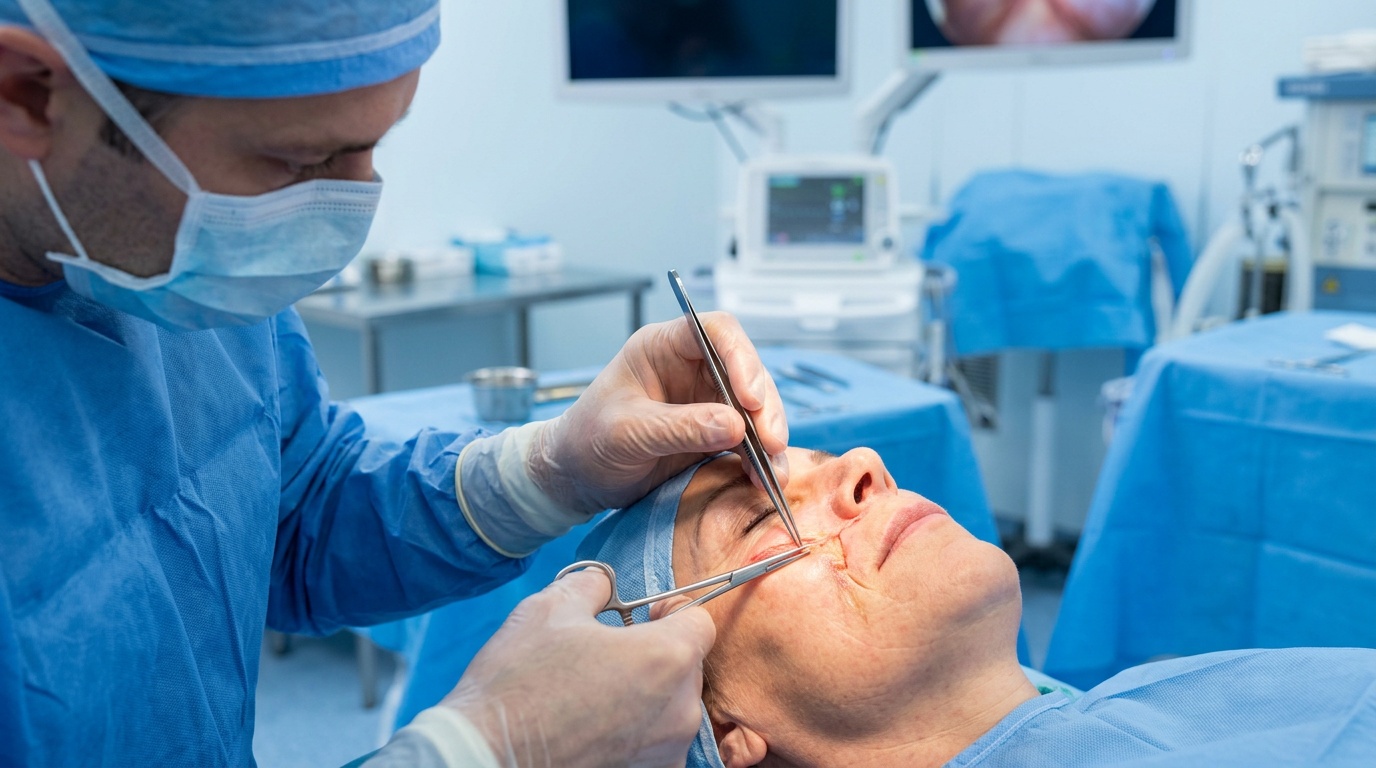
How Selective Ligament Release Elevates the Midface
The nasolabial fold often becomes more prominent as the cheek descends and the soft-tissue transition between the cheek and upper lip changes. A modified deep plane facelift can reposition the descended cheek as a deeper tissue unit instead of pulling skin directly toward the temples. This may soften the fold and improve the lower midface while preserving facial width and contour. In a 632-patient retrospective study published in Plastic & Reconstructive Surgery, Kim and colleagues reported improvement in the Wrinkle Severity Rating Scale for nasolabial folds from 2.89 at baseline to 1.65 after the modified technique. Study findings do not predict an individual result.
Avoiding the “Pillow Face” by Limiting Deep Compartment Mobilization
“Pillow face” generally describes a rounded, overfilled appearance rather than a naturally repositioned cheek. The modified approach does not require broad movement of every deep fat compartment. Selective repositioning can restore a descended contour without unnecessary fullness, while limiting skin traction can reduce a stretched or windblown appearance. Fat volume, cheek width, skin elasticity, bone structure, and preexisting asymmetry affect the final contour. Consultation is needed to determine whether deep structural descent, skin laxity, or another anatomic factor is dominant.
Key insight: Natural midface rejuvenation depends on tissue position and proportion, not simply on adding volume. A restrained plan may produce a more balanced contour than broad mobilization or tight skin pulling.
Zygomaticus Major Plication: A Key Difference in Technique
The zygomaticus major contributes to smiling and midface movement. In the technique described in the relevant Plastic & Reconstructive Surgery report, plication of this muscle may support midface contour by gathering and stabilizing selected tissue rather than depending only on skin tension. Careful anatomical judgment is required because the muscle’s location and function relate directly to expression. Risks include bleeding, infection, nerve injury, asymmetry, contour irregularity, scarring, and changes in facial movement. Dr. Mark Albert can discuss whether this method fits a patient’s anatomy during an individualized evaluation.
Recovery by the Hour: Day 1 Through Week 2 and Beyond
Recovery after a modified deep plane facelift is gradual. Early swelling, bruising, tightness, numbness, and uneven fullness may change throughout the day and do not reliably predict the final contour. Your surgeon’s instructions take priority because incision care, activity limits, medication guidance, and follow-up timing vary with the operation, anesthesia, medical history, and tissue response.
Days 1-3: Expected Swelling, Bruising, and Discomfort Management
During the first several days, patients commonly notice facial tightness, cheek and jawline swelling, bruising near the ears or lower face, and temporary numbness. Mild drainage or pressure may occur when approved by the surgical team. Discomfort may relate to tissue tension, swelling, sleep position, and limited jaw movement, although experiences differ. Rest, head elevation, short walks as permitted, and incision protection are typical early aftercare.
The face may look unfamiliar on the first morning, especially when swelling is uneven. One cheek can appear fuller, one side can bruise more deeply, and the hairline or ear area may feel tight. Avoid judging balance from photographs during this phase. Contact the surgical office promptly for rapidly increasing one-sided swelling, persistent bleeding, fever, worsening redness, drainage, breathing difficulty, chest symptoms, or a sudden change in facial movement.
Days 5-7: The “Worrisome Window” and When You Look Human Again
Days five through seven can be difficult because bruising may remain visible while swelling shifts into the cheeks, jawline, or neck. Recovery often progresses in steps rather than steady daily improvement. A small increase in fullness after activity or poor sleep does not necessarily indicate a complication. Scheduled examinations help distinguish expected changes from findings requiring treatment.
Many people begin moving more comfortably around the home during this interval, though social plans may remain premature. Gentle activity may be appropriate, while strenuous exercise, heavy lifting, bending, and facial pressure generally remain restricted until clearance. Do not use cosmetics, hair products, or skin treatments near healing incisions unless approved by the care team.
Day 10-14: Social Presentation and What Still Needs Healing
Major bruising and social presentation commonly improve between days 10 and 14 for many patients, although timing varies. Some feel ready for limited public activities, while others prefer more privacy because residual swelling, yellowing bruises, incision redness, or temporary stiffness remains visible. A scarf, hairstyle, or carefully selected schedule may provide comfort, but concealment should not replace medical review when a change seems concerning.
At two weeks, the face may look more settled without being finished. Smile movement can feel unfamiliar, sensation may remain reduced around the cheeks or ears, and the jawline may continue changing. Incisions require protection from excess tension and sun exposure, and scar care should follow individualized instructions. Return to work depends on occupation, commute, public visibility, and healing rather than a fixed date.
Month 1-6: Final Contouring and Scar Maturation
During the first month, swelling usually declines, but firmness, small contour differences, and intermittent numbness can persist. By the second and third months, movement and tissue softness often feel more familiar, while refinement continues. Scar color and texture may mature over several months. Incision location, pigmentation, sun exposure, and wound healing affect scar development.
Deep tissue elevation, skin contraction, sensory recovery, and scar maturation occur on different schedules. Follow-up visits allow Dr. Mark Albert to evaluate healing, symmetry, incision quality, and return of expression. Complications can occur despite appropriate planning, including hematoma, infection, delayed healing, nerve dysfunction, asymmetry, contour irregularity, and visible scarring. Personalized medical advice is necessary whenever recovery differs from the surgical team’s instructions.
Who Benefits Most from the Modified Deep Plane Approach?
A modified deep plane facelift may suit a patient whose main concern is cheek and lower-midface descent rather than loose skin alone. Candidacy depends on anatomy, tissue quality, facial proportions, medical history, and goals. Examination with Dr. Mark Albert is necessary to determine whether this approach, a traditional SMAS facelift, a Mini Facelift, or another plan is appropriate.
Key Candidacy Criteria: Midface Descent vs. Skin Laxity
The main concern may be downward movement of the malar fat pad, cheek soft tissue, or lower facial support. This can deepen the nasolabial fold, contribute to early jowling, reduce jawline definition, and create a heavier cheek-to-mouth transition. A patient with mild surface laxity may not need broad deep-plane mobilization, while skin tightening alone may create excess tension without restoring midface position.
- Visible cheek or midface descent that affects facial balance.
- Nasolabial folding or early jowling related to soft-tissue movement.
- Sufficient general health for elective surgery and anesthesia, as determined by a qualified clinician.
- Realistic expectations about gradual healing, residual lines, asymmetry, and scar maturation.
- Willingness to follow incision care, activity restrictions, and follow-up instructions.
Age and Tissue Considerations: Not Every Patient Needs Full Release
Age alone does not determine whether a patient needs a deep-plane operation. Some younger adults have midface descent because of inherited anatomy, changes in soft-tissue support, or variations in skin elasticity. Some older adults retain strong cheek support and may need a more limited strategy. Skin thickness, collagen quality, facial bone structure, previous surgery, smoking status, and laxity distribution all affect planning.
Selective release can be appropriate when only certain retaining structures limit elevation. Releasing more tissue is not automatically better. The plan should match the location of descent and desired vector while protecting facial nerve anatomy and natural movement. Candidacy also requires acceptance that no technique guarantees perfect symmetry, invisible scars, a particular duration, or unchanged expression.
Structural Elevation Alone Is Not a Skin Treatment
Facelift surgery changes the position of selected tissues but does not correct every skin feature. Fine lines, uneven pigmentation, sun damage, enlarged pores, redness, and altered texture may remain. A smoother appearance may result from better facial support, while the skin continues to follow its own biology and aging pattern.
During consultation, Dr. Albert can separate concerns caused by tissue descent from those caused by surface skin quality. This supports realistic expectations and helps prevent excessive lifting in an effort to correct pigmentation or texture. The recommended Mini Facelift is also anatomy-dependent and may be considered when laxity is limited, but it cannot be selected responsibly without examination. Technique choices, risks, anesthesia considerations, and recovery expectations require individualized medical assessment.
Frequently Asked Questions About Modified Deep Plane Facelift

How long does recovery take before I can return to work?
Many patients plan approximately two weeks before public-facing work, though timing varies with bruising, swelling, occupation, and healing. Physically demanding work may require additional restrictions. Your surgeon should determine readiness during follow-up.
Will I look like I had work done?
A carefully planned modified deep plane facelift aims to reposition support tissues rather than pull skin tightly. Natural expression and proportion remain goals, but results vary with anatomy, technique, healing, and age. No surgeon can promise an undetectable result.
How long do results last, and what affects longevity?
Deep tissue elevation can provide durable improvement, yet facial aging continues. Skin elasticity, sun exposure, genetics, weight changes, smoking, and tissue quality affect longevity. Published research describes long-term structural elevation, but individual duration cannot be not assured.
Can I combine a modified deep plane facelift with other procedures?
Some patients may be candidates for combined facial surgery, while others may face unnecessary risk from a longer operation. Medical history, anesthesia considerations, surgical goals, and recovery demands must be reviewed in person before a combined plan is considered.
How do I choose between a modified deep plane and a traditional SMAS facelift?
The decision depends on whether the dominant issue is midface descent, lower-face laxity, skin excess, or a combination. A qualified plastic surgeon should assess the SMAS, retaining ligaments, fat compartments, skin envelope, and facial nerve anatomy before recommending a technique.
Frequently Asked Questions
What is the downside of a modified deep plane facelift?
A modified deep plane facelift carries risks including bleeding, infection, nerve injury, asymmetry, contour irregularity, scarring, numbness, and changes in facial movement. Swelling and recovery are also expected to vary. Selective dissection may limit unnecessary tissue movement, but it does not remove surgical risks or guarantee a natural-looking result.
What is the average cost of a modified deep plane facelift?
The cost of a modified deep plane facelift varies by surgeon, location, anesthesia, facility fees, and the procedures included in the plan. A reliable average cannot be assigned without reviewing those factors. Dr. Mark Albert can discuss a personalized estimate after evaluating facial anatomy, treatment goals, and the planned surgical approach.
What is the new facelift everyone is getting?
A modified deep plane facelift is one contemporary facelift approach receiving attention, but no single facelift is appropriate for everyone. The technique selectively releases limiting retaining ligaments and repositions deeper tissues rather than relying mainly on skin tension. Candidacy and technique depend on tissue descent, skin quality, facial proportions, and individual goals.
Does a modified deep plane facelift really last 10 years?
A modified deep plane facelift may provide long-lasting improvement, but no procedure can promise a specific duration such as 10 years. Aging, genetics, sun exposure, weight changes, skin quality, and surgical technique affect how results change over time. An in-person consultation is needed to discuss expected longevity for a particular patient.
What is the most regretted cosmetic surgery?
No single cosmetic surgery can be identified as the most regretted for every patient because satisfaction depends on expectations, anatomy, goals, complications, and recovery. Facelift regret may arise when a person expects permanent correction, chooses an unsuitable procedure, or is unprepared for changes in appearance and facial movement. Careful consultation helps patients weigh benefits, limitations, and risks.
How is a modified deep plane facelift different from a traditional facelift?
A modified deep plane facelift selectively works beneath the SMAS in planned regions, while a traditional SMAS facelift mainly adjusts the SMAS and manages the skin envelope separately. The modified approach may move cheek and lower-face tissues as a deeper unit with less broad dissection. The appropriate plan depends on each patient’s anatomy and laxity.