

short scar facelift scars
Short scar facelift scars are planned around facial anatomy, skin movement, and the deeper support layer rather than incision length alone. A well-positioned incision can heal discreetly, but scar quality also depends on tension distribution, collagen remodeling, skin characteristics, and postoperative instructions. Individual healing varies, so an in-person consultation with a qualified plastic surgeon is necessary before deciding whether a short-scar approach is appropriate.
Key Takeaways
- Strategic planning for short scar facelift incisions considers facial anatomy, skin mobility, and underlying support structures, not just the length of the cut.
- Achieving discreet scar healing involves careful management of tension distribution, collagen formation, individual skin traits, and adherence to postoperative care guidelines.
- Because each person heals differently, a personal consultation with a qualified plastic surgeon is essential to determine if a short-scar facelift is the right option.
Understanding Short Scar Facelift Scars: What to Expect
Defining the Short Scar Facelift: A Focused Approach
A short scar facelift uses a more limited incision than a traditional full rhytidectomy, often beginning near the temple, continuing around the front or edge of the ear, and ending near the earlobe rather than extending behind the ear and into the hair-bearing scalp. This design may suit patients whose primary concerns involve early jowling, laxity along the lower cheek, or mild to moderate tissue descent. It is not a universal solution. The amount of skin laxity, neck involvement, facial structure, and soft-tissue position all influence the appropriate technique.
Incision Placement: Strategic Design for Concealment
Incisions are placed where natural shadows, the ear’s contours, and existing hair can provide visual camouflage. Around the ear, careful alignment with the tragus and earlobe helps preserve normal landmarks. At the temple and sideburn, the incision should respect hair direction and the temporal hairline so healing does not create an obvious step-off. The goal is not merely to make an incision shorter. It is to create a fine, well-supported line that follows anatomy and remains proportionate to the amount of correction required.
How Short Scar Incisions Differ from Traditional Facelifts
A traditional facelift generally uses a longer incision that can extend behind the ear and into the scalp. A short-scar approach reduces the length of that pathway, with some techniques ending near the earlobe. Research summaries report that these incisions may eliminate approximately 40% to 50% of the total incision length used in a traditional rhytidectomy, though the exact design depends on the patient and operation. Less incision does not mean less surgery in every case, and a limited approach may not address substantial neck skin laxity or more advanced descent.
The Role of Deep-Tissue Support in Minimizing Surface Scarring
The skin should not carry the entire burden of facial repositioning. Surgeons may address the SMAS, or superficial muscular aponeurotic system, and related deeper tissue planes to distribute lift forces beneath the skin. In selected patients, deep-plane suspension can reposition descended tissues with less reliance on pulling the skin tightly. This anatomical principle may support a smoother contour and reduce strain across the closure, though it cannot eliminate visible scars or guarantee a particular result. Dr. Mark Albert evaluates the facial skeleton, soft-tissue descent, skin elasticity, and desired correction before selecting a technique, including a Mini Facelift when that focused operation fits the patient’s anatomy.
The Short Scar Facelift Healing Timeline: From Day 1 to Maturation

Immediate Post-Op (Days 1-7): Initial Healing and Comfort
During the first week, swelling, bruising, tightness, numbness, and mild asymmetry can make the face appear unlike its eventual appearance. Incisions may be pink or red, and small areas of crusting can occur as the skin edges seal. Dressings, washing instructions, activity limits, and follow-up timing should come directly from the operating surgeon. Patients should avoid judging the final scar during this early inflammatory phase. Increasing pain, spreading redness, drainage, fever, or sudden swelling requires prompt contact with the surgical team.
Week 2: Transitioning Toward Normalcy and First Scar Observations
Many patients begin returning to public social activities and non-strenuous work within 10 to 14 days, based on healing and the surgeon’s guidance. At this stage, facelift scars after 2 weeks may remain pink, firm, slightly raised, or uneven in color. Bruising can persist, and swelling near the cheeks or ears may continue to change from morning to evening. A scar that looks noticeable at two weeks is not necessarily a bad scar. Early appearance offers limited information about the final result.
Weeks 6-8: Scar Maturation and Addressing Common Concerns
By six to eight weeks, most surface wounds have closed, yet collagen remodeling is still active. Redness at seven weeks can fall within ordinary scar maturation, particularly in lighter or more reactive skin. Firmness, itching, altered sensation, and a ridge beneath part of the incision may also soften gradually. Scar tensile strength reaches only about 20% at three weeks, according to the research findings provided for this guide, so the tissue remains biologically immature well beyond the point when it looks closed.
3-6 Months: Fading and Softening of Incisions
Over the next several months, many incisions become flatter, paler, and more flexible. The exact pace depends on genetics, pigmentation, sun exposure, smoking status, nutrition, medical conditions, and the location of the incision. Temporary numbness or tightness can gradually improve as superficial nerves recover. Patients should continue the surgeon’s scar-care plan rather than adding products or massage without instruction. The short scar facelift recovery period is not identical for every patient, and visible healing may progress unevenly on the two sides of the face.
12+ Months: Scar Maturation and Natural Appearance
Scar remodeling can continue for 12 full months. At that point, a healed line may be difficult to notice at conversational distance, though a close examination can still reveal a subtle change in texture or color. “Fading completely” is not a medically predictable promise, since scars remain permanent tissue even when they become inconspicuous. Short scar facelift scars should be assessed over time, with attention to contour, ear anatomy, hairline position, and skin quality rather than a single early photograph.
The Mini Facelift is one facelift option that may use a limited incision pattern, but its suitability, tissue support, anesthesia, recovery, and risks require individualized evaluation. Dr. Albert can assess whether the planned correction and incision design are anatomically appropriate during a consultation.
Preventing Unnatural Results: Earlobe Preservation and Hairline Integrity
The “Pixie Ear” Deformity: What Causes It and How to Avoid It
A pulled-down or elongated earlobe, sometimes called pixie ear, can occur when excessive tension is placed on the skin around the ear rather than being distributed through deeper supporting tissues. Scar contracture, inaccurate tissue alignment, or insufficient support beneath the skin may alter the relationship between the earlobe, cheek, and jawline. These changes are not an expected requirement of a facelift, though individual healing and anatomy influence risk. A consultation should include assessment of the earlobe attachment, skin laxity, facial proportions, and the amount of lifting needed.
Meticulous Earlobe Reattachment and Closure Techniques
Preserving the earlobe begins before the incision is made. The surgeon marks the natural junction between the cheek and ear, then plans closure so the lobe remains in its original position without upward or downward traction. Deep sutures can help support repositioned tissues, while precise skin-edge alignment limits folding, bunching, and excess tension at the visible incision. Dr. Mark Albert evaluates these details when planning a facelift or a Mini Facelift. The operation selected, including its depth and incision pattern, must correspond to the patient’s anatomy rather than a fixed template.
Preserving the Tragus and Natural Ear Contour
The tragus is the small cartilage structure at the front of the ear. An incision that sits too far forward, or closure that pulls the skin tightly across this area, can make the ear appear flattened or overly exposed. Careful dissection and closure preserve the tragus, the preauricular crease, and the natural shadow beside the ear. Short scar facelift scars may be less conspicuous when they follow these landmarks, though a shorter incision alone does not determine scar quality. Swelling, firmness, and uneven redness can temporarily obscure the final contour while tissue remodeling continues.
Managing Hairline Incisions: Sideburns and Temporal Tuft
Hairline planning requires attention to the direction, density, and natural border of the sideburn and temporal tuft. If skin is pulled without respecting hair growth, the sideburn may shift, the hairline may look elevated, or a visible step-off may develop. An incision placed within a natural hair-bearing boundary can be easier to conceal, but hair follicles must be handled carefully to limit trauma. Patients should ask how the surgeon plans to preserve sideburn position, temporal hair, and the transition from temple to ear.
- Earlobe: Maintain the natural attachment and avoid downward traction.
- Tragus: Follow the ear’s contour without flattening the cartilage landmark.
- Sideburn: Respect existing hair direction and density.
- Temporal tuft: Avoid a sharp change in the hairline or a visible step.
- Deep support: Distribute lifting forces through the SMAS or selected deeper tissue planes rather than relying on skin tension alone.
Comprehensive Scar Care and Optimization with Dr. Mark Albert
Post-Operative Scar Care Protocol: A Step-by-Step Guide
Scar care should begin with the operating surgeon’s instructions because closure materials, wound appearance, medical history, and healing speed differ among patients. The incision must remain clean and protected while the skin edges seal. Do not apply creams, oils, makeup, silicone, or massage until the surgical team confirms that the wound is ready. A practical framework is:
- Follow instructions for washing, dressing changes, medications, and scheduled visits.
- Observe the incision without picking crusts or removing sutures yourself.
- Report spreading redness, increasing warmth, drainage, fever, separation, or rapidly worsening swelling.
- Once the surface is fully closed, confirm whether silicone or another scar product is appropriate.
- Resume activity, hair care, and touch around the ears only according to individualized guidance.
When and How to Use Silicone Sheets and Gels
Silicone sheets and silicone gels are commonly used after an incision has completely closed, not on an open, draining, or scabbed wound. They may help maintain hydration and provide a protective barrier during scar remodeling, though they cannot erase a scar or guarantee a particular appearance. The surgeon should confirm the starting date, wear schedule, cleaning method, and response to irritation. A thin layer of gel may be useful in areas where a sheet does not fit comfortably, such as the curves around the ear. Stop and contact the clinical team if itching, rash, blistering, or worsening redness develops.
The Importance of Gentle Mobility and Massage
Early vigorous rubbing can irritate healing tissue and place unnecessary force across the incision. Gentle movement of the neck and face may be permitted as swelling settles, while scar massage is generally considered only after the wound is closed and the surgeon gives specific approval. The technique may involve light circular or crosswise motion, but pressure and timing depend on the incision, sutures, tenderness, and tissue firmness. Lymphatic drainage should not be self-directed immediately after surgery. Ask the surgical team whether it is appropriate and who should perform it.
Sun Protection: Your Essential Daily Defense
Ultraviolet exposure can darken or prolong the visibility of a healing scar. Once the incision is adequately closed and the surgeon permits sunscreen, use broad-spectrum protection and physical coverage such as a hat. Avoid placing sunscreen directly on an open wound. Sun protection matters even when redness has faded because collagen remodeling continues for months. Patients with a history of darkening scars or strong pigment response should discuss a tailored prevention plan during follow-up.
Factors Influencing Scar Quality: Genetics, Health, and Surgeon Skill
Scar appearance reflects several variables: inherited healing tendencies, skin thickness and pigmentation, smoking or nicotine exposure, nutrition, medical conditions, infection, wound tension, and postoperative care. Surgical precision also matters. Dr. Mark Albert’s planning considers incision placement, deep-tissue support, ear anatomy, hairline position, and the amount of correction required. Even with careful technique, scars remain permanent tissue and can mature at different rates on each side. If a scar becomes raised, increasingly painful, opens, or changes unexpectedly, seek timely assessment rather than relying on photographs or online comparisons.
Short Scar Facelift: Candidacy, Technique Variations, and Cost Considerations
Who is an Ideal Candidate for a Short Scar Facelift?
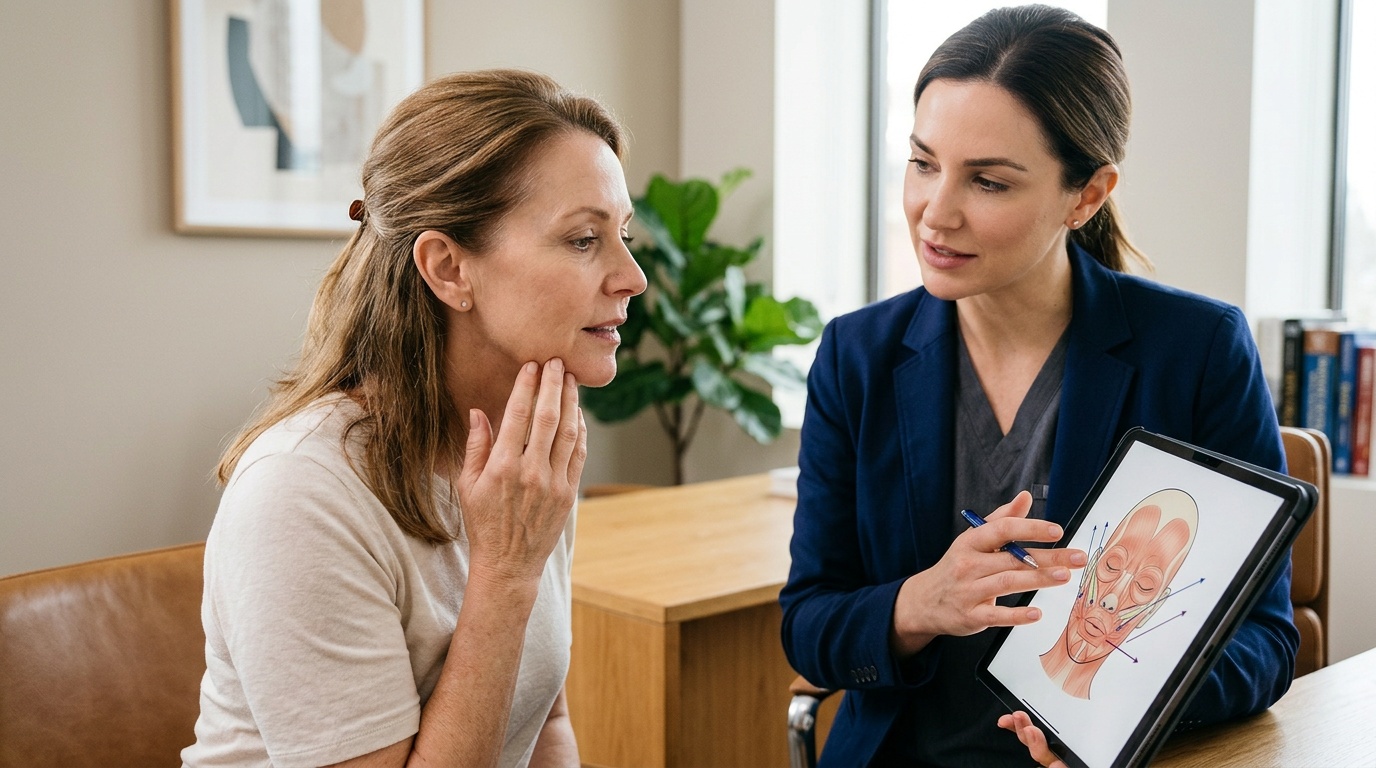
A short-scar approach may suit an adult with early to moderate jowling, lower-cheek laxity, and limited skin excess who prefers a focused incision pattern. It may be less suitable when substantial neck skin, advanced facial descent, or extensive tissue repositioning requires a longer access route. Skin elasticity, bone structure, facial asymmetry, prior surgery, medical history, smoking or nicotine exposure, and healing tendencies all affect planning. A consultation with a qualified plastic surgeon is necessary to determine candidacy, anesthesia, recovery expectations, and risk. Photographs alone cannot establish whether this approach is appropriate.
Comparing Short Scar Facelift Techniques: Mini Facelift vs. Nanolift™
The Mini Facelift is a focused facelift option that may address localized laxity through a limited incision and tailored tissue support. Nanolift™ is another short-incision concept designed for carefully selected anatomy and a more limited degree of correction. Neither name defines a single operation for every patient. The extent of skin laxity, SMAS position, jawline contour, neck involvement, and desired change determine the surgical plan.
| Consideration | Mini Facelift | Nanolift™ |
|---|---|---|
| Typical focus | Localized lower-face laxity and early jowling | Very limited correction for carefully selected anatomy |
| Incision planning | Short pattern adapted to the ear and hairline | Compact pattern based on tissue descent and skin excess |
| Key limitation | May not address substantial neck laxity | May not provide enough correction for advanced descent |
Dr. Mark Albert’s Approach to Short Scar Facelifts
Dr. Mark Albert is certified by the American Board of Plastic Surgery and is a Fellow of the American College of Surgeons. His planning evaluates incision concealment, skin quality, earlobe position, sideburn continuity, and the deeper support layer before selecting a facelift technique. The objective is proportionate repositioning rather than excessive skin removal. Support may involve the SMAS or a deeper tissue plane when the anatomy calls for it. Even careful technique cannot eliminate all scar visibility, asymmetry, swelling, infection, bleeding, nerve injury, or the possibility of revision.
Understanding the Cost Factors for Short Facelift Surgery in NYC
The short scar facelift cost varies according to the selected operation, surgeon’s expertise, facility fees, anesthesia, preoperative assessment, postoperative visits, and the complexity of tissue support. A lower fee does not indicate a better incision design or more suitable care. Ask whether the quoted amount includes the operating facility, anesthesia, garments or dressings, follow-up appointments, and management of an unexpected complication. A written estimate should be reviewed alongside the proposed technique, not considered separately from safety and continuity of care.
Questions to Ask Your Surgeon About Scarring and Results
Bring specific questions to the consultation: Where will the incision begin and end? How will the earlobe, tragus, sideburn, and temporal hairline be protected? Which deeper tissue layer will support the lift? What limitations apply to my anatomy? When may silicone, massage, hair washing, exercise, and sun protection begin? What changes should prompt an urgent call? Ask to review appropriate short scar facelift before and after photographs, while recognizing that images cannot predict an individual result.
Frequently Asked Questions
Do short scar facelift scars ever go away?
Short scar facelift scars usually fade and soften over time, but they do not disappear completely. Incisions often look pink, firm, or uneven during early healing, then continue changing for 12 months or longer. Sun protection, appropriate wound care, and follow-up with the operating surgeon can support scar management, though individual results vary.
What is the worst day after a short scar facelift?
The first several days after a short scar facelift are often the most uncomfortable because swelling, bruising, tightness, and numbness may be most noticeable. Recovery differs among patients, and symptoms should gradually change rather than steadily worsen. Increasing pain, spreading redness, drainage, fever, or sudden swelling warrants prompt contact with the surgical team.
Does skin age faster after a short scar facelift?
Short scar facelift surgery does not make facial skin age faster, though it cannot stop normal aging. The procedure repositions selected facial tissues, while future changes continue to reflect genetics, sun exposure, lifestyle, and time. A consultation with a qualified plastic surgeon can explain what a limited facelift may and may not address.
What are the signs of a bad short scar facelift result?
Potential warning signs after a short scar facelift include worsening pain, spreading redness, fever, drainage, sudden swelling, wound separation, or tissue color changes. Noticeable scars, firmness, numbness, or uneven swelling early in recovery do not automatically indicate a poor result. The operating surgeon should assess any concerning change and evaluate the final outcome after healing progresses.
How many people regret a short scar facelift?
No single, reliable percentage describes regret after a short scar facelift because studies use different procedures, follow-up periods, and definitions of satisfaction. Regret may relate to expectations, recovery, complications, or a result that does not match the patient’s goals. Thorough consultation about candidacy, limitations, risks, and alternatives can help patients make an informed decision.
Why can short scar facelift scars look red or raised after several weeks?
Short scar facelift scars can remain red, firm, itchy, or slightly raised for several weeks because collagen remodeling continues after the skin has closed. Scar appearance at six to eight weeks does not predict the final result. Healing may progress unevenly, and patients should follow their surgeon’s instructions before starting massage or scar products.
What makes short scar facelift scars more noticeable?
Short scar facelift scars may be more noticeable when skin tension is concentrated at the closure, incision alignment is less favorable, or individual healing produces thicker or darker scar tissue. Smoking, sun exposure, certain skin characteristics, medical conditions, and genetics can also affect scar quality. An in-person assessment is needed to discuss technique and personalized scar care.