
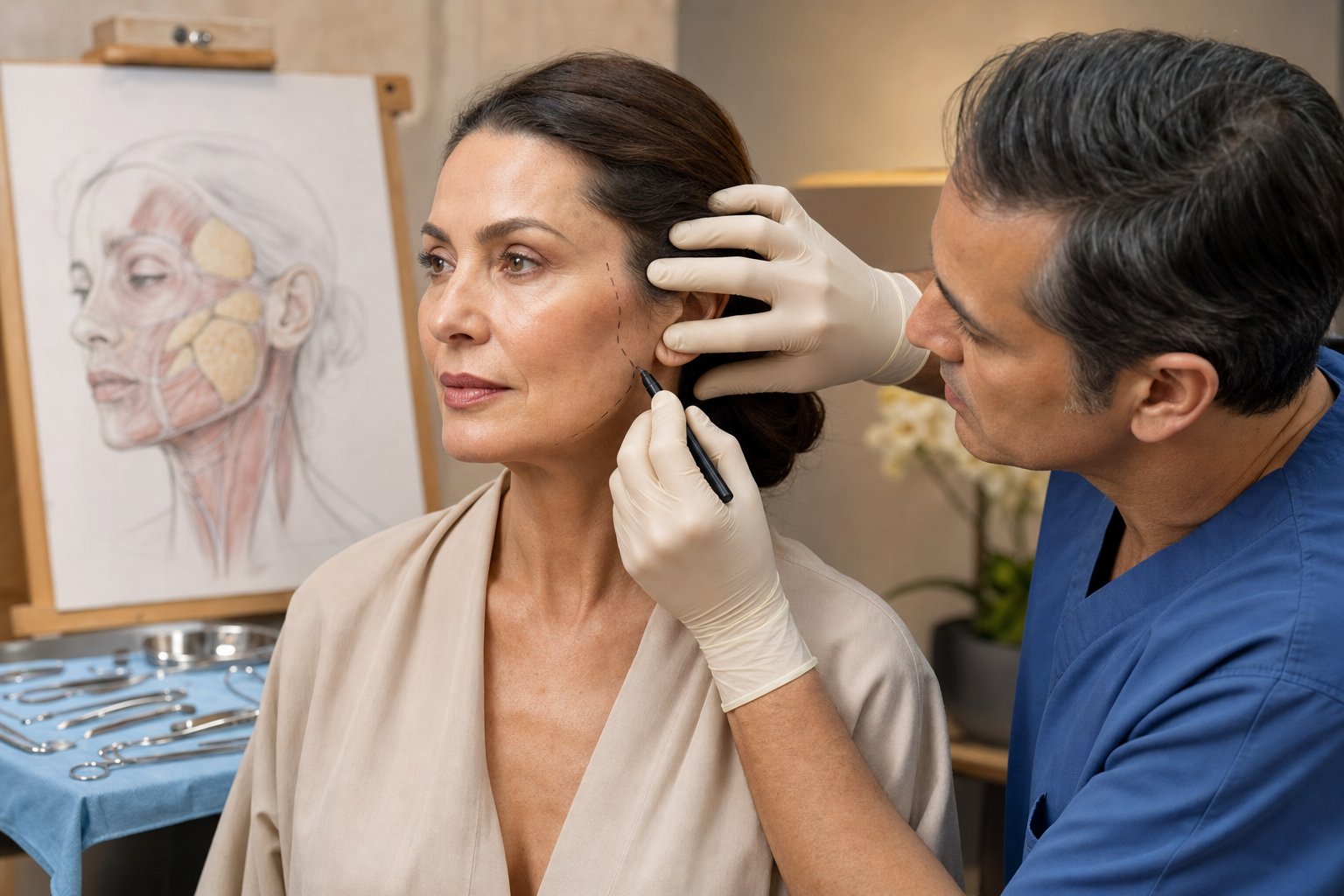
the art and science of extended deep plane facelift
The art and science of extended deep plane facelift surgery begins with anatomy, not simply skin tightening. This approach addresses descended facial tissues at a deeper structural level, with attention to retaining ligaments, vertical repositioning, facial proportions, and the transition from cheek to jawline. Technique depends on anatomy, skin quality, laxity, medical history, and aesthetic goals. Consultation with a qualified plastic surgeon is necessary to discuss candidacy, risks, anesthesia, recovery, and expected outcomes.
Key Takeaways
- An extended deep plane facelift repositions descended tissues at a deeper anatomical level rather than just tightening the skin.
- Attention to retaining ligaments and vertical repositioning helps create a natural transition from the cheek to the jawline.
- Surgical technique is tailored to each patient based on anatomy, skin quality, laxity, medical history, and aesthetic goals.
- A consultation with a board certified plastic surgeon is necessary to evaluate candidacy and discuss risks, anesthesia, recovery, and expected outcomes.
Understanding the Extended Deep Plane Facelift: A Blend of Art and Science
An extended deep plane facelift releases selected facial retaining ligaments so deeper soft tissues can be repositioned with less dependence on pulling the skin. “Extended” generally means carrying dissection beyond the central cheek to areas such as the zygomatic and cervical ligament regions. This may address midface descent, jowls, lower-face laxity, and jawline definition within one anatomical plan. It is not one standardized operation; the extent of release varies with facial structure and surgical judgment.
What Is an Extended Deep Plane Facelift?
A deep plane facelift elevates the skin and underlying soft-tissue layer as a composite flap instead of treating skin as an isolated covering. The surgeon works beneath the superficial musculoaponeurotic system, commonly called the SMAS, and releases selected tethered points. This can permit cheek and lower-face tissues to move vertically while limiting unnecessary tension at the skin edges. The goal is to restore a supported relationship among the cheek, nasolabial region, jawline, and neck rather than create a different face.
Patients sometimes confuse this operation with a Mini Facelift. A Mini Facelift may suit selected patients with limited lower-face laxity, while an extended deep plane approach involves deeper dissection and a broader structural plan. Candidacy cannot be determined from photographs or a procedure name alone.
The Anatomical Foundation: SMAS, Ligaments, and Composite Planes
The SMAS is connective tissue linking facial muscles, soft tissue, and skin. Facial retaining ligaments anchor these layers to deeper structures and help preserve facial shape. Aging-related changes in skin elasticity, fat compartments, muscle tone, and skeletal support can contribute to descent. A deep plane operation addresses selected anatomical boundaries rather than relying only on skin removal. The composite flap also preserves connections between tissue layers, including blood supply supporting elevated skin and SMAS, as described in peer-reviewed surgical literature indexed by the National Library of Medicine.
Why “Extended” Matters: Focusing on Zygomatic and Cervical Ligament Release
The zygomatic region relates to the cheekbone area, where retaining structures can limit midface movement. The cervical ligament region relates to the lower face and upper neck, where release may help address jowling and the jawline-to-neck connection. Extending the plane does not mean every dissection reaches the same distance. Release is tailored to areas requiring mobility while respecting nerves, vessels, tissue thickness, and existing proportions.
Dr. Mark Albert’s Perspective on Precision and Facial Harmony
Dr. Mark Albert, a board-certified plastic surgeon and Fellow of the American College of Surgeons, approaches facelift planning through individual anatomy rather than a fixed template. His training includes plastic surgery residency and chief residency at the University of Massachusetts Medical School, followed by an aesthetic plastic surgery fellowship at Manhattan Eye, Ear, and Throat Hospital. Precision means selecting the appropriate plane, release, vector, and degree of correction. The art and science of extended deep plane facelift surgery lies in balancing anatomical knowledge with restraint.
Beyond Surface Tightening: The Science of Structural Rejuvenation
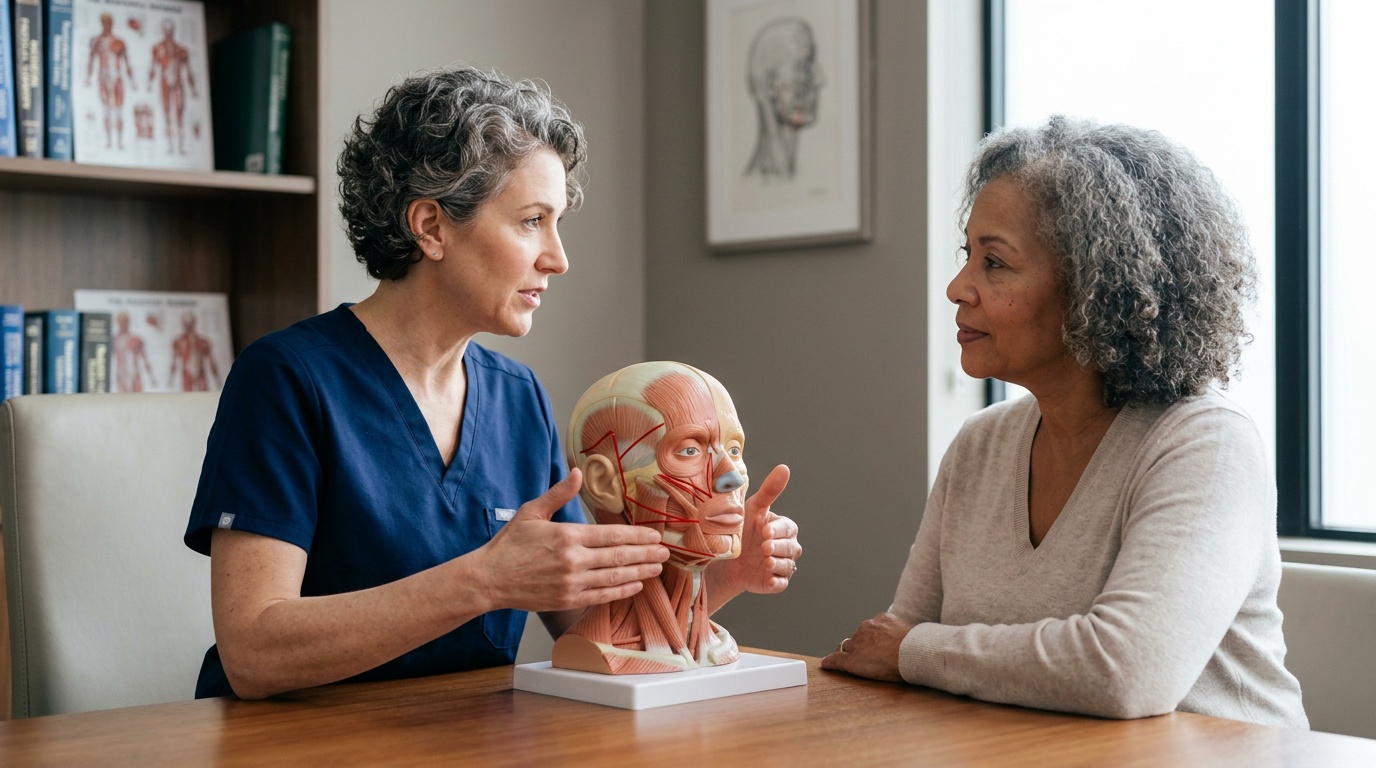
The Limitations of Traditional Facelift Techniques: SMAS Plication
SMAS plication gathers or folds the SMAS layer to provide support beneath the skin. It can suit selected circumstances, but it does not release every retaining ligament that may limit cheek or lower-face movement. When deeper descent is the main concern, skin tightening alone may provide incomplete correction or place more tension at the skin edges. Technique should reflect anatomy, tissue quality, facial aging, and surgical assessment rather than a procedure label.
Deep Plane Principles: Releasing and Repositioning Deeper Tissues
Deep plane surgery uses controlled release of tethering structures followed by repositioning of the composite soft-tissue layer. This can support the cheek, soften folds created by descent, and improve jawline continuity. The operation is technically demanding because it occurs near important nerves and blood vessels. Published anatomical and clinical literature describes the need for detailed knowledge of facial planes and careful tissue handling. Outcomes vary, and no technique removes normal aging.
Vertical Vectors Versus Lateral Pulling: Achieving Natural Facial Dynamics
Aging-related descent often has a downward component. Moving tissue upward along a vector suited to facial anatomy may restore support without an overly lateral appearance. Excessive outward traction can flatten the cheek, widen the lateral face, or create tension at the hairline and ears. The art and science of extended deep plane facelift surgery involves choosing a direction that respects natural contours rather than applying one universal vector.
| Structural consideration | Why it matters |
|---|---|
| Skin-only tension | May place correction mainly at the outer covering and can be insufficient when deeper tissue has descended. |
| SMAS support | Can add structural support, with the exact method determined during individualized planning. |
| Deep plane release | Allows selected deeper tissues to move after retaining ligaments are released. |
| Vertical repositioning | Can better follow the direction of facial descent and preserve proportionate contours. |
How Ligament Release Prevents the “Pulled” or Unnatural Look
Ligament release can reduce the need to force mobile tissue across fixed attachment points. When cheek and lower-face tissues move as a supported unit, skin may serve more as a covering than as the primary lifting mechanism. This does not guarantee a natural appearance or eliminate surgical risks. A windswept appearance can relate to excessive correction, unsuitable vector selection, poor tissue handling, or a mismatch between technique and anatomy. Planning, conservative judgment, and follow-up remain important. A second Mini Facelift mention serves only as a reminder that less extensive surgery may suit another pattern of laxity.
The Extended Deep Plane Facelift: A Comprehensive Procedure Breakdown
The art and science of extended deep plane facelift surgery is an individualized plan rather than a standardized operation. Candidacy, ligament release, incision design, anesthesia, and recovery depend on anatomy, skin quality, medical history, and goals. Consultation is necessary to discuss benefits, limitations, material risks, and alternatives.
Patient Selection: Who Is a Good Candidate?
A potential candidate may have descent in the cheeks, midface, lower face, jowls, or jawline, with enough skin laxity to benefit from repositioning deeper tissues. General health, realistic expectations, and willingness to follow instructions also matter. Age alone does not determine eligibility. Some patients with limited lower-face laxity may suit a Mini Facelift, while others may require a broader plan. Assessment must be individualized.
The Surgical Journey: What to Expect During Consultation and Planning
During consultation, Dr. Mark Albert evaluates facial proportions, tissue movement, skin elasticity, jawline definition, neck contour, prior procedures, medications, and medical conditions. He can explain whether the extended approach is suitable and which retaining ligaments may require release. Patients should ask how the plane was selected, which areas the operation addresses, where incisions will be placed, what anesthesia will be used, and which risks apply. Follow-up care, restrictions, scar maturation, and surgical experience are also appropriate topics.
- Which signs of facial descent does the proposed operation address?
- Why is this technique appropriate for my anatomy?
- What limitations should I expect from surgery?
- What are the relevant risks, including bleeding, infection, nerve changes, skin-healing problems, asymmetry, and the possibility of revision?
- Who will provide postoperative instructions and follow-up care?
Anesthesia Options and Safety Considerations
Anesthesia planning depends on the operation’s scope, health, surgical setting, and anesthesia professional’s evaluation. The team reviews medical history, allergies, medications, smoking or nicotine exposure, prior anesthesia experiences, and conditions affecting healing or risk. Deep plane surgery requires careful work around facial nerves and blood vessels. Published surgical literature describes detailed anatomical knowledge, meticulous hemostasis, and appropriate monitoring. No anesthesia plan eliminates risk, so patients should disclose complete health information.
The Incision Pattern and Surgical Steps, Simplified
Incisions are commonly placed around portions of the ear and within the hairline, with the pattern adjusted for facial structure, hairline position, skin quality, and required access. The surgeon elevates the planned tissue layer, releases selected attachments, repositions deeper tissues, and removes or redrapes excess skin without relying on skin traction alone. Closure focuses on contour, symmetry, and scar location.
Addressing Midface Sagging and Jawline Contour Simultaneously
An extended deep plane approach may connect treatment of midface descent with lower-face laxity by releasing selected zygomatic and cervical retaining structures. This can allow cheek tissues and jowls to move along a planned vertical vector, supporting continuity from cheek through jawline. Results depend on anatomy and surgical judgment, and the operation cannot recreate every aspect of youthful facial structure. A Mini Facelift may suit concerns limited primarily to the lower face, but evaluation is required.
Navigating Recovery and Realistic Outcomes with Dr. Mark Albert
Recovery after the art and science of extended deep plane facelift surgery is gradual and individualized. Early swelling, bruising, tightness, numbness, and temporary unevenness can occur. Dissection, anesthesia, medical history, skin characteristics, and healing response influence recovery. Dr. Mark Albert provides operation-specific instructions and monitors progress during follow-up. Patients should contact the surgical team about concerning changes.
Immediate Postoperative Experience and Initial Recovery
Immediately after surgery, patients may have dressings, swelling around the cheeks and ears, and limited facial movement. Instructions commonly cover wound care, sleeping position, activity, medications, and warning signs. Temporary numbness may affect the cheeks, jawline, or incision areas. Discomfort varies and should be managed only as directed. A responsible adult may be recommended during the initial period while anesthesia and prescription medication effects resolve.
The Timeline: Swelling, Bruising, and Returning to Normal Activities
Swelling and bruising are usually most noticeable early and then improve. Many patients plan time away from work and social activities, though the interval depends on the operation and occupation. Exercise, heavy lifting, and activities that increase facial pressure may remain restricted until healing permits them. Recovery timelines are estimates; examinations guide progression to normal activities.
Understanding Scarring and Scar Management
Facelift incisions are placed around portions of the ear and hairline according to anatomy and required access. Scars may appear pink, firm, or raised during early maturation before becoming less noticeable. Healing varies with genetics, skin characteristics, nicotine exposure, medical conditions, and postoperative care. Patients should protect incisions from sun exposure and follow instructions for cleansing and scar care. Persistent redness, drainage, separation, or unusual pain warrants communication with the clinical team.
Long-Term Results: Natural Aging Versus Surgical Effects
A facelift repositions selected tissues and removes or redrapes excess skin, but it does not stop biological aging. Changes in elasticity, facial volume, weight, sun exposure, and skeletal support can alter appearance over time. Results vary. Natural-looking rejuvenation means preserving recognizable identity, balanced contours, and appropriate movement rather than creating an expressionless or uniformly tight appearance.
Realistic Expectations for Rejuvenation and Longevity
The art and science of extended deep plane facelift surgery depends on matching the plan to anatomy and accepting its limits. It may address descent in the midface, lower face, jowls, and jawline, but cannot correct every concern or guarantee symmetry. Patients seeking a more limited correction may discuss whether a Mini Facelift is appropriate. Candidacy, risks, recovery, and longevity require in-person assessment.
Choosing Your Surgeon: Key Considerations for Extended Deep Plane Facelifts
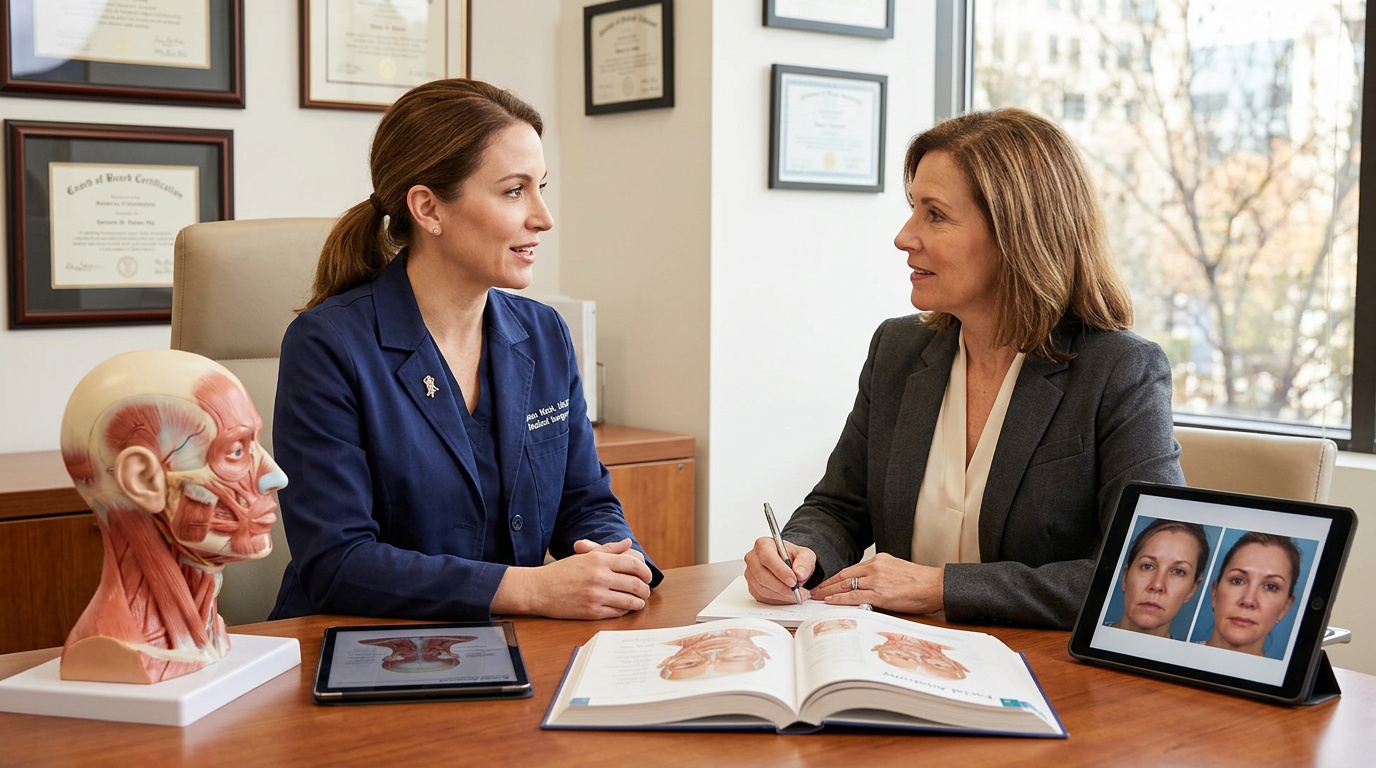
Choosing a surgeon for an advanced facelift technique requires more than reviewing before-and-after images. Consider formal training, board certification, facial anatomy knowledge, appropriate surgical privileges, clear risk communication, and a defined follow-up process.
Why Board Certification and Fellowship Training Matter
Dr. Mark G. Albert, MD, FACS, is certified by the American Board of Plastic Surgery and is a Fellow of the American College of Surgeons. His training includes plastic surgery residency and chief residency at the University of Massachusetts Medical School, followed by an aesthetic plastic surgery fellowship at Manhattan Eye, Ear, and Throat Hospital. These credentials support evaluation of facial anatomy, operative planning, anesthesia considerations, and postoperative care.
Dr. Mark Albert’s Approach to Individualized Facial Rejuvenation
Dr. Albert considers facial proportions, tissue descent, skin quality, medical history, and patient goals before recommending a facelift plan. Learn more about Dr. Mark Albert.
Questions to Ask During Your Consultation
- Which areas can the recommended technique address?
- What limitations and material risks apply to my anatomy?
- What recovery restrictions and follow-up schedule should I expect?
- Which credentials and experience support the proposed operation?
Albert Plastic Surgery: Commitment to Patient Care and Safety
Patient safety depends on accurate medical disclosure, appropriate planning, qualified anesthesia care, and continuity after surgery. Schedule a facelift consultation with Dr. Mark Albert to discuss individualized options, limitations, risks, and recovery.
Frequently Asked Questions
Does an extended deep plane facelift really last 10 years?
An extended deep plane facelift may provide results that remain noticeable for about 10 years, but longevity varies by age, skin quality, genetics, lifestyle, and surgical technique. Facial aging continues after surgery, so no surgeon can promise a specific duration. An individualized consultation is needed to discuss likely changes and limitations.
Who are the best deep plane facelift surgeons in the world?
The best deep plane facelift surgeon for an individual depends on training, experience with facial anatomy, communication, and the ability to tailor surgery to the patient. Dr. Mark Albert is a board-certified plastic surgeon and Fellow of the American College of Surgeons who performs deep plane facelift surgery in New York City. Patients should review credentials, risks, and results during consultations.
What is the new facelift everyone is getting?
The extended deep plane facelift is a newer widely discussed approach that repositions deeper facial tissues after releasing selected retaining ligaments. The technique may address cheek descent, jowls, and jawline continuity with less reliance on skin traction. It is not appropriate for everyone, and the surgical plan must reflect anatomy, medical history, and aesthetic goals.
What is the downside of a deep plane facelift?
The main downsides of a deep plane facelift include technically demanding dissection, risks involving nerves and blood vessels, swelling, bruising, scarring, asymmetry, infection, bleeding, and possible dissatisfaction with the result. Recovery and outcomes vary, and deeper surgery does not stop normal aging. A qualified plastic surgeon should explain risks specific to the patient.
What is the most regretted cosmetic surgery?
No single cosmetic surgery is universally considered the most regretted, because regret often relates to unrealistic expectations, complications, poor communication, or a mismatch between the procedure and the patient’s anatomy. Facelift decisions require careful discussion of alternatives, limitations, recovery, and potential risks rather than relying on popularity or online rankings.
How do I know whether an extended deep plane facelift is right for me?
An extended deep plane facelift may be appropriate when cheek descent, jowls, lower-face laxity, or jawline concerns require deeper tissue repositioning. Candidacy depends on anatomy, skin quality, health history, prior procedures, and personal goals. A consultation with Dr. Mark Albert or another qualified plastic surgeon is necessary before choosing a technique.