

what is the cost of a deep plane facelift
For readers asking, “what is the cost of a deep plane facelift,” a reasonable 2026 United States planning range is approximately $35,000 to $75,000, with higher fees in major metropolitan centers. In New York City, specialist pricing may begin around $50,000 and exceed $150,000 in select practices. Review the quote line by line because surgeon, anesthesia, facility, and follow-up charges may be bundled or billed separately.
Deep plane facelift surgery works beneath the superficial muscular aponeurotic system and requires careful patient selection, anatomical knowledge, qualified anesthesia support, and an appropriately accredited facility. A consultation with a qualified plastic surgeon is necessary to assess anatomy, goals, medical history, budget, technique, risks, and expected outcomes.
Understanding the Deep Plane Facelift: An Anatomical and Financial Overview
What Exactly Is a Deep Plane Facelift?
A deep plane facelift repositions deeper facial tissues instead of relying mainly on tightening excess skin. The surgeon releases selected retaining ligaments, mobilizes the deeper soft-tissue layer, and redrapes the lower face and neck with less dependence on skin tension. The aim is a natural change in facial position and contour rather than a pulled appearance.
The Anatomy Behind the Technique: Why Deep Plane Differs
The face contains skin, subcutaneous fat, the superficial muscular aponeurotic system, retaining ligaments, facial muscles, and facial nerve branches. Deep plane dissection occurs beneath the SMAS and above selected deeper structures. This can allow connected tissue compartments to move as a unit, while requiring detailed nerve knowledge and individualized judgment.
“Deep plane” does not describe one identical operation. Ligament release, lower-face correction, neck treatment, incision design, anesthesia, and recovery vary with facial structure, skin quality, tissue descent, prior surgery, and the surgeon’s assessment.
Who Is Dr. Mark Albert and Albert Plastic Surgery?
Dr. Mark Albert, formally Mark G. Albert, MD, FACS, is certified by the American Board of Plastic Surgery and is a Fellow of the American College of Surgeons. His training included plastic surgery residency and chief residency at the University of Massachusetts Medical School, followed by an aesthetic plastic surgery fellowship at Manhattan Eye, Ear, and Throat Hospital. He is Program Director of the MEETH Aesthetic Plastic Surgery Fellowship and an Assistant Clinical Professor of Surgery at the Zucker School of Medicine at Hofstra/Northwell.
Albert Plastic Surgery individualizes facelift planning rather than using one age threshold or standard correction. The practice also maintains a Mini Facelift service page for patients whose anatomy and tissue change may call for a more limited approach. Candidacy, technique, anesthesia, recovery, risks, and outcomes require an in-person clinical assessment.
The Deep Plane Facelift: A Guide to Realistic Expectations
A deep plane facelift may improve laxity and descent in the lower face and neck, but it does not stop aging or produce identical results for every patient. Swelling, bruising, numbness, incision healing, facial balance, visible change, movement, and sensation may vary temporarily during recovery.
Published clinical reporting cited in the research brief describes temporary motor nerve weakness in approximately 0.5% to 1.5% of deep plane procedures and permanent nerve injury at less than 0.1% when surgery is performed by experienced, board-certified specialists. These population-level figures do not predict an individual result. Consultation should address personal risk factors, limitations, expected longevity, and the boundaries of correction.
The Cost of a Deep Plane Facelift: National Averages and NYC Pricing

National Average Cost Ranges for Deep Plane Facelifts in 2026
Research summarized for this guide places the typical United States price for a primary deep plane facelift between $35,000 and $75,000. The surgeon’s fee commonly represents about 70% to 85% of the total, or approximately $25,000 to more than $60,000. An accredited facility may charge about $2,500 to $5,000, and a board-certified anesthesiologist approximately $1,500 to $3,500. These are planning ranges, not personalized quotes.
Ask whether the estimate includes postoperative examinations, facility resources, anesthesia, surgical garments, medications, and management of an unexpected clinical issue. A lower headline price may reflect narrower surgery or excluded services.
New York City Specialist Pricing: Understanding Premier Rates
Deep plane facelift cost in NYC may be higher because of operating expenses, malpractice costs, facility standards, staffing, specialist demand, and surgeon experience. Research findings place metropolitan pricing at approximately $50,000 to more than $150,000. A high fee does not guarantee superior results. Review credentials, operative plan, facility, anesthesia, follow-up, and included services.
Factors Driving Geographic Cost Variations
| Market or fee category | Planning range | What may influence the amount |
|---|---|---|
| United States national range | $35,000 to $75,000 | Surgical scope, surgeon expertise, facility, anesthesia, and regional overhead |
| Major metropolitan centers | $50,000 to more than $150,000 | Local operating costs, specialist demand, practice structure, and case complexity |
| Deep plane Mini Facelift | $16,000 to $28,000 | Geographic market and the extent of tissue correction |
Geography is only one variable. A longer operation, more extensive tissue release, complex neck anatomy, hospital-based care, or additional monitoring can change the estimate. Patients searching for a deep plane facelift near me should compare complete written estimates rather than advertised surgeon fees alone.
The “Celebrity Surgeon” Fee Premium: What to Expect
Some high-profile surgeons charge a substantial premium based on demand, location, practice capacity, and professional reputation. Publicly confirmed pricing for a specific surgeon, including searches such as “cost of deep plane facelift Dr. Jacono,” may be unavailable or change with the patient and surgical scope. Request a current, itemized estimate instead of relying on an online figure.
Compare American Board of Plastic Surgery certification, facial surgery training, experience, accredited operating resources, anesthesia credentials, financial terms, and postoperative access. The best deep plane facelift surgeons in the USA cannot be identified by price alone; consider planning, safety, communication, and continuity of care.
Itemized Deep Plane Facelift Expenses: What Your Investment Covers
Request a written estimate separating the surgeon’s fee, anesthesia, facility charges, postoperative care, and routine supplies. Fees vary with tissue release, neck anatomy, operating time, medical needs, location, and surgical resources.
Surgeon's Fee: Expertise and Procedure Time
The surgeon’s fee reflects planning, technical skill, operating time, postoperative assessment, and responsibility for the surgical plan. It may vary according to whether correction is limited to the lower face or includes broader facial and neck treatment. Evaluate a higher fee through credentials, training, facility standards, communication, and continuity of care, not as a guarantee of a particular result.
Anesthesia Fees: Type and Anesthesiologist's Role
Anesthesia may be billed separately or included in a bundle. Charges depend on the anesthetic, procedure duration, monitoring, and anesthesia professional’s role. The research brief identifies approximately $1,500 to $3,500 for a board-certified anesthesiologist. Ask who administers anesthesia, where monitoring occurs, and whether the estimate covers the full operating period.
Operating Room and Facility Costs: Accreditation and Resources
Facility charges cover the operating room, equipment, sterile supplies, recovery area, nursing support, and emergency resources. An accredited facility, including one certified by AAAASF, also known as Quad A, follows standards for staffing, equipment, documentation, and patient care. Research findings place accredited facility fees at approximately $2,500 to $5,000, subject to location and surgical scope. Confirm whether recovery monitoring and supplies are included.
Post-Operative Care and Follow-Up Visits
Ask how many routine examinations are included, who answers questions, and how unexpected concerns are evaluated. Follow-up may include incision checks, swelling assessment, sensation review, activity guidance, and communication with the surgical team. Visit timing and number vary with healing and the surgeon’s protocol.
Potential Additional Costs: Pre- and Post-Op Medications and Garments
Separate expenses may include requested medical testing, prescribed medications, wound-care supplies, and a postoperative garment. Ask for a complete cost worksheet identifying fixed charges, estimates, and services requiring separate payment.
Financial checkpoint: A transparent estimate should state surgical scope, surgeon’s fee, anesthesia provider, facility, postoperative visits, routine supplies, payment schedule, and the policy for changes in the operative plan. Candidacy and technique require individualized consultation with a qualified clinician.
Deep Plane Facelift vs. Mini Facelift: Cost, Technique, and Candidacy
Cost differences reflect surgical extent, tissue descent, incision planning, operating time, and recovery needs. Research places deep plane Mini Facelift pricing at approximately $16,000 to $28,000, while a primary full procedure commonly falls within the higher national range. The appropriate choice depends on anatomy, skin laxity, neck changes, prior surgery, and desired correction.
Comparing Costs: Deep Plane Mini Facelift vs. Full Deep Plane Facelift
| Consideration | Deep plane Mini Facelift | Full deep plane facelift |
|---|---|---|
| Typical scope | More limited lower-face correction for selected anatomy | Broader repositioning of descended facial tissues, with scope determined clinically |
| Planning range | Approximately $16,000 to $28,000 | Approximately $35,000 to $75,000 nationally, with higher metropolitan pricing |
| Potential reason for the difference | Less extensive dissection, shorter operative scope, and fewer facility resources in some cases | Greater surgical extent, longer operating time, and more comprehensive planning |
| Best decision factor | Whether limited correction matches the patient’s tissue laxity and goals | Whether broader repositioning is clinically appropriate for the face and neck |
Anatomical Differences: Targeted vs. Comprehensive Rejuvenation
A Mini Facelift may suit localized lower-face laxity and limited skin or soft-tissue descent. A full deep plane facelift addresses a broader pattern by releasing and repositioning selected deeper structures. Incision design, ligament release, skin redraping, neck involvement, and anesthesia must be tailored during examination.
Candidacy Considerations for Each Technique
Do not select an operation based only on price or procedure name. Evaluation includes skin quality, jowling, facial proportions, neck contour, tissue descent, medical history, smoking status, previous facial surgery, and expectations. Consultation should explain what each approach cannot address.
When Is a Deep Plane Mini Facelift the Right Choice?
The Mini Facelift may suit localized lower-face laxity without a need for broader correction. It is not automatically safer, better, or less expensive for every person. Dr. Mark Albert can assess whether it matches anatomy, goals, recovery preferences, and expectations. Candidacy, technique, risks, and outcomes require individualized clinical assessment.
Clinical Safety, Complications, and Long-Term Value of Deep Plane Facelifts
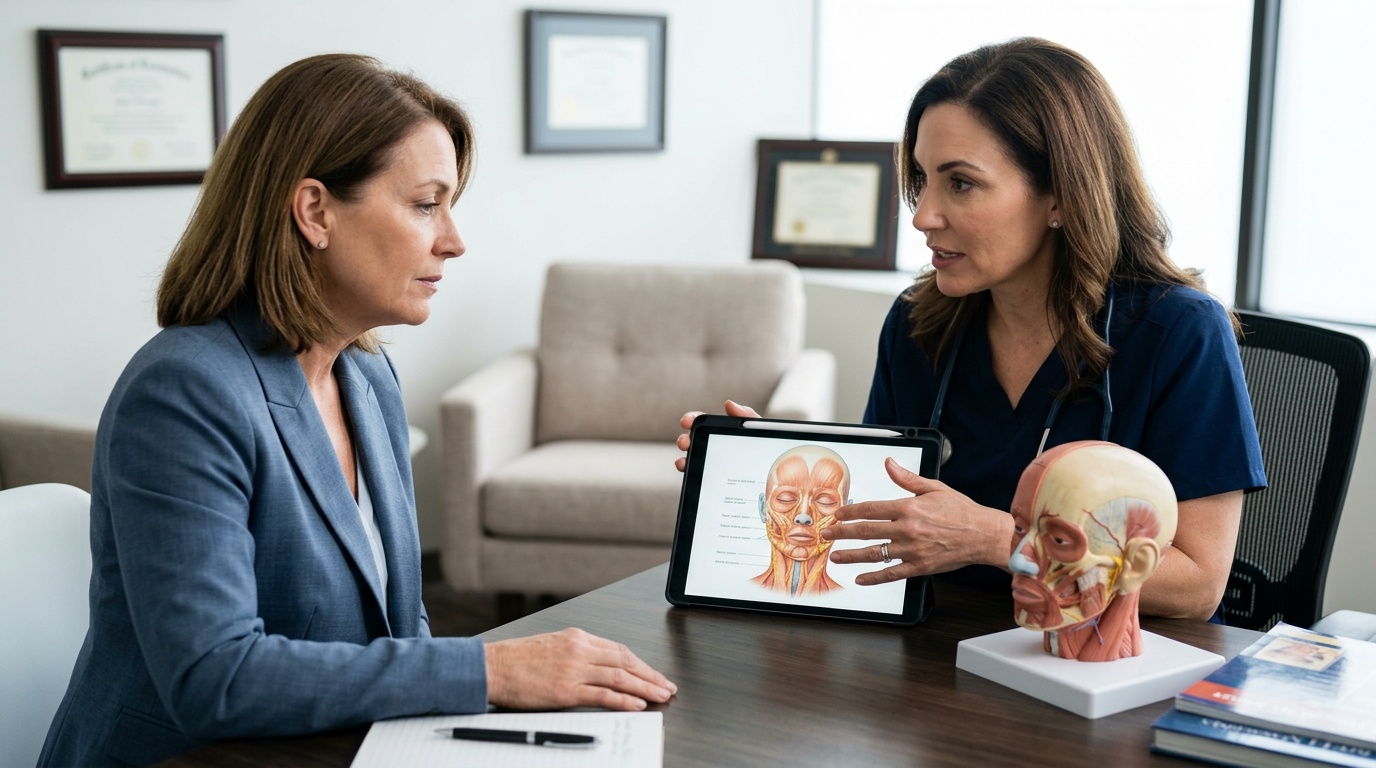
Safety should be evaluated before price. The operation involves dissection beneath the SMAS and near facial nerve branches, making candidacy, anatomy, anesthesia, facility standards, and postoperative access relevant to risk. Published figures report temporary motor nerve weakness in approximately 0.5% to 1.5% of deep plane procedures and permanent nerve injury in less than 0.1% when performed by experienced, board-certified specialists. These figures do not predict an individual outcome.
An Unvarnished Look at Potential Complications and Risks
Potential complications include bleeding, hematoma, infection, delayed wound healing, visible scarring, asymmetry, prolonged swelling, numbness, altered sensation, hair loss near incisions, skin injury, and temporary or permanent facial weakness. Hematoma is reported as the most common early complication, occurring in approximately 1% to 3% of facelift patients according to the research findings. Anesthesia risks depend on health history, medications, and the planned anesthetic.
Deep plane surgery cannot stop future aging or guarantee a specific contour. Rapidly increasing swelling, significant bleeding, fever, breathing difficulty, or new facial weakness requires prompt contact with the surgical team or urgent medical evaluation, as appropriate.
Mitigation Strategies and Safety Protocols: Dr. Mark Albert's Approach
Dr. Mark Albert is certified by the American Board of Plastic Surgery and is a Fellow of the American College of Surgeons. His training included plastic surgery residency and chief residency at the University of Massachusetts Medical School and an aesthetic plastic surgery fellowship at Manhattan Eye, Ear, and Throat Hospital. He is Program Director of the MEETH Aesthetic Plastic Surgery Fellowship and an Assistant Clinical Professor of Surgery at the Zucker School of Medicine at Hofstra/Northwell.
Ask how the tissue plane will be selected, which areas will be treated, who administers anesthesia, and where recovery occurs. Accredited facilities, qualified anesthesia professionals, careful hemostasis, documented medical history, and scheduled follow-up are practical safety measures. Dr. Albert can explain an individual plan, though no surgeon can eliminate every operative or healing risk.
Safety checkpoint: Consultation should cover facial nerve anatomy, bleeding risk, incision healing, anesthesia, facility accreditation, emergency arrangements, follow-up access, and circumstances that could change the operative plan.
The Longevity Factor: Deep Plane Facelifts and Long-Term Value
Research summarized for this guide places reported longevity of deep plane repositioning at approximately 10 to 15 years, compared with about 5 to 8 years for SMAS plication or mini lift procedures. Age, genetics, skin quality, sun exposure, weight changes, tissue characteristics, and the original plan affect duration. These figures describe general improvement, not permanence.
Long-term value depends on appropriate correction, care quality, expectations, and total financial commitment. A limited Mini Facelift may suit selected patients, while others may require broader repositioning. The decision belongs in an individualized examination.
Evaluating Surgeon Qualifications: Board Certification and Experience
When researching a deep plane facelift near me, look beyond ratings and headline fees. Confirm American Board of Plastic Surgery certification, facial surgery training, experience with the technique, operating privileges or an accredited setting, and anesthesia qualifications. Ask to see representative results from the surgeon’s own work, recognizing that photographs cannot predict personal results.
- Request the surgical scope and tissue plane in writing.
- Confirm facility accreditation and recovery arrangements.
- Ask which fees are bundled or billed separately.
- Discuss nerve weakness, hematoma, numbness, scarring, and revision possibilities.
- Understand who provides postoperative care and handles urgent concerns.
Financing Options and Insurance Clarification
Facelift surgery is generally elective, so health insurance typically does not cover the aesthetic fee, anesthesia, facility use, or routine recovery expenses. Coverage depends on the policy and any separate medical indication. Obtain financing terms directly from the practice or lender, review interest and payment schedules, and do not choose a surgeon solely because financing makes a higher fee manageable. A consultation with Dr. Albert can establish the plan, inclusions, medical risks, and complete estimate before scheduling.
Frequently Asked Questions
How long does a deep plane facelift last?
A deep plane facelift may provide visible improvement for many years, but longevity varies by age, skin quality, tissue changes, genetics, lifestyle, and surgical technique. A deep plane facelift does not stop aging, and some patients may consider additional treatment later. A consultation can address expected durability based on individual anatomy and goals.
Is 75 too old for a mini facelift?
Age 75 alone does not determine whether someone is a candidate for a mini facelift. Mini facelift candidacy depends on skin and tissue changes, medical history, medications, anesthesia considerations, goals, and the amount of correction needed. An in-person assessment with a qualified plastic surgeon is needed to discuss risks, alternatives, recovery, and cost.
Where is the best country to get a deep plane facelift?
The best country for a deep plane facelift is one where a qualified, appropriately trained surgeon operates in an accredited facility with suitable anesthesia and follow-up care. Country rankings alone cannot predict an individual outcome. Patients should compare credentials, surgical scope, total pricing, travel demands, complication planning, and access to postoperative evaluation.
Where is the cheapest state to get a facelift?
The cheapest state for a facelift varies by surgeon, facility, anesthesia, procedure scope, and local operating costs. A lower advertised fee may exclude anesthesia, facility charges, medications, follow-up visits, or treatment of an unexpected clinical issue. Compare complete written estimates and weigh continuity of care against travel-related expenses.
What's a good but inexpensive country to get a facelift?
A good but inexpensive country for a facelift is not determined by price alone, because surgeon training, facility accreditation, anesthesia support, follow-up access, and complication management also affect overall value. International patients should include travel, lodging, time away from home, and postoperative care in the budget. An individualized consultation is necessary before choosing surgery abroad.
What is the cost of a deep plane facelift in the United States?
The cost of a deep plane facelift in the United States is commonly about $35,000 to $75,000 in 2026, while major metropolitan pricing may range from roughly $50,000 to more than $150,000. The estimate may include separate surgeon, facility, anesthesia, and follow-up charges. A line-by-line written quote is needed for accurate planning.
Why does a deep plane facelift cost more in New York City?
A deep plane facelift may cost more in New York City because of operating expenses, malpractice costs, facility standards, staffing, specialist demand, and surgical complexity. New York City pricing may begin around $50,000 and exceed $150,000 in select practices. A higher fee does not guarantee a better result, so review credentials, the operative plan, included services, and follow-up care.